
Experts Solve Mystery of Dolphin Strandings in Argentina. Turns Out, an Apex Predator Was Chasing Them
Published March 12 2026, 10:07 a.m. ET

(A) Dolphins swimming at high speed; (B) Dolphin pod splits into groups; (C) Dolphins entering San Antonio Bay; (D) Whale-watching vessel navigating alongside dolphin pod.
Researchers have found the reason behind two mass strandings of dolphins in Argentina. These events took place in 2021 and 2023, respectively, at San Antonio Bay in northern Patagonia. Findings regarding these mass strandings have been published in the Royal Society Open Science journal. The team associated with the study determined that the dolphins got stranded because they were being chased away by deadly orcas. These state-of-affairs possibly caused hundreds of dolphins to become trapped.
Experts clarified that just because these two events were caused by orcas does not mean every stranding is the deed of hunters. “This doesn’t mean predators are always the cause of mass strandings, but it suggests that predator-prey interactions may sometimes trigger these events—particularly when combined with factors such as coastal geography, tides, and the strong social behavior of dolphins,” shared Magdalena Arias at the National Scientific and Technical Research Council of Argentina, according to New Scientist.
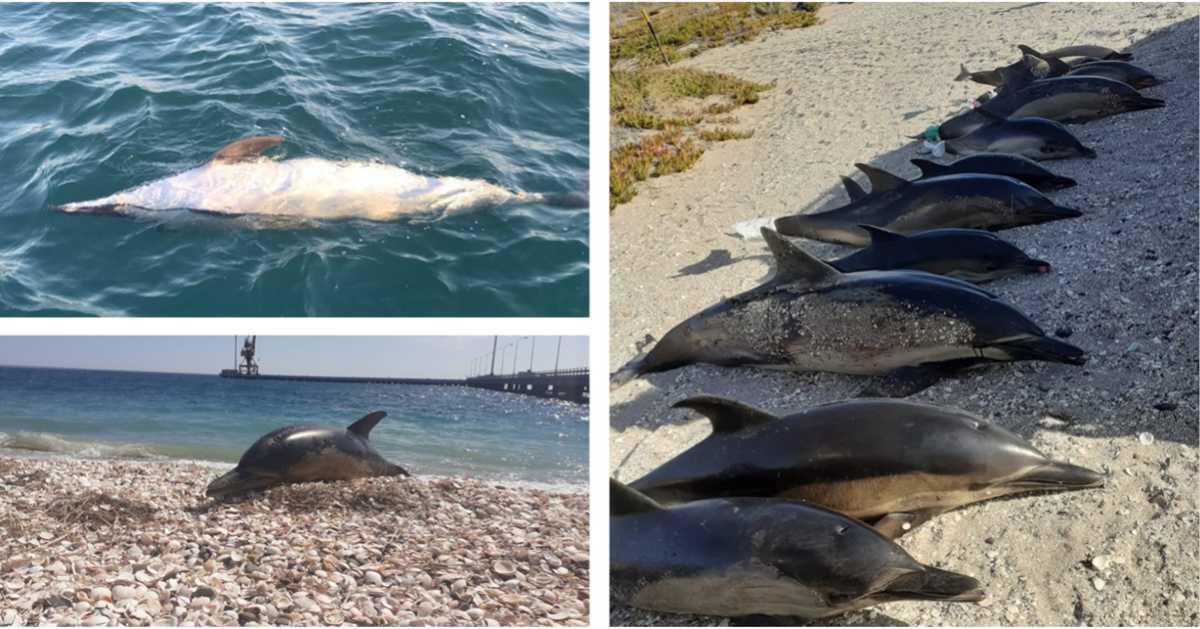
Common dolphins found at the port of San Antonio Este on the coast and floating in the bay on 22 September 2021.
For the purpose of this evaluation, video footage of the stranding events in the eWHALE citizen science platform and social media sites was examined. Investigation revealed that during the 2021 event, 350 dolphins were speeding towards San Antonio Bay in Río Negro province, Argentina. The group was being followed by a pod of eight orcas. Both of them were half an hour away from each other. During the proceedings, some dolphins parted from the group at the mouth of the bay. These dolphins entered a shallow port. Researchers believe that the mammals were hiding in the port, waiting for the orcas to go back into the sea, which they eventually did. Unfortunately, the dolphins possibly got themselves into a fatal trap in the process. The following day, dozens of dolphins were found dead in the port.
The same story repeated in 2023. In this case, 570 dolphins were racing towards the bay, chased by a group of orcas. Some again hid in the port, but this time, the story had a different ending. The dolphins not only escaped the wrath of orcas but also came out with their lives intact because of timely intervention by local authorities and volunteers. These findings solve the long-standing mystery of how these dolphins ended up in sandbanks. In the past, experts had come up with many speculations, like disease, disorientation because of human activities, and tide trappings.
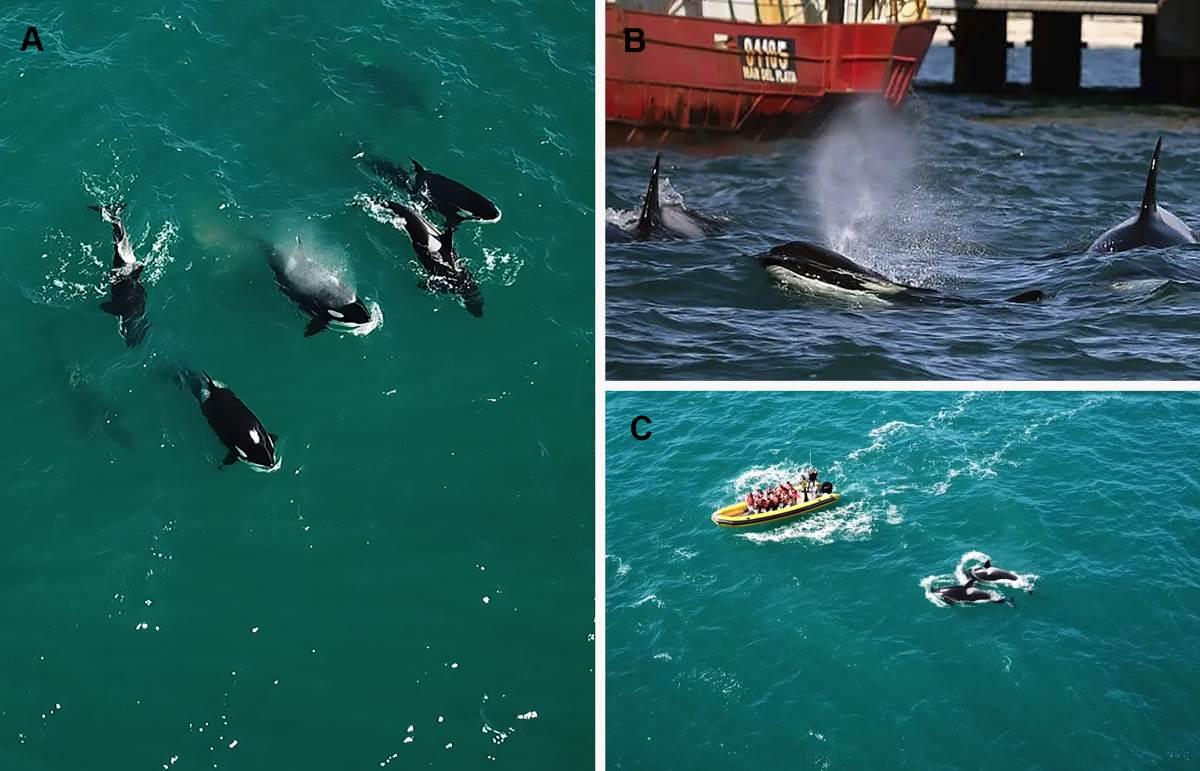
(A) Group of killer whales composed of eight individuals (seven adults and one calf) entering San Antonio Bay; (B) the group observed near the port; (C) whale-watching vessel navigating alongside the killer whales. (Image Source: Royal Society Open Science 2026/(A,C) Franco Dorini; (B) Walter Castro Velis)
Along with looking into footage, researchers also conducted necropsies (animal autopsies) on 38 dolphins from the 2021 event. Insights suggested that the dolphins were in good physical condition, implying that they suffered from no diseases or received any injuries from objects like boats or fishing nets. They also did not have any meals in their stomach, so they weren't chasing prey. These results rule out other popular speculations for the strandings.
Recognizing the involvement of orcas in these two instances should encourage experts to take this reason into consideration while investigating other strandings worldwide. It also shed more light on the poorly understood mass dolphin strandings that take place in southwestern Atlantic. Experts are hopeful that these findings will aid officials in organizing rapid response efforts. Officials will be able to pay more attention to saving dolphins from orcas, rather than worrying about factors like disease. "Our study provides novel evidence suggesting that predator presence may also be an important contributing factor," say the study authors. "Specifically, the presence of killer whales may act as a significant stressor driving common dolphins towards shallow waters, increasing their risk of stranding," they added.