
Scientists Warn An Antarctic Glacier the Size of Florida is 'Hanging On By Its Fingernails'
Published March 11 2025, 8:46 a.m. ET

A beautiful Antarctic glacier
Melting glaciers due to global warming are contributing to rising sea levels and extreme climate in different parts of the world. Now, the situation of the Thwaites Glacier in Antarctica, the widest in the world, is becoming increasingly menacing day after day. As the thermal reservoir of the Earth’s hot mantle defrosts its deep layers of glacial ice, the weakening base is gradually fracturing the ice on the surface. It triggers rib-like cracks and crevices, which end up releasing unfathomable quantities of icy water, spilling them into the seas and causing the sea levels to rise.
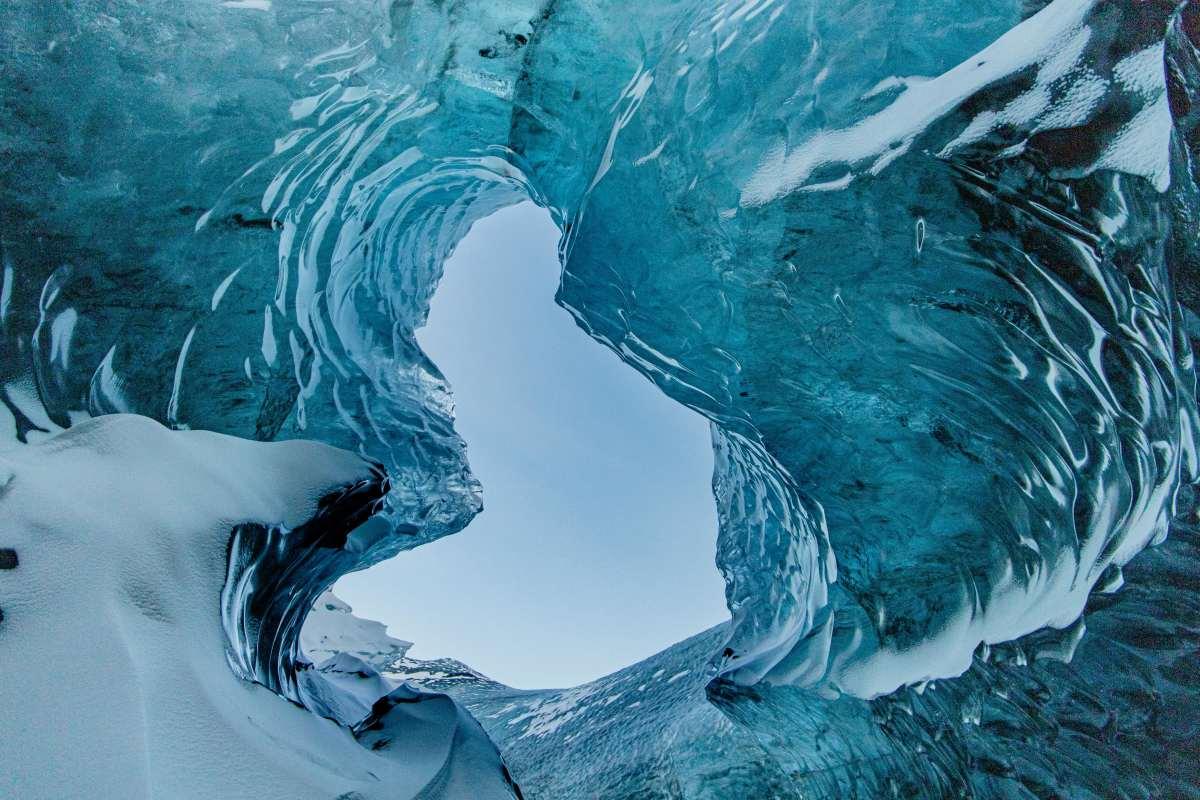
A crevasse in the glacial ice
Aptly dubbed “Doomsday Glacier,” the glacier sheds billions of tons of ice, signaling a potential demise of the surrounding landmass. In a study published in Nature Geoscience, scientists described that Thwaites is “holding on by its fingernails.” If the ice sheet melts and weakens its grip a little more, a deluge of the glacial water locked underneath will gush out.
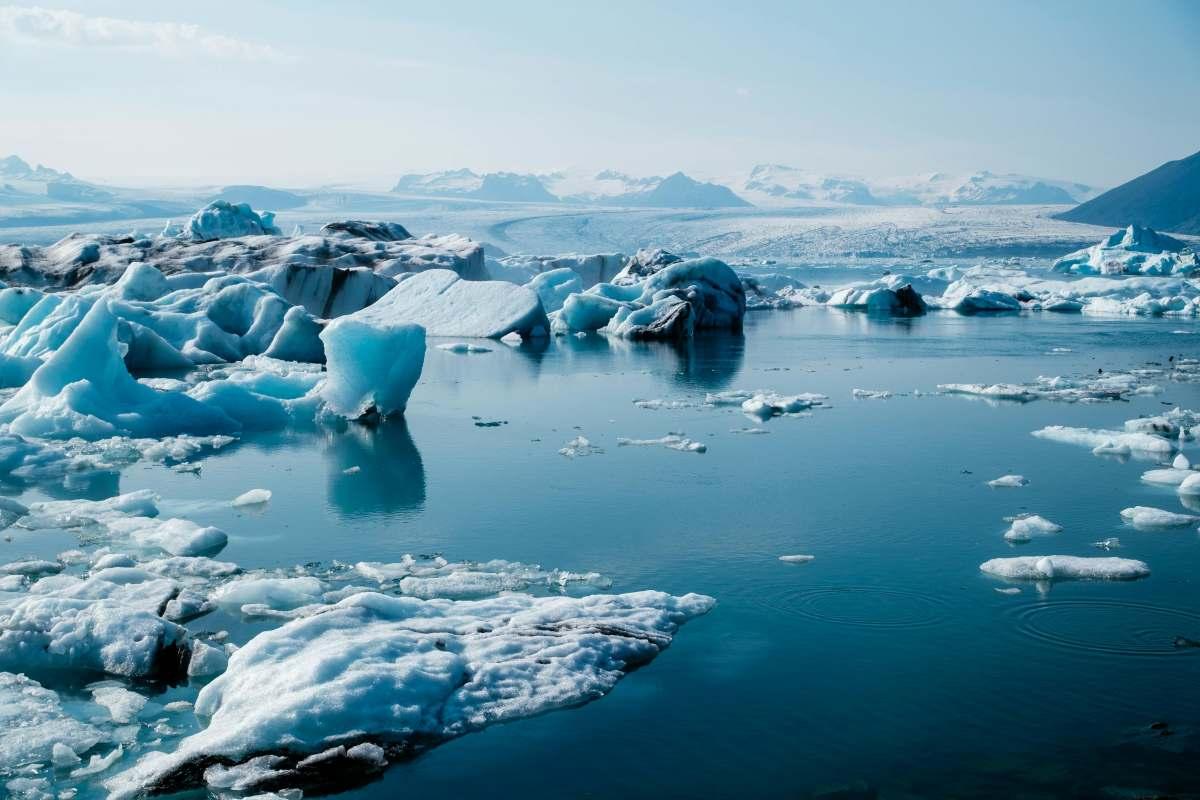
Visual of glaciers melting due to climate change
The goal of the study, conducted by a team led by marine geophysicist Alastair Graham at the University of South Florida’s College of Marine Science (USF CMS), was to evaluate the extent of risk posed by the Doomsday Glacier. They believed that by studying and understanding the glacier’s past, they could better predict its future and take better precautions to deal with the inevitable. “In people and ice sheets alike, past behavior is key to understanding future behavior,” they noted in the press release.
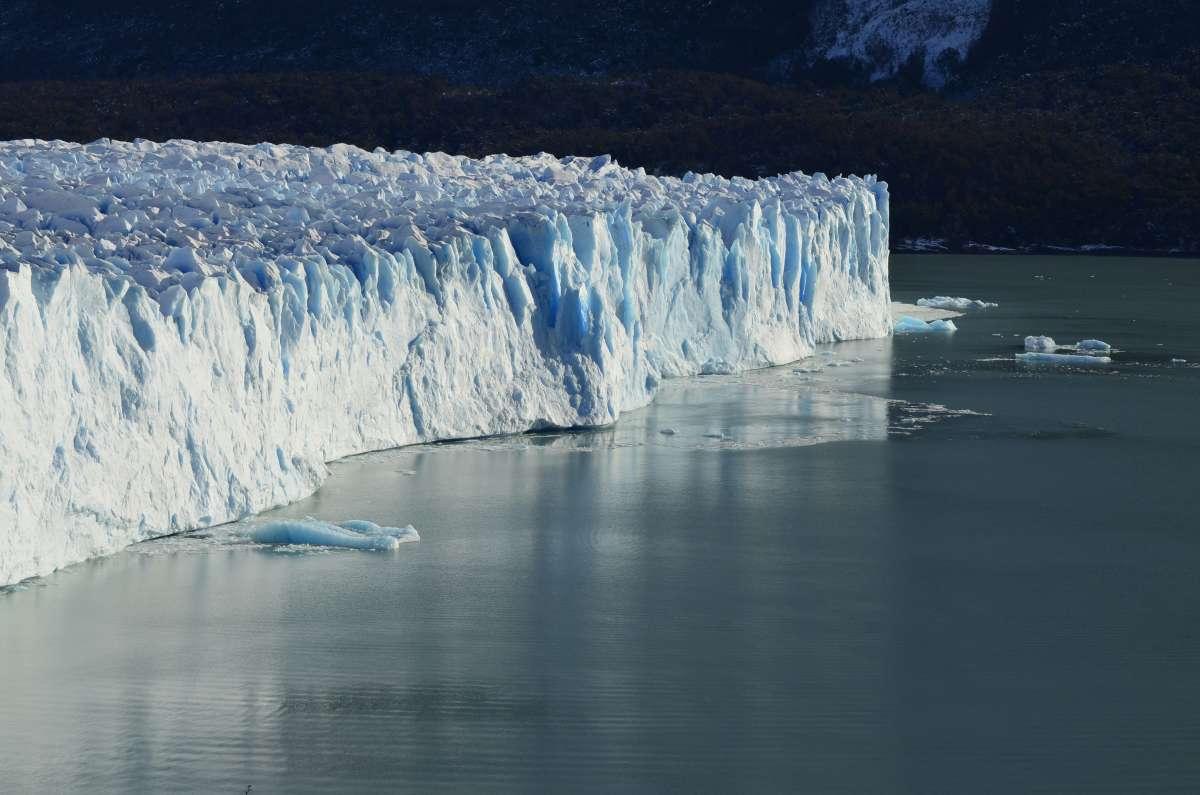
A huge iceberg surrounded by a lagoon of liquid water
They mapped the seafloor with high-resolution underwater drones, which acted “like a crystal ball” in revealing information about its current status as well as its rate of disintegration. They documented more than 160 parallel ridges, ”like a footprint,” as the glacier’s edge bobbed up and down with daily tides. “It’s as if you are looking at a tide gauge on the seafloor. It really blows my mind how beautiful the data are,” lastair Graham, the USF marine geophysicist who led the study, said in the press release.
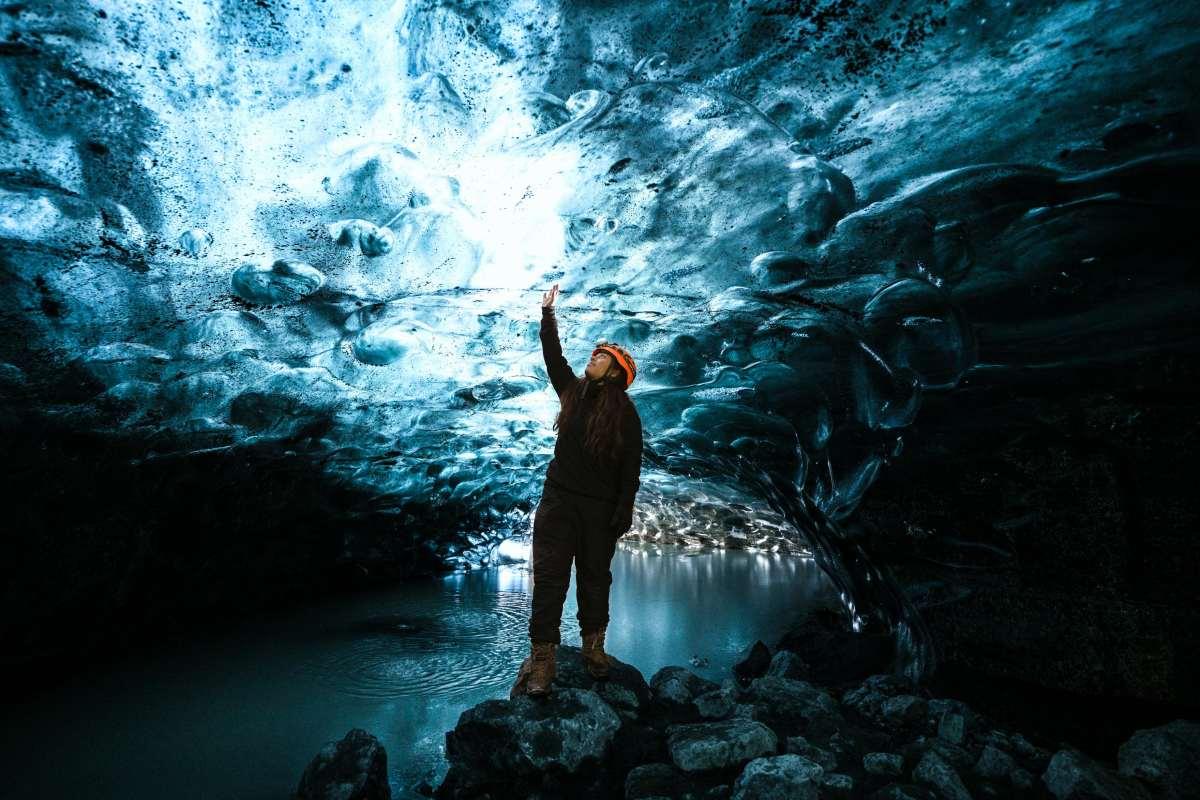
A researcher standing inside a glacial ice cave inside it.
They estimated that at some point in the past, the base of the glacier dislodged from the seabed and retreated at a rate of 1.3 miles per year. This disintegration occurred “as recently as the mid-20th century,” said Graham. If the disintegration continues at this rate, the sea levels could soon rise by 16 feet, according to CNN. “Thwaites is really holding on today by its fingernails, and we should expect to see big changes over small timescales in the future – even from one year to the next – once the glacier retreats beyond a shallow ridge in its bed,” said marine geophysicist and study co-author, Robert Larter, from the British Antarctic Survey.
Thwaites has been retreating at an alarming rate, mainly as a fallout of global warming. Its rapid melt rate even prompted some scientists to call it the “weak underbelly of the West Antarctic ice sheet.” Although some scientists have tried blaming the Antarctic ice sheet, the ice itself is not sluggish. It’s the heat seeping in that is eroding the protective icy blanket, little by little. Reflecting on this scenario, Graham said, “Just a small kick to the Thwaites could lead to a big response.”