
Experts Left a Camera Underwater in Washington for 100+ Days — the Result is Completely Unexpected
Published Jan. 20 2026, 8:42 a.m. ET

Seal swims past tidal turbine.
As energy demands compound, the need for equipment like tidal turbines increases. Tidal turbines are submerged underwater to generate electricity from moving tides. Because they are not a natural presence in the water, many experts question how aquatic creatures respond to them. This question becomes more pertinent when the fact that the creatures could lose their life if they enter the turbine comes into consideration. To figure out how aquatic creatures respond to the new presence, a team of scientists from Washington State took the help of a spy camera. Findings associated with this footage have been published in the journal PLOS ONE. The camera captured underwater footage for 109 days and provided some interesting insights.
In total, the camera remained for 141 days in the narrow entrance to Sequim Bay’s tidal channel. A four-bladed turbine was already placed above the seabed at the site. Experts were able to locate 1,044 unique interactions between the marine creatures and the turbine from the footage. Researchers noted definite behavioral patterns followed by different creatures. Schools of Pacific herring swam through the rotors of the equipment, cormorants specifically avoided the turbine, and harbor seals stopped before carefully approaching whenever they came face-to-face with the facility.
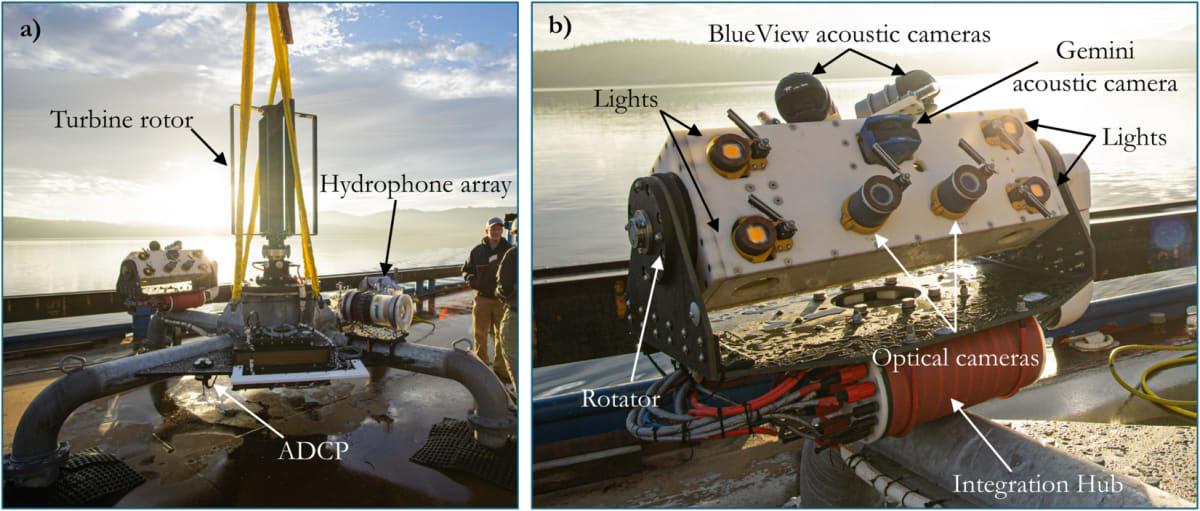
Turbine and monitoring equipment.
Ninety-two seal interactions came to light from the footage. These interactions were spread across both day and night. Marine mammals clearly exhibited strong swimming talent and the ability to avoid collisions. On 406 occasions, pigeon guillemots and double-crested cormorants were seen, who mostly appeared near the turbine during high tides, when the equipment was not functioning. On the other hand, 224 individual fish and five schools came close to the turbine, of which only four fish collided. Three of these fish continued moving, which suggested that the interaction was not always deadly. Machine learning software also identified krill, crabs, and jellyfish around the turbine.
During the analysis, experts detected no collisions between the turbine and seals or seabirds. The study claims that fish enjoyed a 98% safety rate when it came to such interactions. “The risk for collisions is low,” said Christopher Bassett, a co-author and research scientist at the University of Washington, per Inside Climate News. Researchers are ecstatic with the findings, as they believe it will help the U.S. in developing their tidal power potential. Officials have been unable to authorize plans like the San Francisco Bay Tidal Energy Project because of a lack of safety data linked to it. The study provides first-of-its-kind safety insights associated with a tidal turbine in North America.
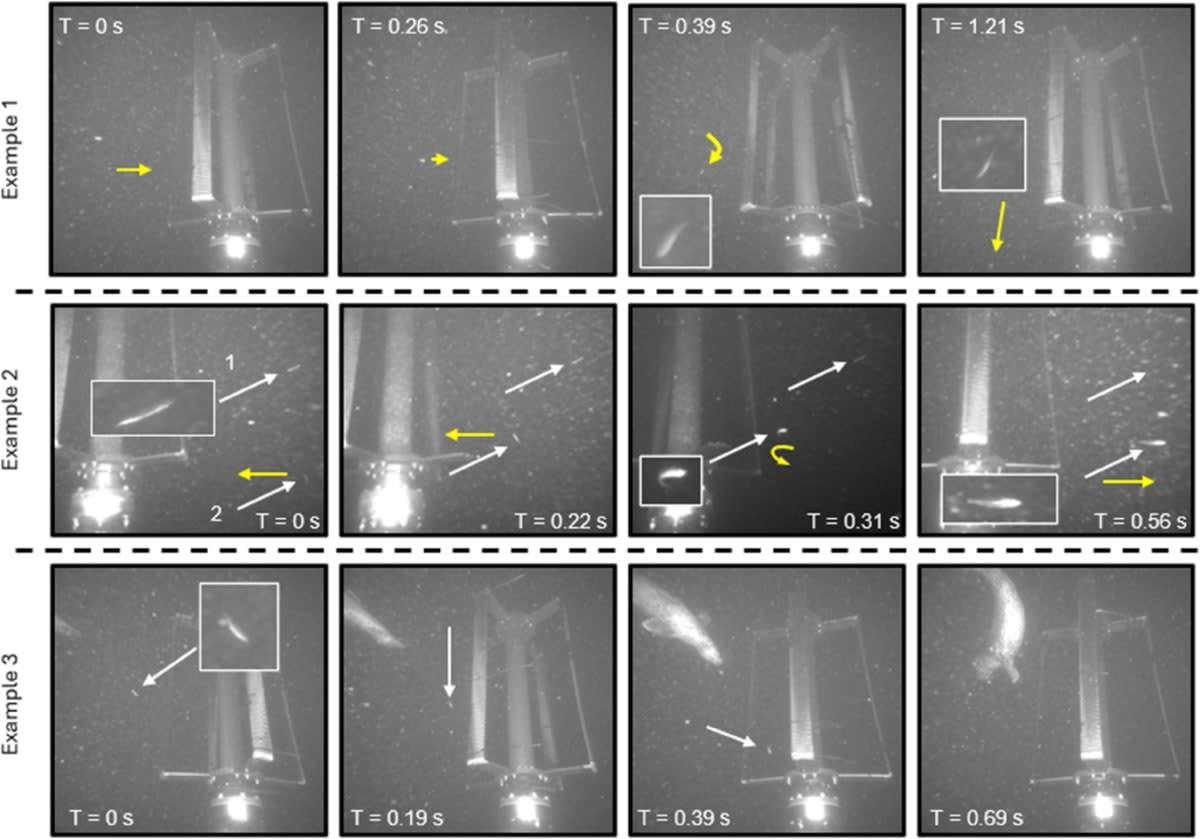
Examples of evasion events while the turbine was operational.
Critics claim that such turbines could be damaging to marine life, which discouraged regulators from approving projects. “The limited number of long-term turbine deployments has meant there is a lack of site-specific data to fully assess potential environmental impacts,” said Elisa Obermann, executive director of Marine Renewables Canada. “Findings from long-term research showing no collisions between marine life and tidal technology are a positive milestone for the industry and a significant step forward,” she said. Researchers have not yet determined the findings as conclusive, though they are encouraged by the results. This is because the turbine under consideration is fairly small, with an area of ten square feet. A larger piece of equipment could produce different results.
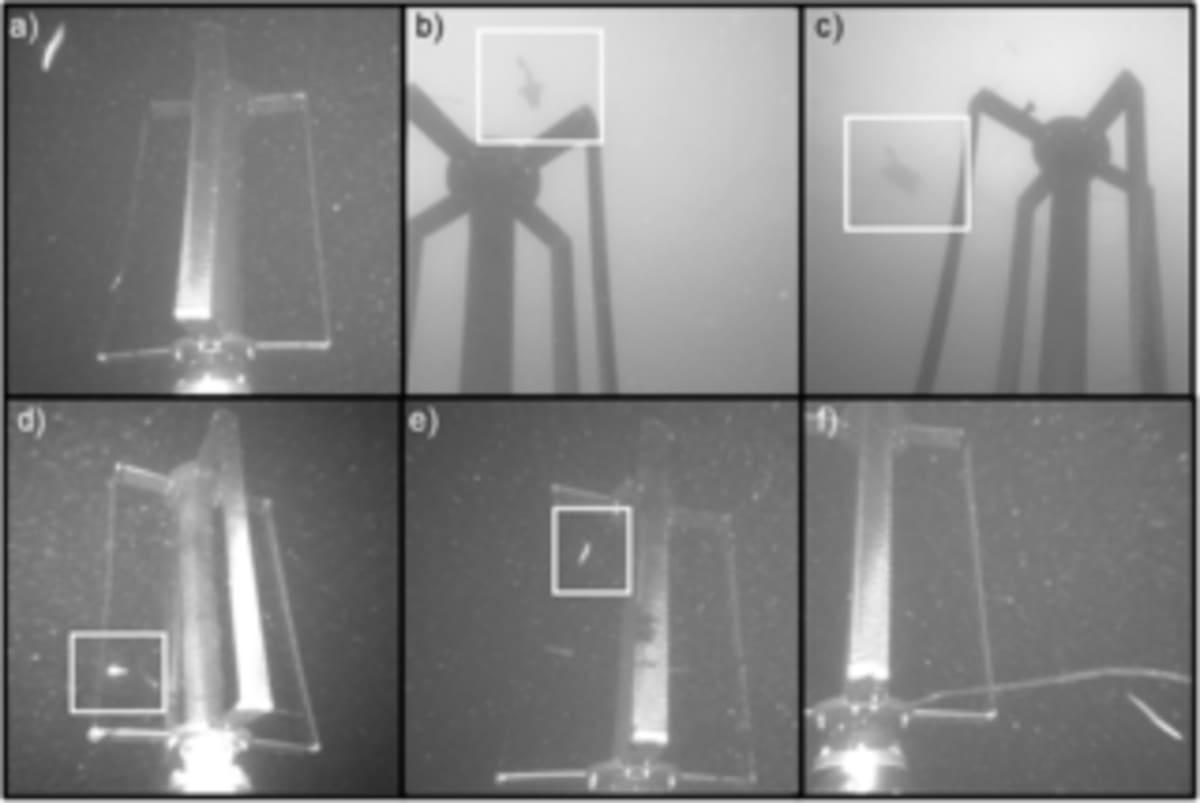
Examples of individual fish when the turbine was rotating
Another limiting factor was that a lot of the footage sampling at night was likely missing, according to Discover Wildlife. Several animal interactions during that time have possibly not been investigated. Seeing the results, scientists put forward the suggestion of employing a feature of slow start in the turbines to ensure that creatures had ample time to escape the equipment. Researchers are now looking forward to investigating the environmental impact of large-scale turbines, stated Inside Climate News. “This collective body of evidence, however messy, should ultimately inform any assessments of risk,” said Bassett.