
America’s Favorite Cooking Oil Found to Be a Silent Culprit Behind Obesity — New Study Says
Published Dec. 1 2025, 7:45 a.m. ET

Woman pouring soyabean oil from a glass jar into a bowl of salad while smiling
Americans are crazy about soybean oil, even more than olive oil and coconut oil. Walk along a streetside, and you may find a vendor fanning his grill to make onion rings, or walk into a café’s kitchen, and you may smell the fishy scent of this oil as a chef whips up a bowl of French fries, a baker scorching balls of dough into crunchy cookies.
Soybean oil, this candidate carries a reputation of high smoke point and tremendous heat performance, which makes it favorable to those who are interested in enjoying deliciousness while adhering to cholesterol-free plant-based proteins. At times, however, this seemingly healthy source of fat and protein can become wicked and trigger a mechanism that could cause your body weight to balloon up, according to a study published in the Journal of Lipid Research.
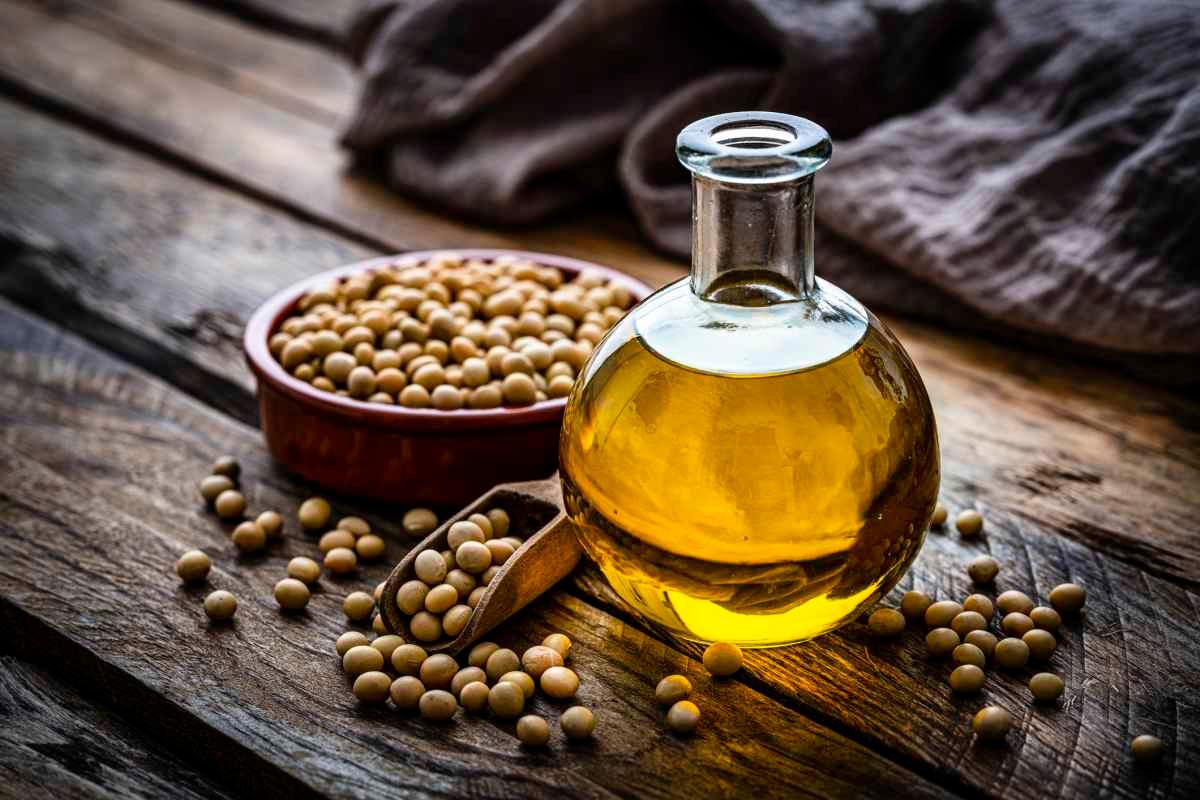
Soybean oil in a glass pitcher and raw soybeans spattered around it on a wooden countertop
Soybean oil isn’t inherently evil, Frances Sladek, a UCR professor of cell biology, shared in a university press release, but the “quantities in which we consume it are triggering pathways our bodies didn’t evolve to handle.” All thanks to a notorious compound that lurks in this oil. Linoleic acid is what we are talking about. When consumed in large quantities, this seemingly harmless compound can be assaulted by the forces of heat, pressure, and oxygen, resulting which they start conversion into molecules of “oxylipins.”
Too many oxylipins swimming in the blood can trigger the production of inflammatory and fat molecules, rapidly contributing to weight gain. These chemical deductions caused scientists to conclude that soybean oil is directly linked to obesity. This also explains why some people are more vulnerable to the metabolic impact of soybean oil. Reflecting upon the observations, Sonia Deol, UCR biomedical scientist, said, "This may be the first step toward understanding why some people gain weight more easily than others on a diet high in soybean oil."

Woman pouring cooking oil from a bottle in a pan
To arrive at this conclusion, researchers at the University of California, Riverside, recruited two groups of mice. In an isolated experiment, they fed a high-fat diet rich in soybean oil to one group. These mice gained substantial weight. Whereas the second group of mice, which were genetically engineered, did not gain weight. They utilized a previous study from 2015 that said that soybean oil is more obesogenic than coconut oil to examine the observations. Pulling along the results of this study, Sladek said, “Now we have the clearest evidence yet that it's not the oil itself, or even linoleic acid. It's what the fat turns into inside the body."
The genetically-engineered mice displayed a smaller production of fatty molecules and healthier liver tissue despite consuming the same soybean oil-rich diet as the other group of mice. These mice also displayed better-functioning mitochondria, better metabolic rate, and an overall resistance to weight gain. Further study revealed that the engineered mice had far lower levels of two particular enzyme families that converted linoleic acid into oxylipins. These enzymes, researchers said, operate similarly in all mammals, including humans, with their levels varying based on genetics, diet, and other biological factors.
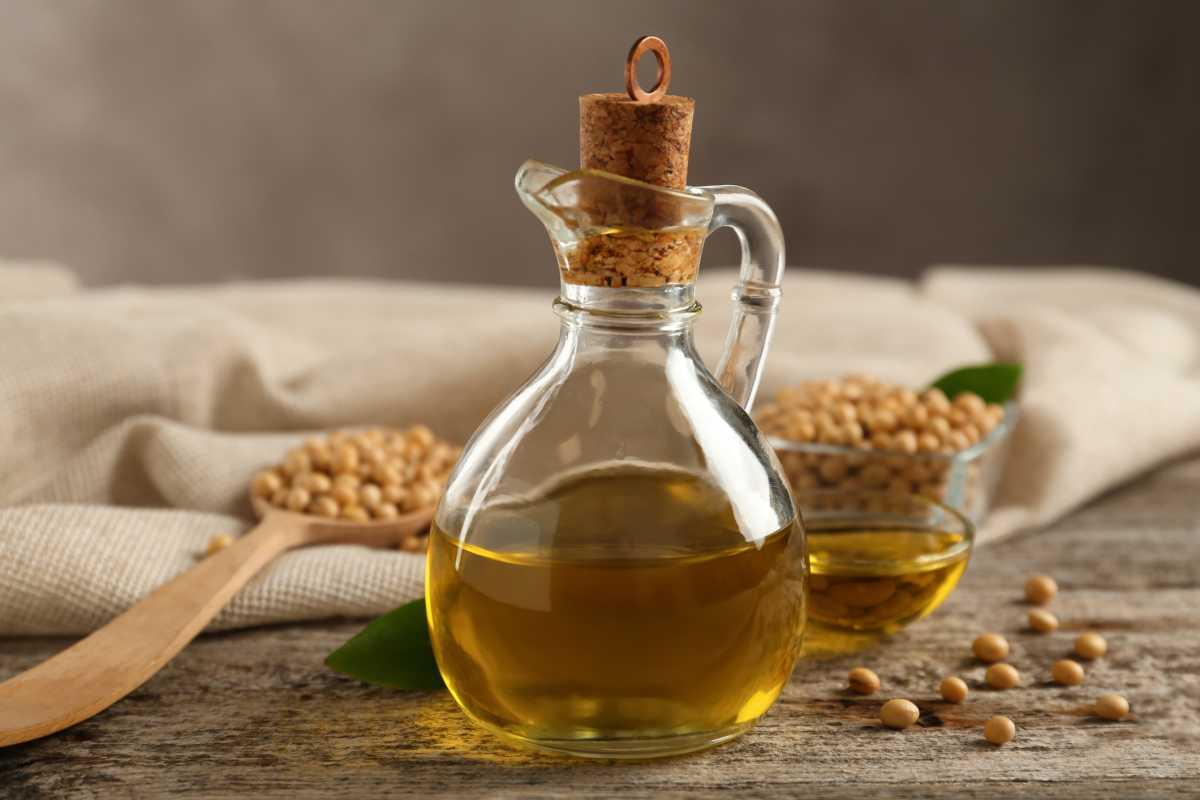
Soybean oil in a glass pitcher and raw soybeans spattered around it on a wooden countertop
Now that soybean oil makes up as much as 10 percent of America’s total calorie production, the study comes as a notification alerting people to how much of it they should consume and at what point they should stop. USDA estimates that soybean oil makes up as much as 90 percent of America’s oilseed production. Within only the last year, the country produced a whopping 27 billion pounds of this ingredient. It took us 100 years, according to Sladek, to realize the link between cigarettes and cancer. “We hope it won’t take that long for society to recognize the link between excessive soybean oil consumption and negative health effects.”