
A Year After the LA Wildfires, Researchers Have Now Uncovered a Lingering Health Crisis
Updated Jan. 15 2026, 9:36 a.m. ET

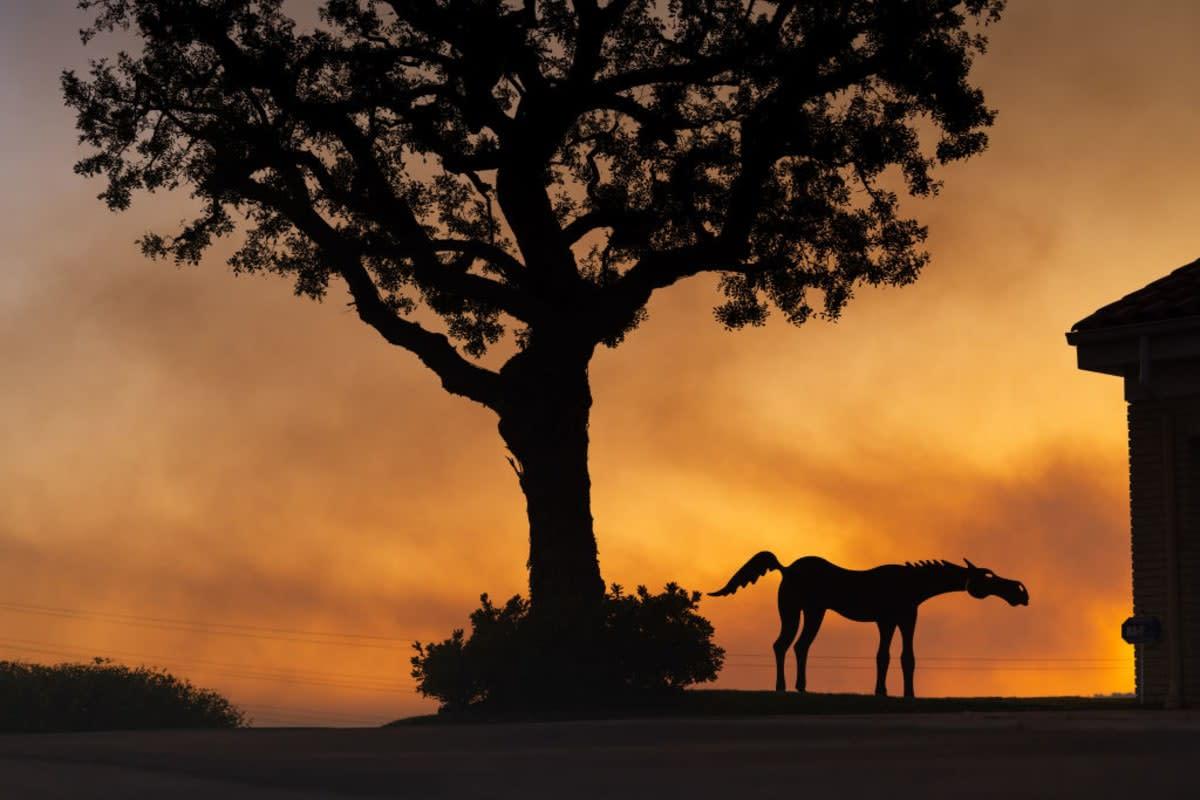
Firefighters trying to quench the wildfires that ravaged Southern California in January 2025
It's been a year since the Palisades and Eaton fires, and Los Angeles residents continue to suffer a delayed wave of serious illnesses and significant psychological trauma. Apart from the direct physical damage, the fires that began on January 7, 2025, created a unique toxic soup as over 16,000 structures, including houses, vehicles, and specialized facilities like dental clinics, were incinerated, UCLA air pollution expert Yifang Zhu told NPR. Recently, UCLA's health researchers, doctors, and scientists, who had been monitoring the aftermath of the wildfires, shed light on some of the long-term impacts the wildfires had on the city's residents.
Powerful winds fueled multiple wildfires that ravaged Southern California in January 2025
Conditions leading to the devastating wildfires started between 2023 and 2024. Extreme humidity followed by record heatwaves and sudden droughts dried L.A.'s air, and vegetation went dry. In early 2025, a sinister gust of Santa Ana's winds swept through L.A.'s foothills and initiated an aggressive eddy that whisked above the withered vegetation. Wildfires erupted, several of them, one after the other. The scene was apocalyptic. Bright red Sun cast an orange glow, smoke billowed, and ash rained down from the sky. Orange flames jumped over the houses, climbed the treetops, and within just a few hours, Southern California collapsed in a heap of glowering embers; when the blaze ended, all that remained was soot, hot ash, and an irreversible trauma.
Smoke gripped everything from batteries to buildings, from cars to furniture. Sprays of smoldering ash covered the sidewalks. Forests were flattened to rubble. All that remained after a month was a shadow of the former L.A. Several people abandoned their homes, cramming everything they could in suitcases, as the fires continued to spread. During this time, the UCLA team was able to capture the impact of the fires on L.A.'s atmosphere. "The fire impact doesn't really disappear with the active flame," Zhu told NPR.
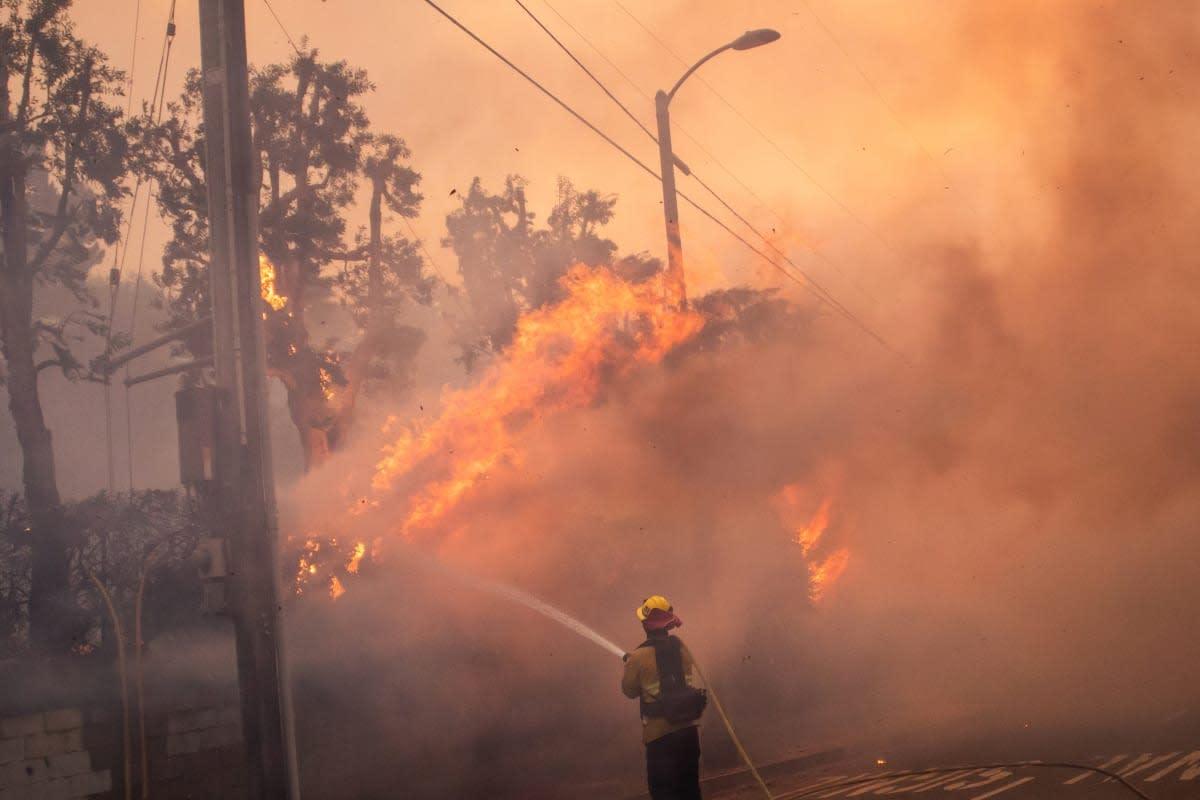
Firefighters spraying water to quench the wildfires that ravaged Southern California in January 2025
The researchers observed levels of benzene, a carcinogen, decreased after the flames were out; however, some gases, like toluene and carbon tetrachloride, became more concentrated inside people's homes a few weeks after the fire. Another research team found a separate carcinogen, hexavalent chromium, lingering in the air long after the fires were out. Hexavalent chromium, also known as chromium (VI) or Cr(VI), is a highly toxic form of the metallic element chromium that can cause severe respiratory issues and lung cancer.
Additionally, the Official Journal of the International Society for Environmental Epidemiology reported that the wildfires exposed L.A. to a flame retardant called Phos-Chek,7, which may be enriched with heavy metals. In the first 90 days, doctors reported a 46% increase in heart attack cases at LA's Cedars-Sinai hospital, as per JACC Journals. It was followed by a 118% increase in blood test abnormalities, including metabolic stress, dizziness without clear signs of dehydration, and unusual chest pains, as per The Guardian.
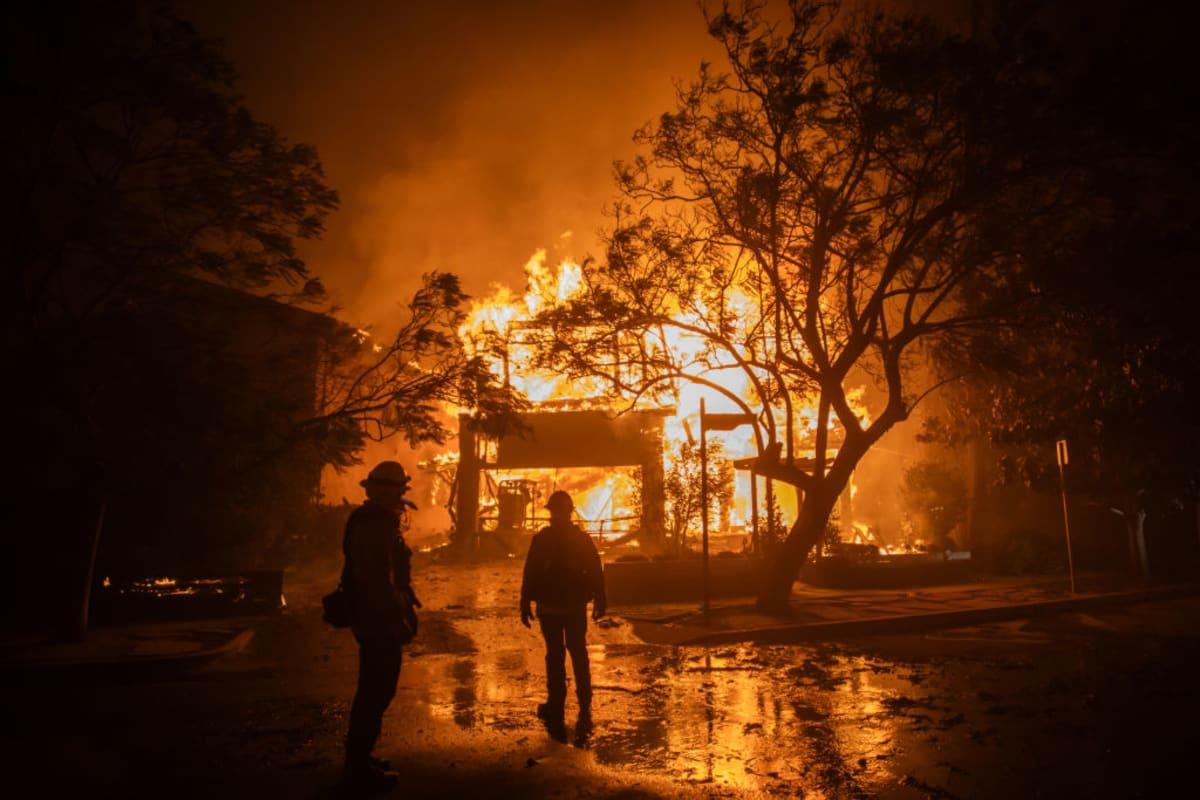
Powerful winds fuelled multiple wildfires that ravaged Southern California in January 2025
The fires didn't just take a toll on people’s physical health, but also their mental health. Dr. Emanuel Maidenberg said people are going through prolonged anxiety, panic attacks, depression, and stress. Everyone is trying to process their trauma, but emotional clouds of grief, sadness, fear, and shock hover above their heads, causing them to remain hypervigilant, cautious, and in a state of shock.
Dr. David Eisenman, a UCLA researcher who enrolled over 4,000 people to test the long-term health impact of the 2025 wildfire, said the catastrophic event changed much of L.A. negatively. In conversation with The Harvard Gazette, psychologists said the best thing doctors can do right now is to make people feel "safe" and make sure their basic needs are fulfilled. In the end, the same wildfire that has left L.A. vulnerable has also unspooled a list of lessons in climate adaptation, controlled, timely fires, and emergency management. How these lessons are implemented, only time will tell.