
After Spending 40 Stressful Years In Captivity, Charlie the Elephant Finally Tastes Freedom
Published Sept. 17 2025, 12:45 p.m. ET

People are taking a photo of an elephant in a zoo.
It has long been observed that animals seem to be more joyful and relieved when they are in their natural habitat than in captivity, no matter how well they are taken care of. This is probably because they get a chance to move freely, explore their surroundings, and engage in activities that were impossible to do in confined spaces. This reminds us how important natural habitats are for any animal. In August last year, one such news captured the hearts of people worldwide. It was revealed that Charlie, the last elephant at South Africa’s National Zoo, was finally set free after spending around four decades in captivity. Conservationists and animal lovers alike celebrated this moment, seeing it as a victory for animal welfare.
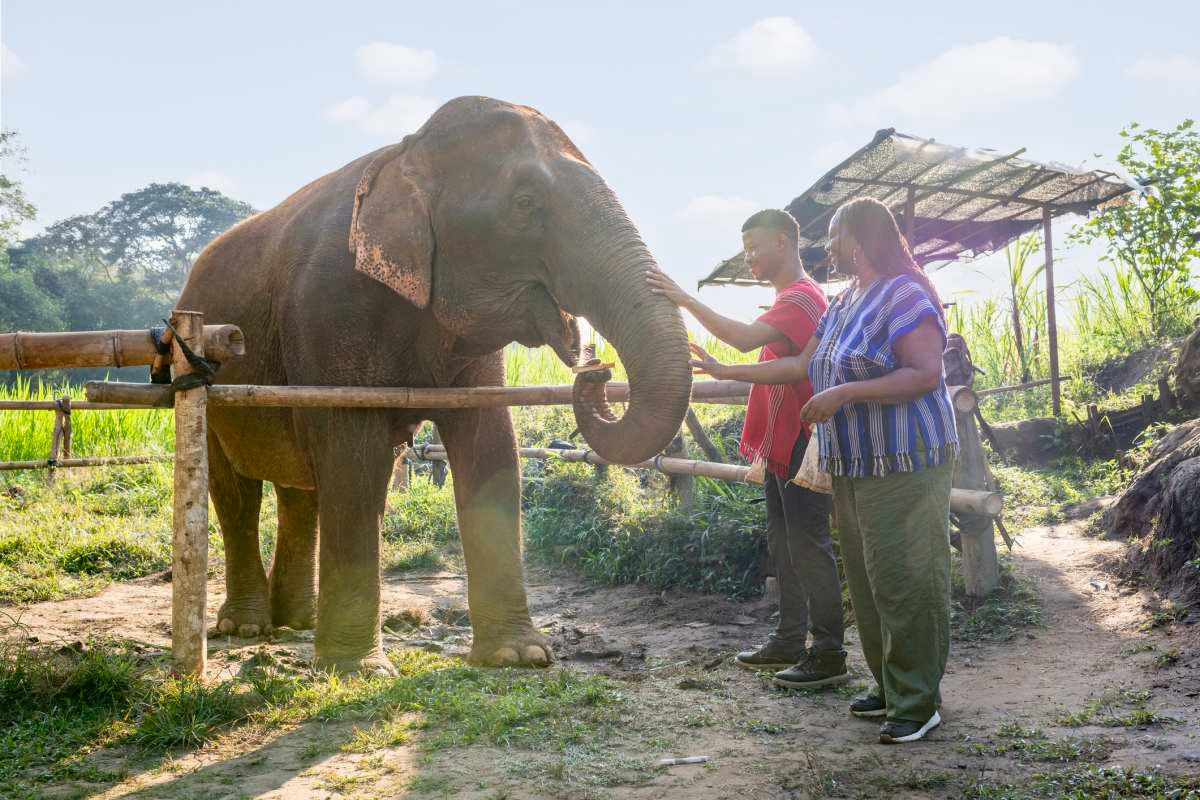
An image of people meeting an elephant.
In 1984, Charlie was separated from his family in Zimbabwe when he was just a little calf and was sold to the Boswell Wilkie Circus, where he entertained the crowds for years. Later on, in 2001, he was moved to Pretoria Zoo, where he stayed until 2024, as reported by IFLScience. Finally, the EMS Foundation announced last year that Charlie was all set to begin his new life after traveling for four hours from the zoo to Shambala Private Reserve in Limpopo. In an official statement, they wrote, “This historic event is a result of years of negotiation with the South African government after the EMS Foundation and the Pro Elephant Network provided scientific evidence that they do not belong in captivity.”
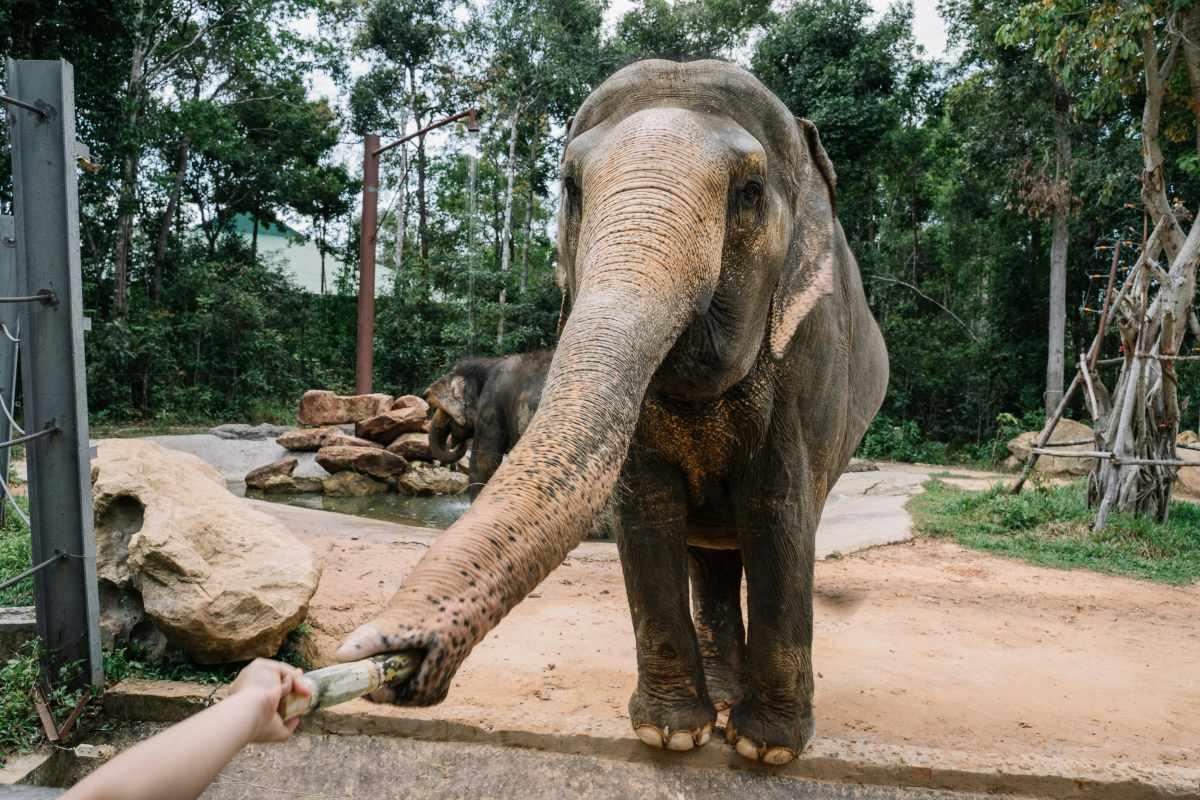
A person feeding a brown elephant.
As reported by the Journal of African Elephants, the foundation further revealed some of the heartbreaking incidents that Charlie faced throughout his time at the zoo. He is said to have seen three of his elephant companions die prematurely, and also lost his daughter when she was just around a month old. Back in 2019, people worried that Charlie was also displaying stress-related signs due to captivity. However, the South African National Biodiversity Institute rejected this, explaining that his actions were habits formed during his circus years and were not something that he could entirely forget, as reported by the BBC.
The foundation wrote, “We hope that his rebirth onto his new land and new life will go some way to healing his wounds. Going forward, the EMS Foundation, Shambala, and our partnering veterinary and behavioral experts will be closely monitoring and supporting Charlie.” They planned to keep Charlie alone initially, so that he gets used to his new surroundings, and later he would join Shambala's elephant herd once he's comfortable. Speaking about this, Nontsikelelo Mpulo, Director of Marketing, Communication and Commercialisation at the South African National Biodiversity Institute, said, “The decision was made more than a year ago to retire Charley. Among several factors that were considered was his advanced age.”
Meanwhile, Dr. Amir Khalil, the veterinarian doctor taking care of Charlie’s health, said that even after years of hardship in captivity, recovery is always possible. Addressing worries about how Charlie might adapt, he revealed positive progress—saying the elephant seemed thrilled to hear distant calls from other elephants and was trying to reach out to them vocally. He said, “We are convinced that step by step he will get used to all these new experiences.” The dedicated team at the foundation later began their fight to free three elephants still present in the Johannesburg Zoo.