
A Space-Traveling Mouse Just Gave Birth—Here's Why This Could Be a Big Deal for Future Exploration
Published Jan. 2 2026, 4:59 a.m. ET

(L) A spacecraft, (R) A mouse sitting on a heap of grass (Representative Cover Image Source: Getty Images | (L) Alejomiranda, (R) Robert Travis Smith)
On October 31, four mice aboard China’s Shenzhou-21 spacecraft set forth on a two-week journey into space, about 250 miles above Earth, at the Tiangong Space Station. On November 14, when they returned home, one of the females was found to be pregnant. The episode may seem totally insignificant, except when looked at from the science’s point of view. The fact that the mouse got pregnant marks a breakthrough in space reproduction research and unlocks a set of exciting possibilities for humans on future space missions.
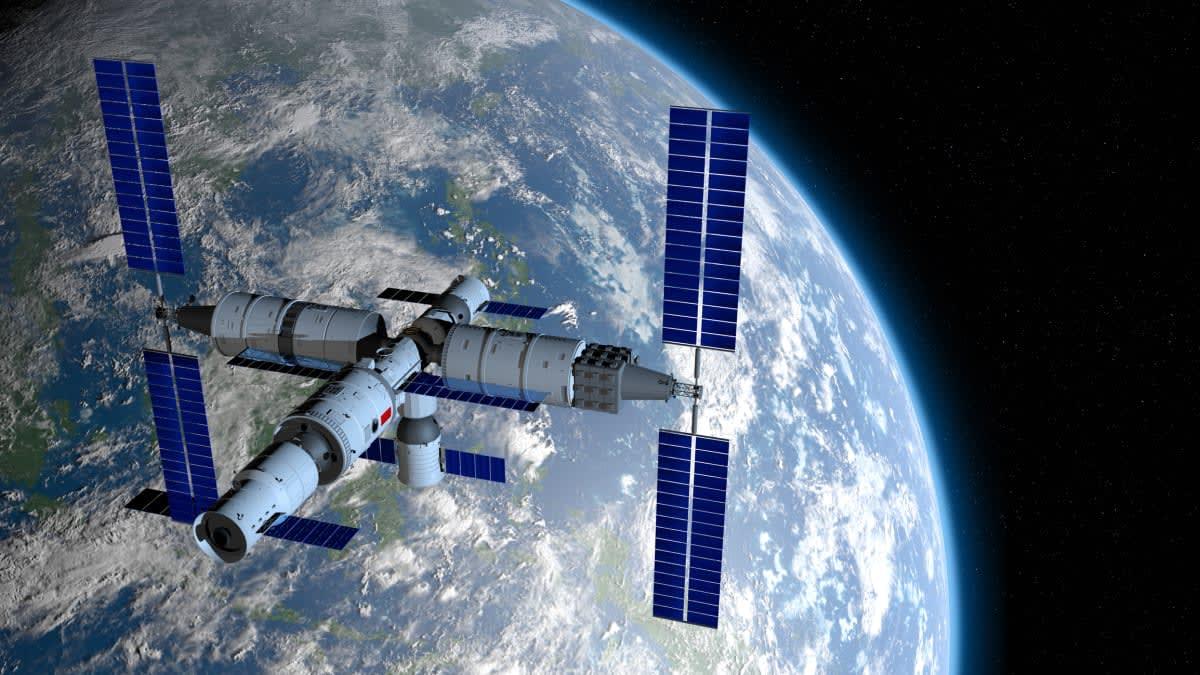
View of TIANGONG 3 - Chinese space station orbiting Earth
Numbered 6, 98, 154, and 186, the mice were housed in a specialized habitat designed to mimic Earth’s optimal conditions, including controlled temperature, food, and waste management. The lights in their little chamber around them turned on at 7 a.m. and off at 7 p.m., allowing their bodies to maintain their circadian rhythms. While the tiny rodents jostled in microgravity, weightlessness, and radiation, they were served with a nutrition-rich buffet. Foods were nutritionally balanced but intentionally hard to satisfy their need to grind their teeth. A directional airflow system kept their habitat clean by blowing hair and waste into collection containers, per Universe Today.
After two weeks, they safely splashed down on Earth, also bringing along some good news. One female was pregnant. On December 10, she gave birth to nine healthy pups inside a facility in the Technology and Engineering Center for Space Utilization (CSU) of the Chinese Academy of Sciences (CAS). This pregnancy offered a sliver of hope to scientists investigating how space’s conditions influence reproduction. CAS researcher Wang Hongmei reflected that the mission showed that “short-term space travel did not impair the reproductive capability of the mouse."
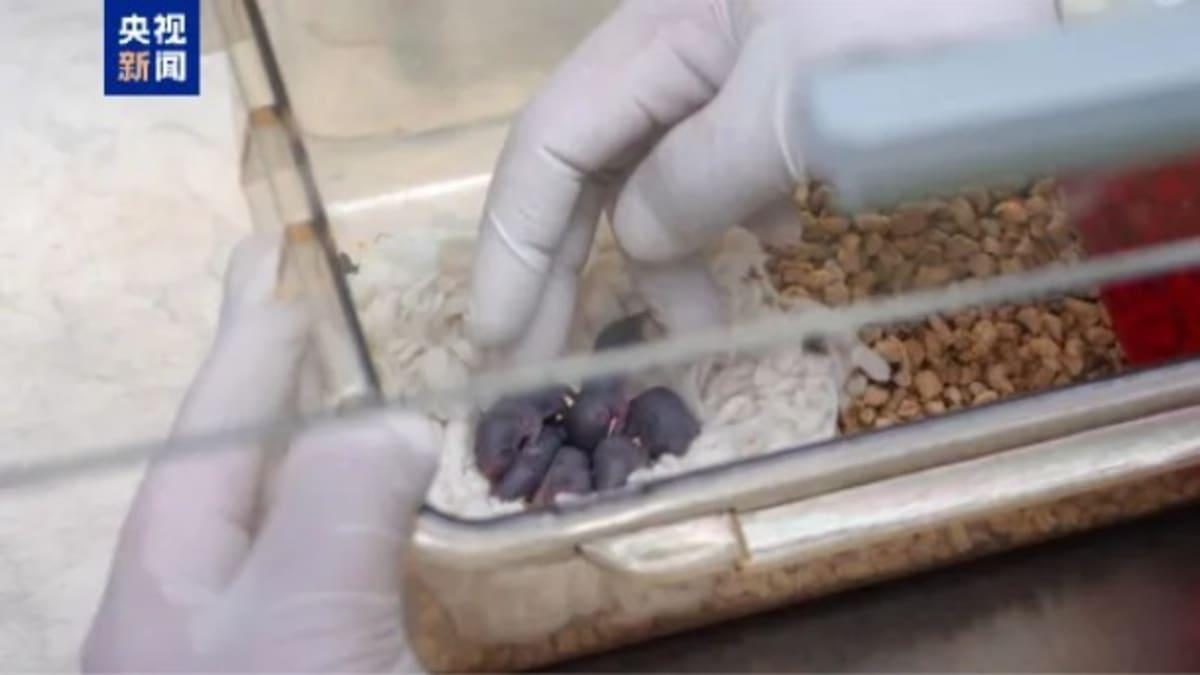
The space mouse delivered 9 tiny pups on Dec 10.
This is not the first time reproduction has been monitored in space exposure. In a previous study published in Scientific Reports, scientists caged 12 male mice and sent them on a space mission. When they returned, scientists used their sperm to fertilize female mice back on Earth. Experiments revealed that the physiological function of male reproductive organs at the molecular level and the sperm fertilizing ability of males returned from ISS were quite normal. No inconsistencies were found in growth rate or fecundity.
In this case, the four mice had to face unexpected challenges as the two-week mission got extended. By the end of their odyssey, the mice started facing food shortages. The ground team took rapid measures. Water was pumped into their boxes through external ports. Astronauts used their own ration supplies to feed them biscuits, corn, hazelnuts, and mostly soybean milk. An AI monitoring system kept a constant track of their movements, eating patterns, and sleep cycles so scientists would know what they needed in real time.
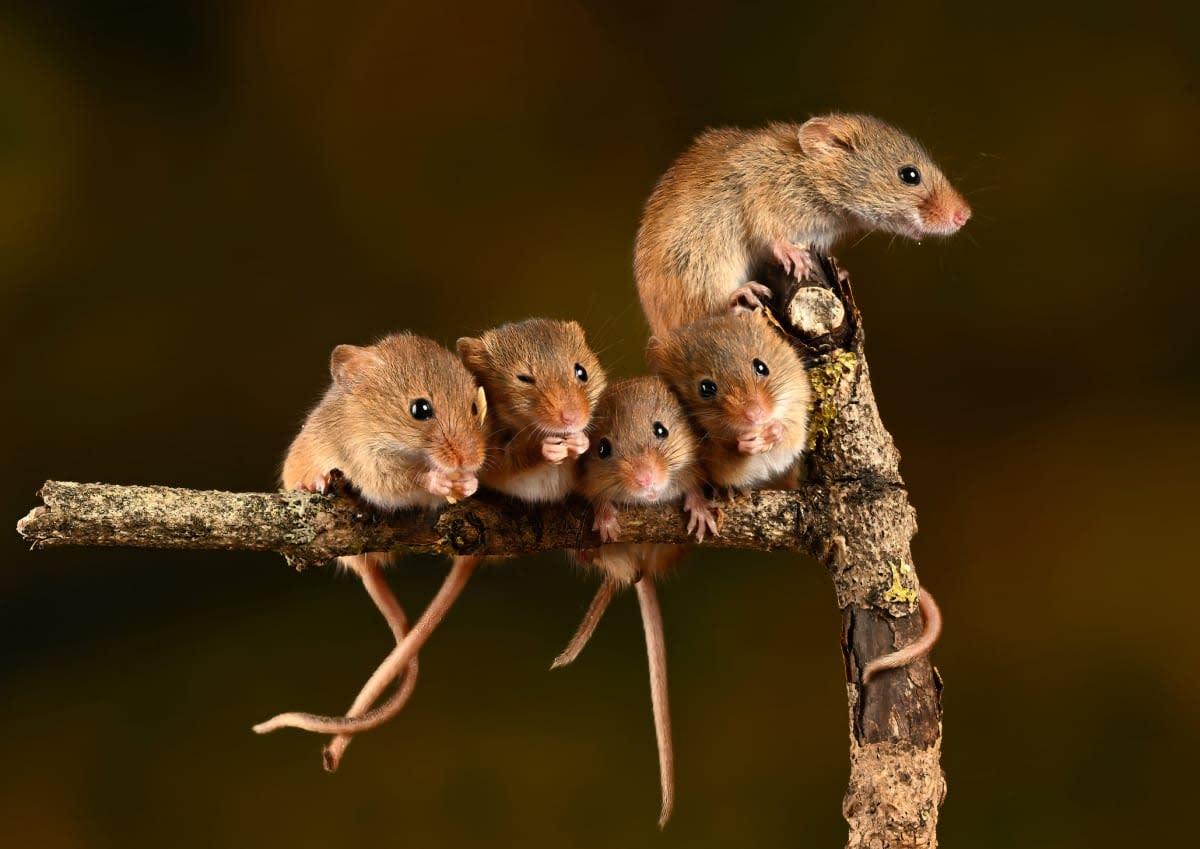
Mice perched on a branch
Of the nine pups that the pregnant female birthed on Earth, six survived. According to researchers, this is a normal survival rate. This event offers precious insights into how microgravity influences mammalian reproduction and early development. Since mice mirror human biology, scientists can study their bodies to understand how they handle the physiological and psychological stresses when suspended in space, and most of all, how they reproduce quickly without the Earth's gravity. The mission could open possibilities for human astronauts who may like to set up colonies on the Moon and Mars in future space missions and reproduce off Earth.