
Scientists Are Trying to Make Space Food With Thin Air and Astronaut Urine — But Is It Possible?
Published Nov. 10 2025, 9:43 a.m. ET

Astronauts eating food in space.
Space exploration can be endless if the required resources are available. Space agencies have high hopes of sending spacecraft and possibly humans to the Moon, Mars, and beyond, but some challenges may hold them back. One of those hurdles is food! Till now, astronauts have been feeding on food produced on Earth and transported to the International Space Station. Although the method of storing food is a viable option for missions in low Earth orbit, it will be challenging and impractical for distant missions. The European Space Agency (ESA) has recognized the gap and is working towards a solution, potentially bringing long-distance space missions one step closer to success.
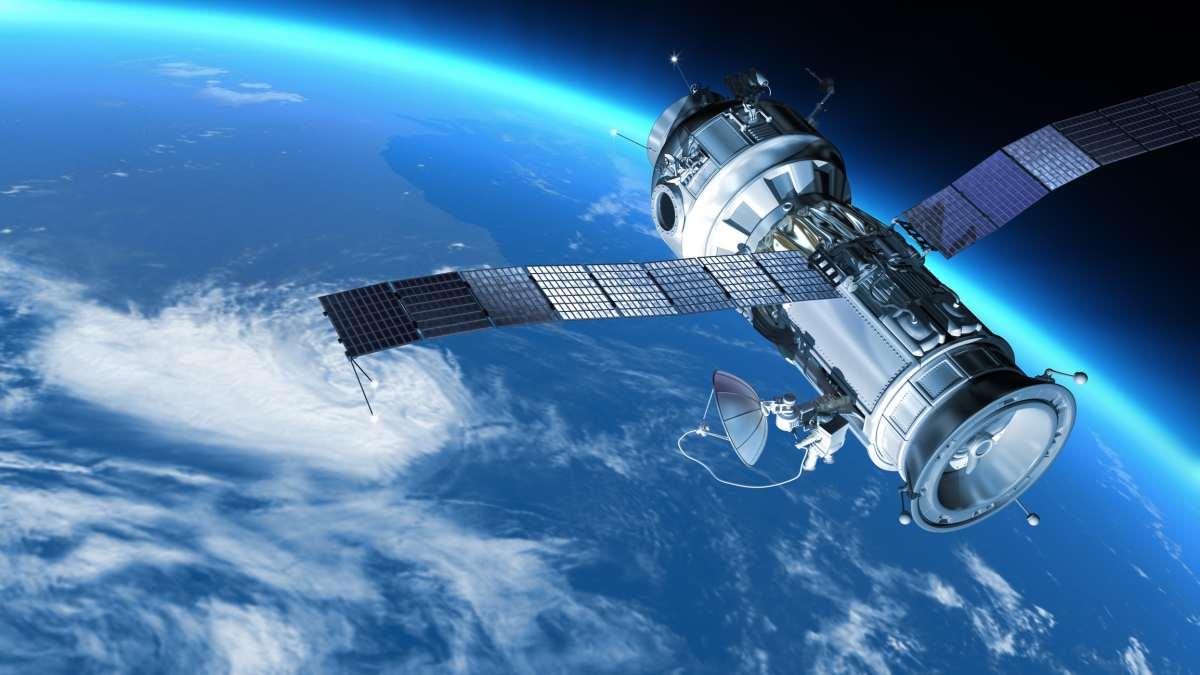
NASA satellite hovering around planet Earth collecting data
The space agency has launched the project HOBI-WAN, which stands for "Hydrogen Oxidizing Bacteria In Weightlessness As a source of Nutrition." The project, part of the Terrae Novae Exploration Program, is trying to figure out the potential use of a protein called Solein that can be manufactured in space. The protein will be produced using fewer resources and will potentially eradicate the hassle of food storage. "This project aims at developing a key resource which will allow us to improve human spaceflight's autonomy, resilience, and also the well-being of our astronauts," Angelique Van Ombergen, ESA's chief exploration scientist, said in a statement.
Astronauts stranded in space or heading for long spacial missions on the moon or beyond will require "innovative and sustainable solutions to be able to survive with limited supplies." The scientists believe that Solein could be the solution to that problem. The powdered protein produced by Finnish food technology company Solar Foods is made up of microbes, air, and electricity. The gas fermentation technology is used to convert these elements into a consumable protein. The company has tested the technology on Earth, but for space, the process will be slightly tweaked. On Earth, ammonia was used as a nitrogen source, but in space, urea, a compound found in urine, will be used as the source.
A person viewing a sample through the microscope.
The company will be working in tandem with OHB System AG for the next 8 months to test this theory in real life to see if the protein can grow under spatial circumstances. If the on-ground simulated testing shows a positive result, Solein production would be tested out at the International Space Station. The project's aim is "to develop the fundamentals of gas fermentation technology to be used in space — something that has never been done before in the history of humankind," said Arttu Luukanen, senior vice president of space and defence at Solar Foods. Luukanen explained that the behavior of gases and liquids in microgravity is different due to the lack of gravity.
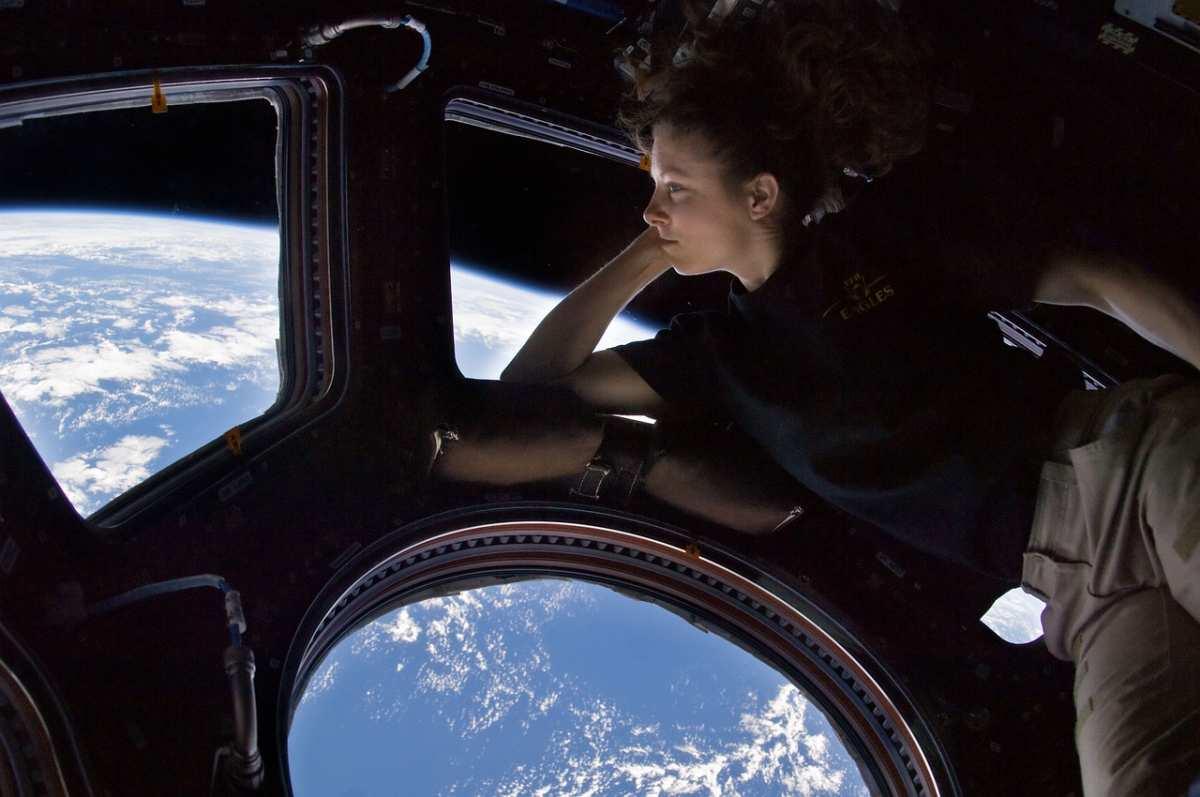
Astronaut enjoying the view of planet Earth from the window of the space station
Buoyancy on Earth causes lighter particles to rise and heavier ones to sink. But in microgravity, gases are not evenly spread, which can deprive the growing protein or organism of some crucial elements and "drastically affect the transport of nutrients and gases." That's one challenge that, if researchers successfully overcome, will be a huge win for spatial missions. Nevertheless, the HOBI-WAN project is an effective initiative by the space agency. "With this project, we the European Space Agency is developing a key capability for the future of space exploration," said Van Ombergen.