
A Chinese Lanternfly Is Rapidly Invading the U.S. And Its Wrecking Ecosystems and Costing Millions
Published Feb. 6 2026, 5:44 a.m. ET

Spotted Lanternfly in New York City.
Spotted lanternflies are thriving in the US, and scientists may know the reason. They speculate that the secret to spotted lanternflies’ sustenance may lie in the tricks they picked up in their native country, as published in the journal Proceedings of the Royal Society B. These creatures were first documented in the US back in 2014. Since then, they have expanded to 19 states in the eastern US. The spotted lanternfly (Lycorma delicatula) is a planthopper with long mouthparts that help it to suck sap from plants. The creature is native to China, and over the years, has spread to South Korea, Japan, and the US.
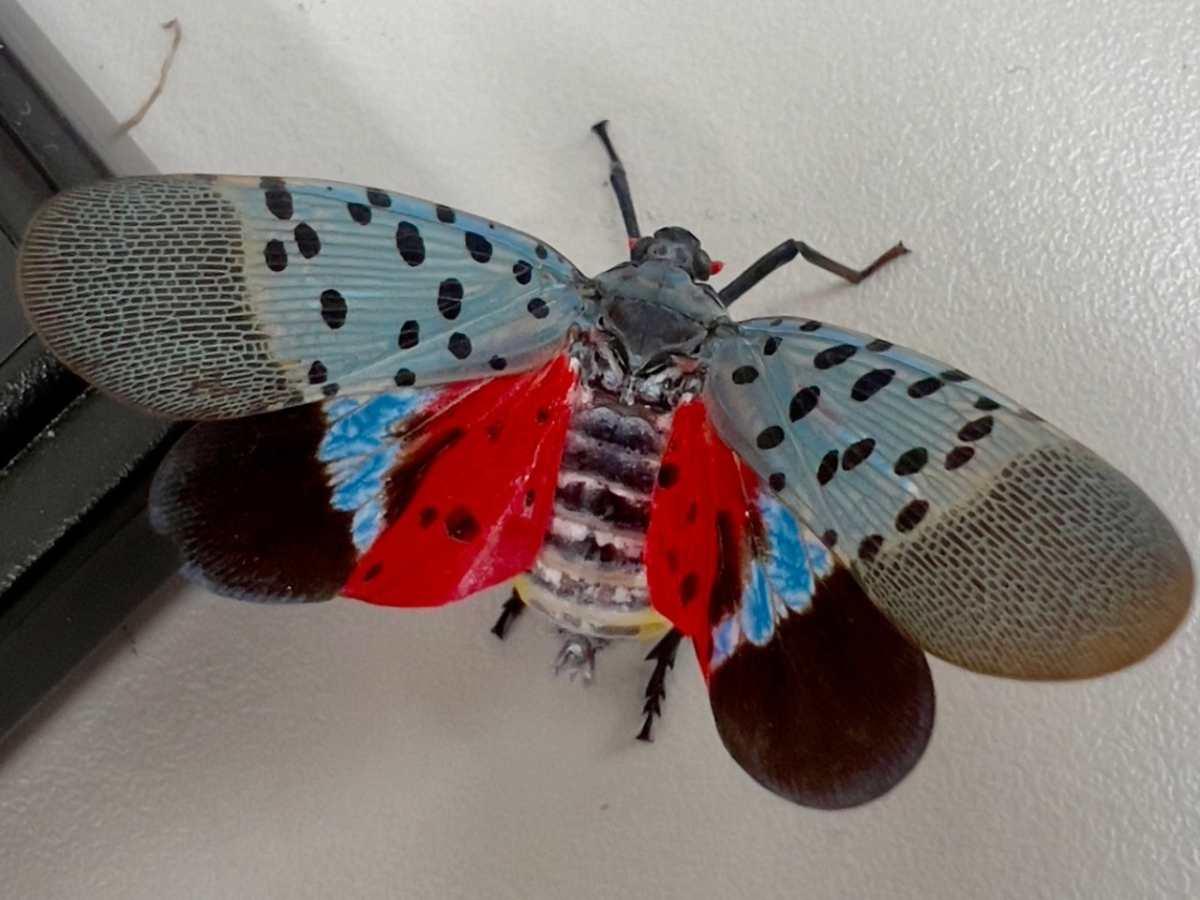
A spotted lanternfly in Shanghai. In the insect’s native China, some lanternflies have partially blue wings, unlike the grey seen on those that have invaded the US. Image Source: NYU | Photo by Fallon Meng)
The lead author, Fallon (Fang) Meng, a biologist at New York University (NYU), believes that native cities can act as evolutionary incubators. Due to the presence of extreme heat and toxic chemicals in most cities, the evolutionary features they developed to deal with these factors in their native evolutionary incubator further help them to adapt well in foreign cities. Scientists were long baffled by the success Lycorma delicatula enjoyed while spreading in new environments, like US cities, according to NYU.
Not only the spotted lanternfly but also several other invasive species thrived in foreign soil, despite arriving in small numbers, resulting in populations with low genetic diversity. This phenomenon is called the “genetic paradox of invasion.” It is vital to understand the reason behind this phenomenon, as invasive species are damaging to foreign ecosystems. Lycorma delicatula is known to trigger environmental and economic harm by attacking native animals and birds. To date, the insect has inflicted losses worth millions of dollars in New York City alone.
To understand this phenomenon, researchers conducted genomic analysis of several specimens of Lycorma delicatula from both China and the US. The results indicated that US lanternflies exhibited less genetic diversity than their Chinese counterparts. This feature, though, had little impact on its sustenance. “We found a really dramatic decrease in genetic variation—US lanternflies were genetically clustered into one big population—but despite that decrease, the lanternflies are still adapting to the local climate,” said Anthony Snead, a postdoctoral associate at NYU and study co-author. The team also found evidence of a previously unknown bottleneck that occurred over 170 years ago.
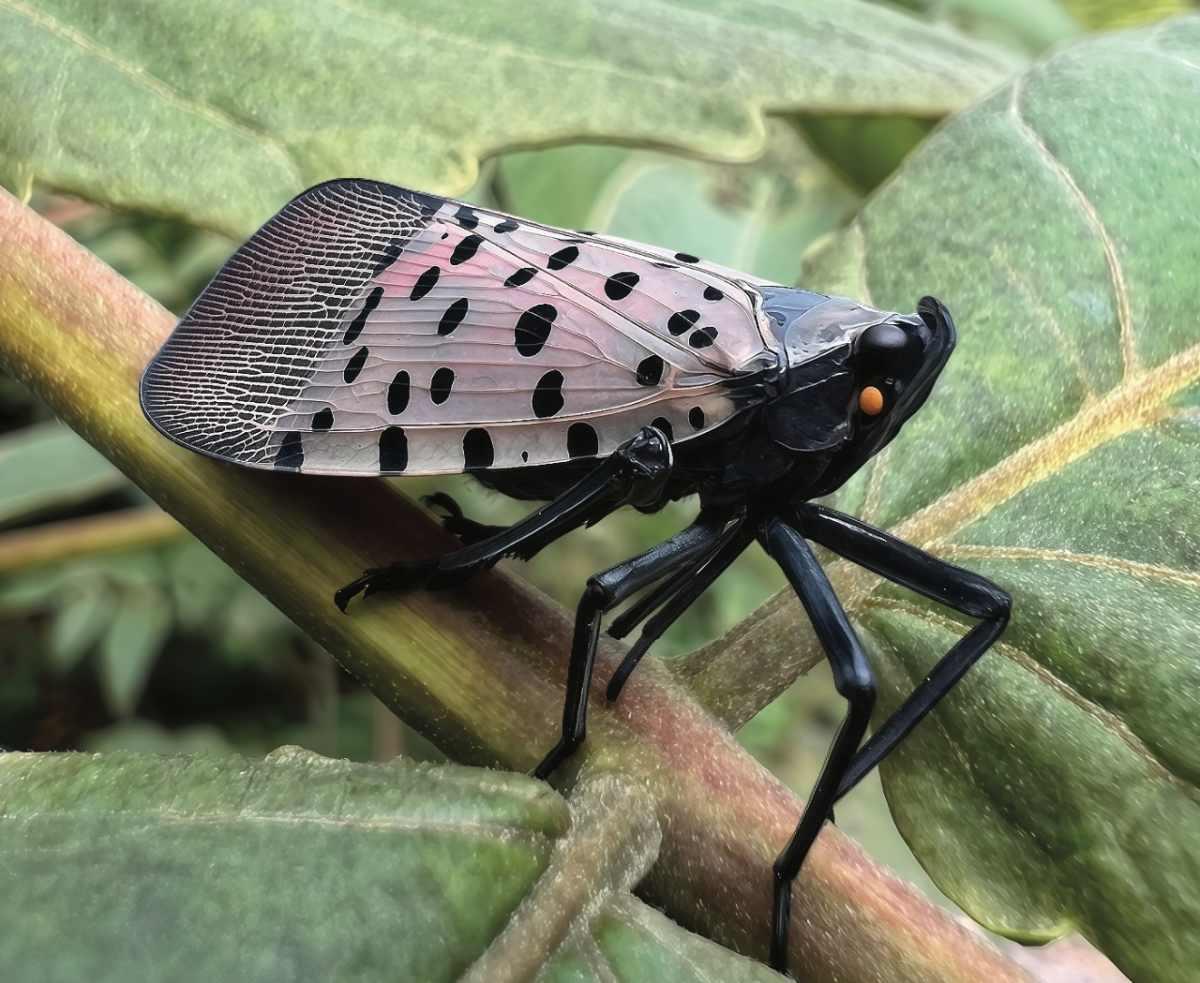
An invasive spotted lanternfly feeds on tree sap using piercing mouthparts, a behavior driving widespread damage to economically important hosts such as grapevines and maples in the northeastern United States.
While examining the genetic differences between urban and rural lanternflies, they detected some changes in genes associated with stress response in the former. It was evident in both the Chinese and US specimens. The study speculates that these changes help urban specimens live well in the hotter conditions of the cities, and also enhance detoxification and metabolism, essential to sustain against pollution and pesticides. This finding suggests that urban China may be preparing these creatures to thrive in other urban areas.
“We think that these differences may indicate how lanternflies have evolved to survive in hot, polluted, pesticide-heavy cities—and not just in their native China, but in the US as well, which may be helping them spread and creating new potential problems with control in the future,” said Meng. This also highlights the role humans play in increasing the threat of invasive species.
The human-made infrastructure is priming creatures like Lycorma delicatula to flourish in foreign lands and destroying ecosystems worldwide. “In our increasingly urban world, we should be studying invasive species and urbanization as interconnected parts of a whole. These two major aspects of global change are too often studied in isolation, but their effects can compound in synergistic and surprising ways, as we are seeing here with the spotted lanternfly,” said Kristin Winchell, assistant professor of biology at NYU and the study’s senior author. “This perspective may be the key to understanding the success of the spotted lanternfly and how to best predict and manage biological invasions.”