
What Will Happen if Everyone in the World Turns Into Vegetarians?
Published Dec. 27 2024, 9:45 a.m. ET

(L) Two people eating vegetarian salad, pasta and pizza in restaurant. (R) People cutting vegetables for cooking. (Representative Cover Image Source: Pexels | (L) Sam Lion, (R) Maarten van den Heuvel)
The awareness around vegetarian diets has fairly increased over the years. While green diets significantly impact our health, they also hold great ecological value. A viral video by science experts of AsapSCIENCE (@AsapSCIENCE) strived to address the state of the world if everyone adopted a vegetarian lifestyle. It details the ecological and economic effects of a vegetarian-centric society and how it may help tackle the alarming problems of global warming and climate change at large.

A person grabbing a slice of a vegetarian pizza.
Though vouching for the green way of life, the host confirmed none of the AsapSCIENCE members were vegetarians. Predictable, as the worldwide rate of vegetarianism ranged from only 4-5% in the North American subcontinent to 30% in India. The majority of the human population depends on meat from chicken, sheep, pigs, and cows around the globe thus, creating a massive demand for livestock. “As a result, there are currently about 20 billion chickens, 1.5 billion cows, over a billion sheep, and nearly a billion pigs in the world,” the video stated. Moreover, the supply of meat further creates a mammoth demand for the product further profiting the non-vegetarian business.
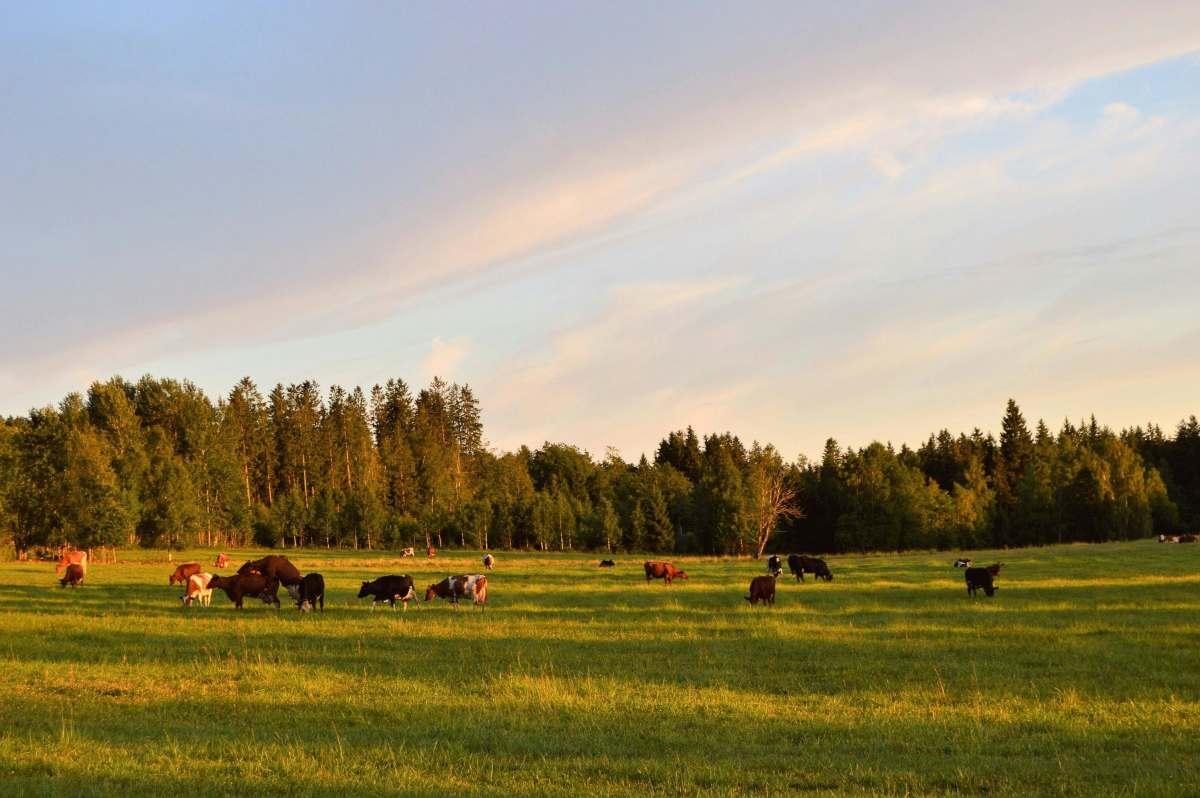
A pasture land where livestock is raised.
However, the video insightfully pointed out that if the number of “meat-eating humans” decreases, this vast market of livestock and whole herds of domestic animals would be useless and have to disappear. Pasture lands used to feed the livestock, about 33 million square kilometers of land, would free up the opportunity to grow natural forests. But the statistic only considers pasture lands leaving out crop farms exclusively grown for “animal feed”, which possibly take up another several million hectares of land. While a portion of the freed land could be utilized to grow vegetable crops most of it would be barren lands eventually turning into inhabitable deserts.
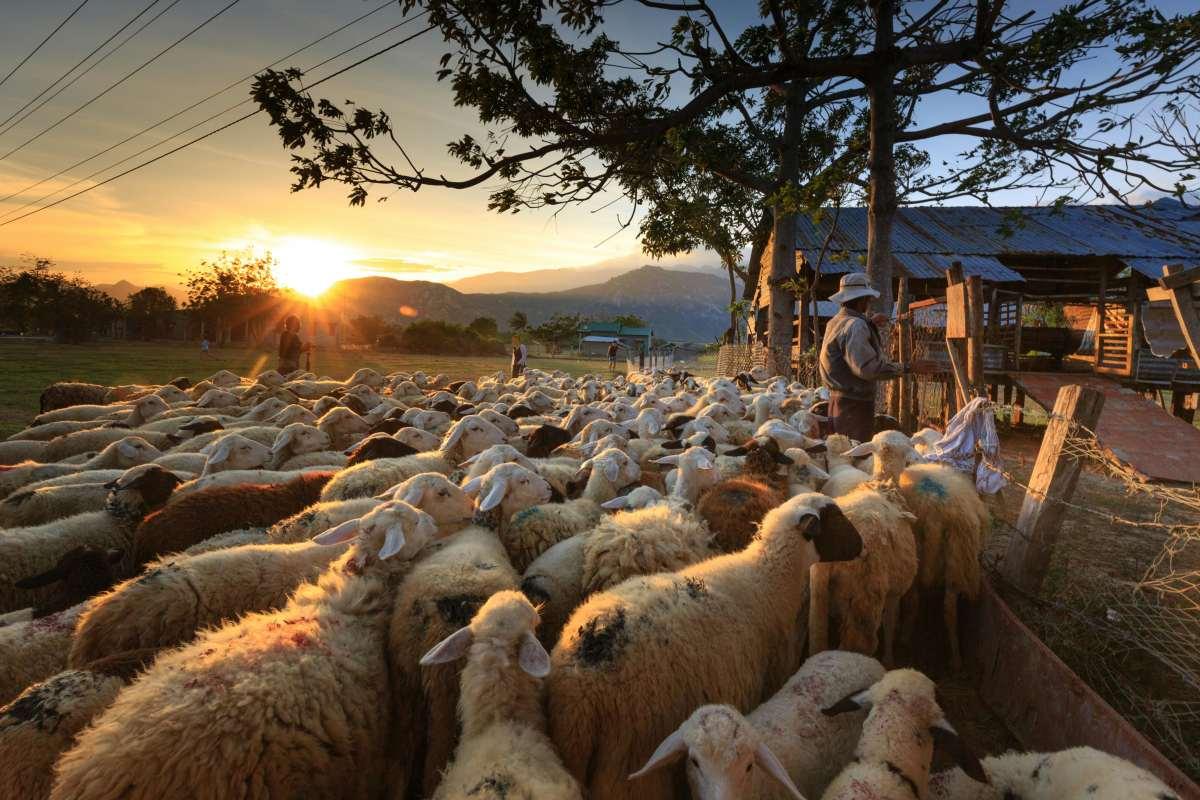
A herd of sheep in a farm.
Cows and grazing animals are a part of the climate change problem due to the large production of methane gas from their excretion. According to the video, methane has “25 times more potential planet-warming power than CO2.” In addition to deforestation and pollution, livestock adds another 15% of global greenhouse gas emissions. This easily outweighs the gas emissions from planes, automobiles, and trains combined and scientists theorize that cutting down on livestock production would help tackle climate change to a great extent.
Freshwater source.
A vegetarian diet also correlates to mass water consumption for livestock feeding. It is estimated about 70% of global freshwater is reportedly consumed in agriculture. “It takes 15,000 liters to make a kilogram of beef, 6,000 liters for pork, and 4,000 liters for chicken,” the video informed. Whereas, the number is lower in vegetarian diets with cereal utilizing about 1,600 liters, 900 liters for fruit, and only 300 liters for garden vegetables.

A group of people having an all-vegetarian lunch.
Though green diets are more of a win-win, specific downsides could be a challenge. Several by-products of livestock include leather from animal skin and the production of cosmetics, candles, and detergents from animal fats would face a crisis in addition to the loss of livelihood of farmers and others, nearly 1 billion, dependent on the farming industry. Even vegetarianism would not be a complete answer to deforested lands as crop farming would require greater land areas to meet the demands. Despite vegetarianism being offered as one of the solutions to tackle climate change, countries like India and China are said to have increased their meat consumption as their economies thrive.
You can follow @AsapSCIENCE on YouTube for more interesting videos on environmental issues.