
Think You Only Have 5 Senses? Experts Say Humans May Have More Than 30
Published Dec. 26 2025, 7:46 a.m. ET

A girl smelling sunflowers.
Whether it's work or social media, screens have taken over our lives. In this highly functional and fast-paced world, humans have unknowingly overused two senses: sound and sight. But according to science, humans can tap into 33 different senses. We all know about Aristotle's 5 senses, which divide humans' sensory experience into sight, hearing, smell, taste, and touch. These senses work simultaneously and in an interconnected pattern, providing a holistic experience to the individual, as per The Conversation. For example, the sense of sight affects what we hear and vice versa. Therefore, it wouldn't be too far-fetched to assume that there might be more than five senses that humans indeed experience, but science hasn't classified.
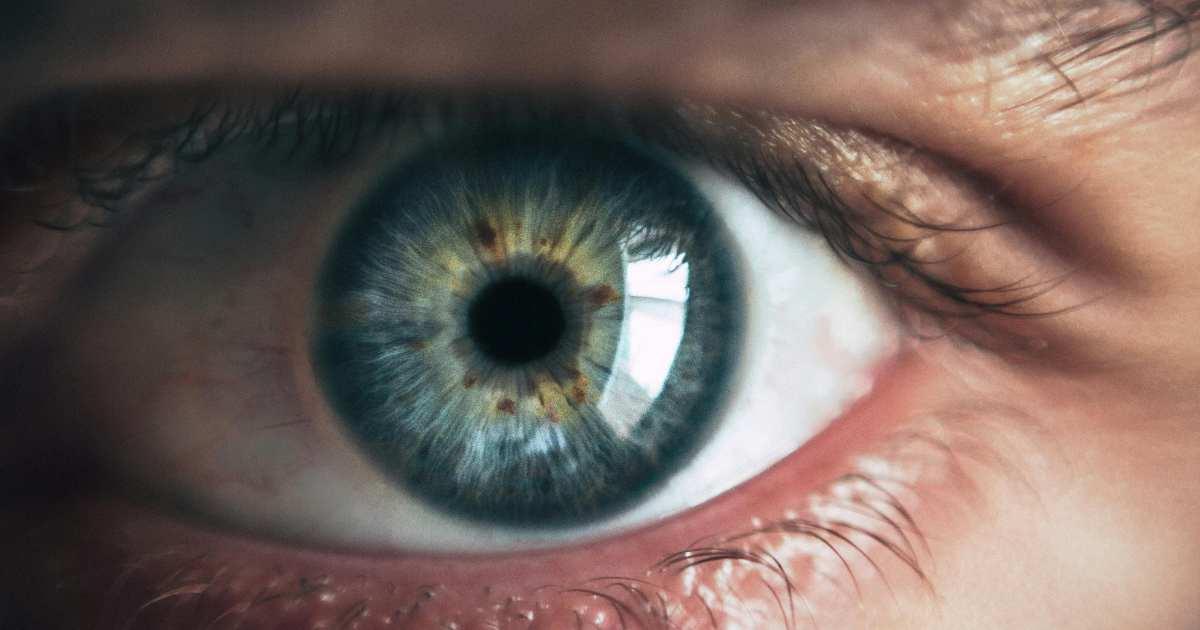
A close-up of a human eye
"The vocabulary of five distinct senses ramifies through our descriptions of thought, emotion, and aesthetics. Until recently, philosophers and scientists alike have accepted this framework and studied each of the senses in isolation," says a University of Glasgow research project titled Rethinking the Senses: Uniting the Philosophy and Neuroscience of Perception. "Modern cognitive neuroscience is challenging our understanding of sensory perception: instead of five, we might have to count up to 33 different senses," the study added. According to the outlet, the additional senses may include proprioception, a sense that allows us to be aware of our limbs even without looking at them. A sense of balance and awareness is naturally maintained by humans because of the vestibular system in the inner ear, sight, and proprioception.

A woman's hand touching wheat in a field.
Another of the many additional human senses is interoception. You might have this term thrown around in conversation, but rarely in the context of human senses. It's an internal sensory system that helps an individual be aware of changes within their own body. Sudden increase of heart rate or hunger pangs are sensations that emerge within the body, experiences that nobody else can detect unless there's a physical sign or outward reaction that makes those internal changes visible. There's another unspoken internal human sense that's seriously underrated, and it's called a sense of agency. According to the National Library of Medicine, it refers to "the feeling of control over actions and their consequences."

An old man walking with his puppy in a forest.
"When we make voluntary actions we tend not to feel as though they simply happen to us, instead we feel as though we are in charge. The sense of agency refers to this feeling of being in the driving seat when it comes to our actions," the agency added. Stroke patients often lose this sense as they need their caregiver to move or lift their limbs. The new philosophy claims that the primary senses, like touch or taste, are also a culmination of multiple senses. When touching an object, an individual can sense temperature, itch, and tactile sensations. Tasting food prompts three senses to work simultaneously: touch, smell, and taste. These variations prove that Aristotle's classification was the tip of the iceberg, and human senses could even go beyond classification.