
The World Banned Whaling 40 Years Ago. But These 3 Wealthy Countries Are Still Killing Whales
Published Feb. 19 2026, 7:18 a.m. ET

Japan's first commercial hunt after leaving the International Whaling Commission in 2019.
George and Gracie, the animated humpback whales of Star Trek IV: The Voyage Home saved the planet from destructive aliens. In real life, whales might not have to deal with the aliens, but they still help protect the planet as skilled engineers of the ocean. They zip through deep waters, guzzling boatloads of fish down their bellies and releasing bubbly farts and poopy ribbons. These iron- and nitrogen-rich materials dissolve in surrounding waters, feeding tiny plants. Together with these plants, whales lock up enormous quantities of carbon in their bodies, thus creating a protective buffer for land-dwelling residents. Even their carcasses sitting on the ocean beds serve as nutritious food sources for the vast underwater population. Unfortunately, they have become victims of humans’ relentless hunting of late. Despite a global moratorium imposing a ban on commercial whaling, whales continue to remain threatened by the knife in human hands.
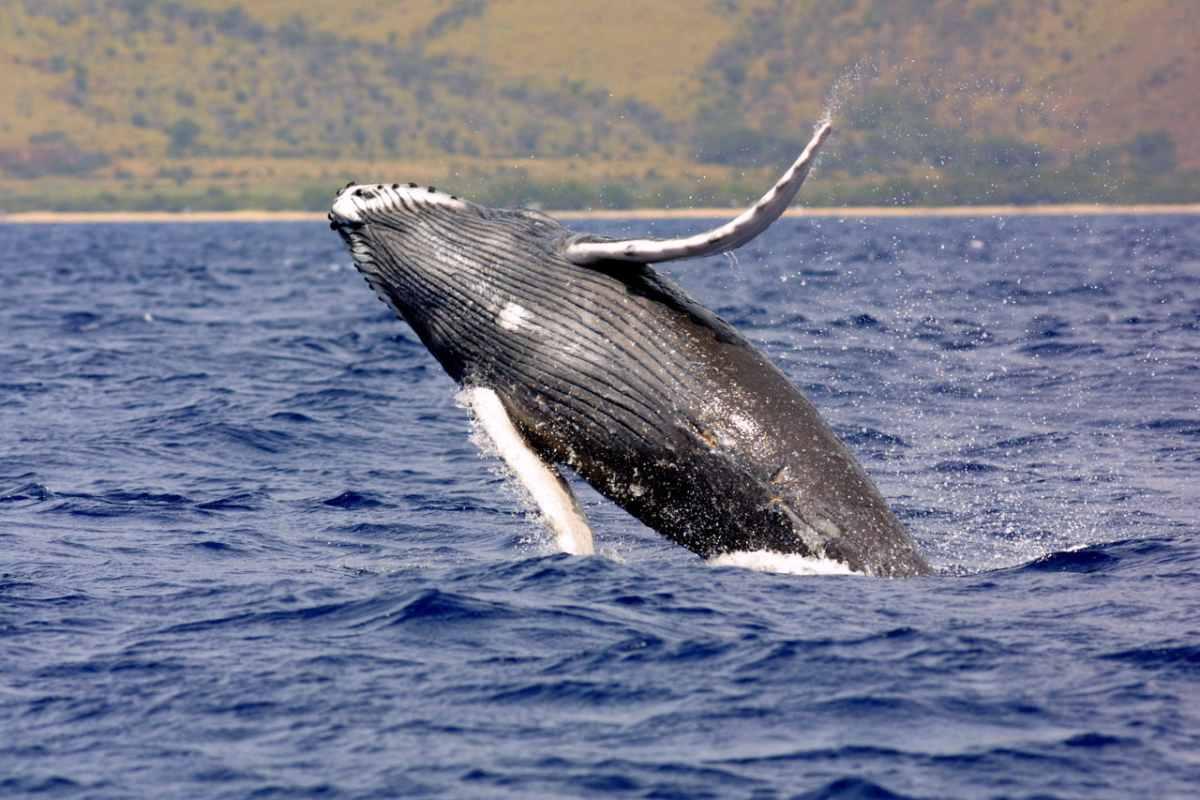
Humpback whale breaching.
Whales have been targets of humans for decades. They are slaughtered for everything, from their oil that is used in soap bars and lamps to their meat. Their mouth bones were plucked out to embellish buggy whips, hats, umbrellas, and corsets, per NRDC. In 1946, the International Whaling Commission (IWC) was launched under the International Convention for the Regulation of Whaling to protect the species. In 1986, IWC issued a global moratorium that imposed a halt on all commercial whaling. Most countries obeyed, except for three: Japan, Norway, and Iceland.
In 2019, Japan withdrew from the IWC. Norway registered an objection, and Iceland lodged a reservation. Ever since they stepped out, the three countries have been suspected of killing nearly 45,000 whales. In conversation with IFLScience, Clare Perry, Senior Ocean Adviser at the Environmental Investigation Agency, pensively reflected that the countries seem to have a blind spot when it comes to the international rule of law and whales. "They justify it through various loopholes in the treaty and by stating that the IWC is not following its original mandate, which [they claim] was the orderly development of the whaling industry," she said.

Minke whale on sale in Iceland
In the 20th century, commercial whaling killed an estimated 2.9 million whales. Clobbering these majestic creatures to death doesn’t just deprive the Earth of their precious engineering services but, in fact, harms the planet by aggravating greenhouse emissions. From fleets of boats tooling to the seas to emission-causing deep-sea refrigerators to shipping vehicles, every step of the hunting trade contributes a little to the emission-caused global warming. Plus, it is painful for them. A 2023 report published by MAST revealed that while 59% of the whales die instantly in one shot, others take several hours to lose consciousness. So, these mammals, Perry said, suffer enormous pain, injuries, and distress, sometimes for hours.
As this year marks the 40th anniversary of the moratorium, the End Commercial Whaling Coalition is rolling out fresh petitions to put an end to commercial whaling. Calling out to the three culprits, Perry said it is “utterly indefensible” for the world’s wealthiest nations to do this. “We are calling on them to trade their harpoons for the cooperation the world so urgently needs,” he said.