
Stop Raking Fallen Leaves in Your Garden- Naturalists Reveal What to Do With Them Instead
Published Dec. 17 2024, 10:45 a.m. ET

A man and his granddaughter raking fallen leaves from their home lawn.
Much of the autumn hues are credited to the dried leaves and fallen foliage in lawns and forested regions. As wild and beautiful as it may seem, people tend to tidy up their lawns by raking the fallen leaves. However, naturalists and environmental experts have advised against the staple practice during the autumn and winter seasons as it harms the local fauna of the lawn. Matthew Shepherd, who is the director of outreach and education at the Xerces Society for Invertebrate Conservation, told PBS, “Leaves are often thrown out — they’re treated as trash” but this is “inadvertently impoverishing our landscapes.”

A stack of fallen foliage during autumn.
With this, the expert attempted to suggest the many life forms that depend on the fallen foliage for shelter and food. More so, the leaves break down and disintegrate into basic compounds that essentially enrich the soil at large. “If we took the roof off our house, we’d be really cold in the winter. If we leave the leaves (on the ground), we’re leaving the roof of the homes of all those insects,” Shepherd reflected. A data chart by the American Museum & Natural History indicated that about 40,000 to 50,000 insects like springtails, and tiny arthropods take shelter in every square meter of leaf litter. Besides the minuscule creatures, fallen foliage also provides a habitat to frogs, salamanders, and rodents along with cocooned moths, and bumblebee queens in autumn.

A little girl raking up fall leaves.
Typically, lawns occupy millions of acres of land in the U.S. thus, becoming a significant source of habitat for all kinds of small living organisms, per a report by Springer Nature Link. Shepherd and other experts have chimed in with innovative solutions on the subject that could potentially preserve life under fallen leaves to a great extent. On his personal lawn, Shepherd refrains from picking out every tiny foliage, leaving out the flower stems and seed heads. He believes the effort invites a lot of birds and animals to his yard, which he enjoys from his home. “There’s a lot of life that you bring into your yard simply by not tidying up,” he said.
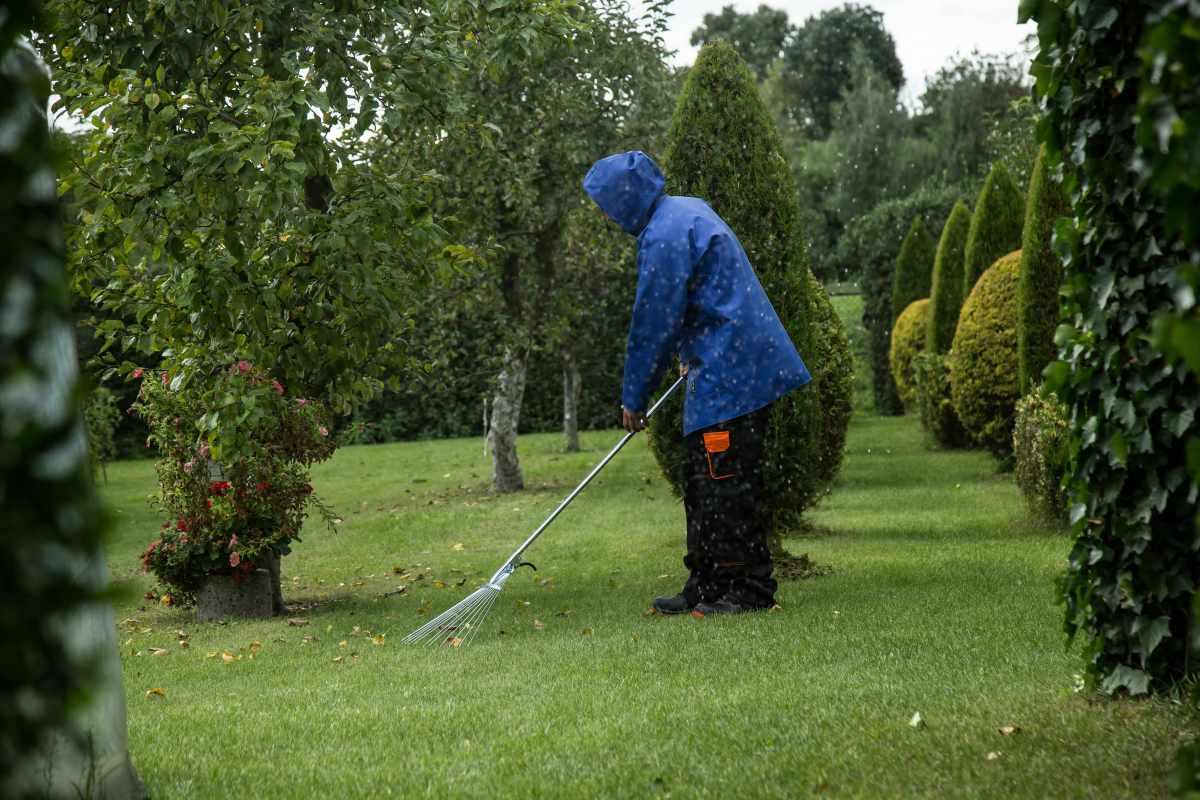
A person raking the leaves in a garden.
Theresa Crimmins of the USA National Phenology Network elucidated that leaves store the carbon dioxide required for photosynthesis, in addition to the barks, trunks, and roots, per PBS. Therefore, the decay of the fallen leaves returns the carbon dioxide taken from the environment and also nitrogen back to the soil, enriching it with nutrients. Earthworms, a farmer’s best friend, also feed on these leaves and excrete what Crimmins said is “essentially soil” and add organic matter to the topsoil.
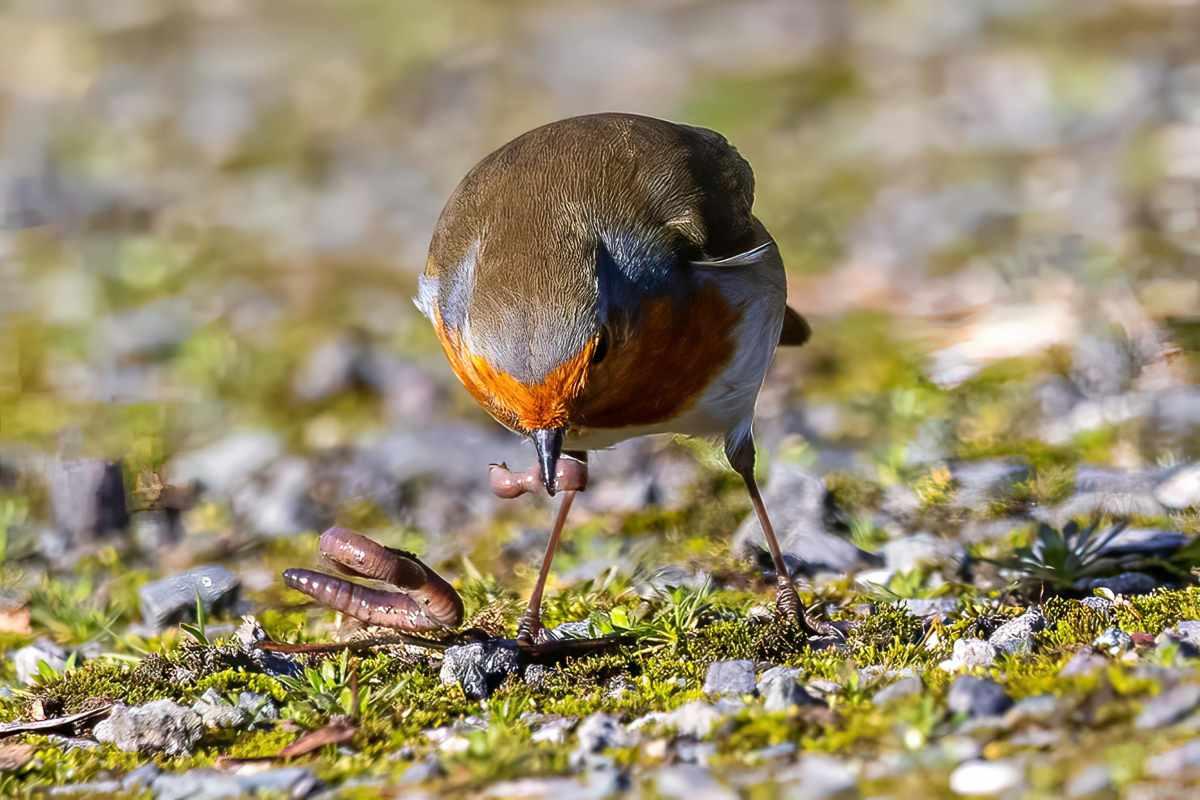
Bird catching an earthworm to prey on.
With the many problems of raking fallen leaves at hand, the experts pointed out a few ways people can manage their lawns while also not hurting the environment. Shepherd said, “It comes down to reaching that balance” between maintenance and natural events. He suggested that people only tidy up portions of the lawn that might serve a purpose, like playing areas for kids or sitting. Whereas, the other end should be “allowed to be more natural.”

Leaf cleanup truck vacuuming fallen leaves and shredding them. Men using rake and leaf blower for clean up.
Other suggestions like composting the fallen leaves in a community gathering place or using leaf shredders may also be viable. The latter could be a potential risk to the life under the leaves, as pointed out by Shepherd. Leaf blowers could be a possible solution but their gas usage does not appear to be as sustainable in comparison to the other management solutions. Burning leaves was flagged as a big no-no due to pollution by expert Gregory Keoleian in his email to PBS NewsHour. He serves as the director of the Center for Sustainable Systems at the University of Michigan.