
Scientists Spot New Red-Colored Spider with Features Never Observed Before
Published Dec. 30 2025, 4:09 a.m. ET

Ladybird velvet spider from the Eresus genus perched on a cluster of yellow flowers
Spider-Man saved the world by killing zombie villains and sentient androids. Ever since spiders emerged on Earth around 400 million years ago, they have been doing the same— saving the world by eating pests and weaving glowing silk. Of the thousands of spider species catalogued by animal scientists, one family, named ladybird velvet spiders belonging to the Eresus genus, is known for matriphagy, per NatureBFTB. After the male and female spiders have mated and the female has laid her eggs, she liquefies her own body into a protein-rich spider milk and sacrifices her life to feed her young ones. Scientists in Budapest are curious to know whether the new ladybird spider species they discovered recently also practices matriphagy. But the males surely depict unusual features, as scientists described them in the journal Animals.
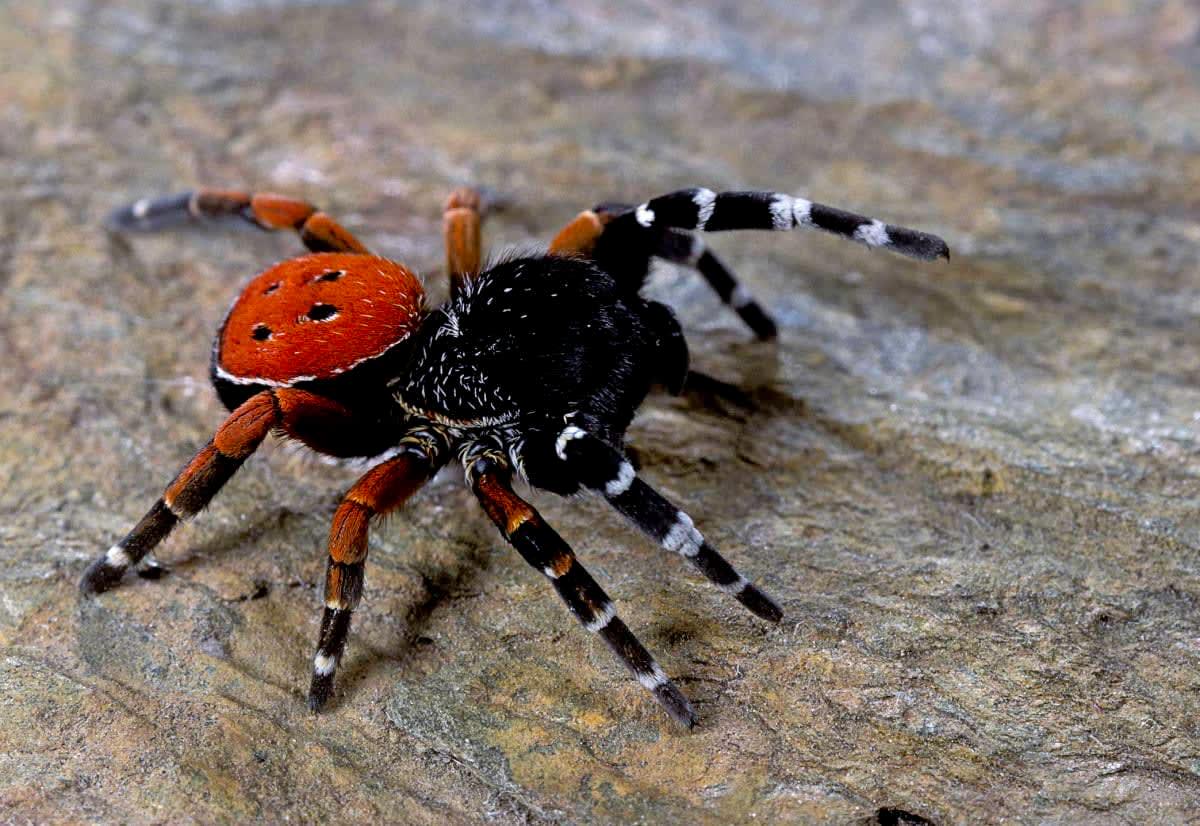
Ladybird velvet spider belonging to Eresus genus with distinctive spots on its red-colored head and white bands on black tentacles
The new spider family was spotted outside Rabat. They were crawling in the harsh, dry lands of Southern Morocco, inside a cork oak grove forest near Sidi Allal El Bahraoui. Typically, the spider taxonomy, or the naming of spiders, is based on their body parts. This time, scientists had to consider everything from textures to patterns and colors to fit them in a category. Their unusually bright red color left them rubbing their jaw, as they pored over their biological ID catalogues and wondered which category they could be put in.
Traits were so odd that they had to classify this species with a new name to give it a proper biological and scientific identity. They named it Eresus rubrocephalus. These spiders belong to the Eresus family, but when it comes to their bodies, they are glaring outliers. Or red-colored oddballs. Scientists used the Latin word “ruber” for red and the Greek word “κεφάλι” for head to name the new species. A detailed morphological analysis revealed characteristics that were never observed before in the Eresus family or close relatives. The spider’s front body section was about 0.29 inches long.
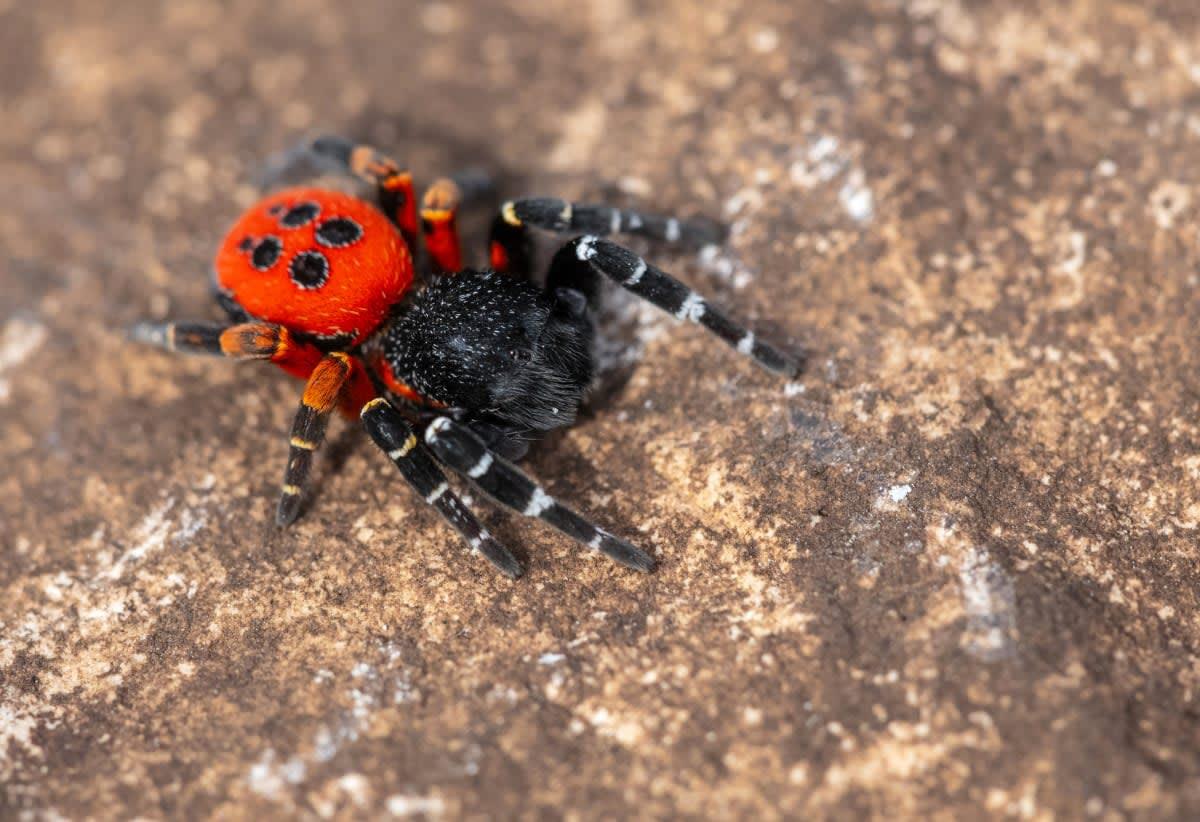
Ladybird velvet spider with distinctive spots on its red-colored head
Males displayed astonishing features under the scanning of electron microscopes, including a distinctive reproductive structure. Sitting on the male palp is a small mating appendage near the mouth, which they use to transfer the sperm. The palp holds a U-shaped groove that wraps almost three-quarters of a circle and also a sharply curved terminal tooth that distinguishes this spider from the rest of the Eresus genus.
Janos Gal, who led the study, mentioned that the head and the thorax region of this spider species are unusually and uniformly red, and the abdomen is covered in carmine red with dots on the dorsal part. Some dots are raindrop shaped. The Moroccan male also displayed narrow black stripes near its abdomen as well as scattered red hairs, interspersed with a few solitary white hairs. A series of additional tests, including DNA barcoding and delimitation, confirmed that the spider deserved its unique identity.
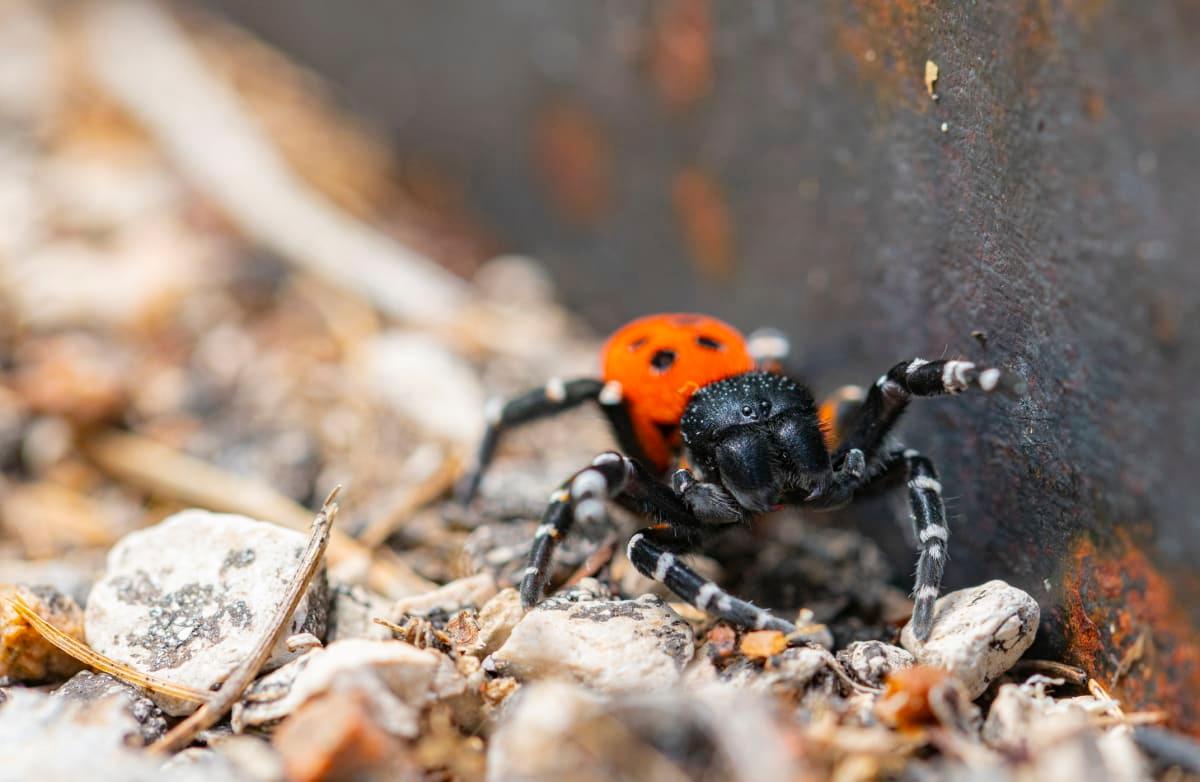
Ladybird velvet spider belonging to Eresus genus with distinctive spots on its red-colored head and white bands on black tentacles perched on rocks
From the pool of data recorded, three main insights emerged for scientists to reflect on and work on. First, spiders evolve their color as a survival strategy. Second, this new ladybird spider unveils a new web of complexity in North African spiders. The Eresus genus is already known for its stark sexual dimorphism, where females are dark and bigger, while the males are colorful and smaller.
Adding to this, the newfound species is showcasing a whole new set of sexual characteristics. Lastly, the finding reinforces that Earth’s biodiversity is beyond the limited library that catalogues animals and species. In this very moment, there are zillions of animals roaming and crawling on the planet that we don’t even know about. Wilderness is exploding with fathomless and Byzantine mysteries that wait to be unlocked.