
Scientists Placed 300 Cameras Across Annamite Mountains. The Footage Revealed Several Rare Animals
Published Feb. 13 2026, 5:59 a.m. ET

Cameras spotted a baby pangolin hitching a ride on their mother's tail.
A curious pangopup trundles through the forest riding on the long tail of its mother. A male peacock pheasant flaunts his colorful eyespots to woo a seemingly uninterested female. Two sun bears engage in playfighting while an idyllic creature that resembles a gym-going cow on drugs gazes at the camera. Bizarre sights unfolded when biologists played the videos their camera traps had recorded from the Annamite mountain forests. Led by Flora & Fauna, the camera trap survey was aimed at capturing some of the rarest and most elusive animal species that would otherwise shy away from exposing themselves to a camera.
Running over the Vietnam coast, the Annamite mountain forests, nicknamed “Amazon of Asia,” are known to host some of the super-rare and Southeast Asia’s most spectacular species. The remote location offers them a habitat advantage, while the plants clinging to the rugged karst limestones offer them both food and shelter. As part of the survey, conducted through 2025, researchers installed more than 300 camera traps in the north, south, and central areas of the mountain range, spanning animal trails, salt licks, and water sources, where the likelihood of observing these animals was greater.
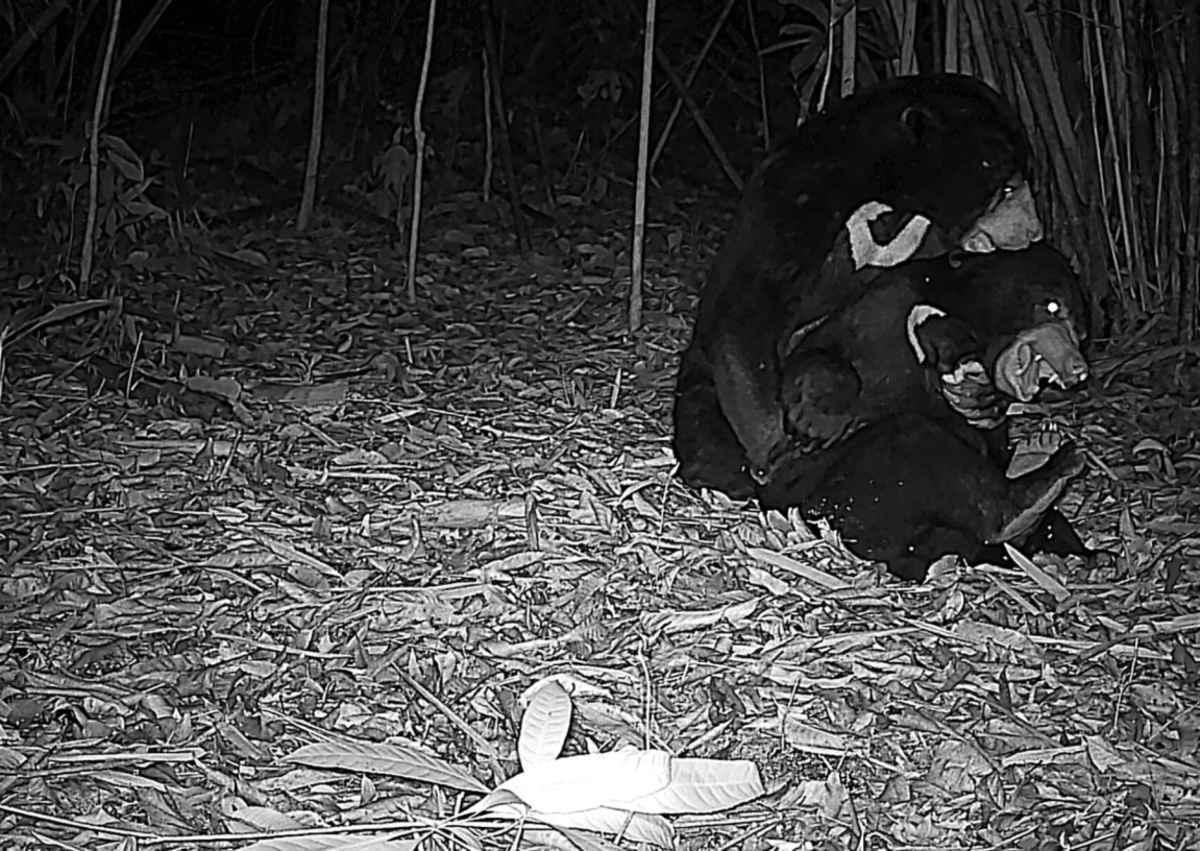
Sun bears are seen play-fighting.
Reflecting on the insight that prompted them to initiate this survey, lead researcher Gareth Goldthorpe shared with IFL Science that although the environment of Annamite is vital for these endangered species, it doesn’t make them immune to the effects of anthropogenic, a.k.a. human-created, threats. The survey was supposed to throw light on how these animals are impacted by habitat fragmentation, human encroachment, deforestation, and snaring.
Many of them are victims of wildlife trafficking. Sunda pangolins, for instance. These anteaters are some of the most trafficked animals for their meat and scales. Marbled cats, too, are vulnerable, given their distinctive patterned coats, which poachers sell for decorative luxury items. The camera traps also detected movements of a rare striped rabbit that wasn’t known to science until 1996, when someone spotted some dead specimens in the market of Laos.
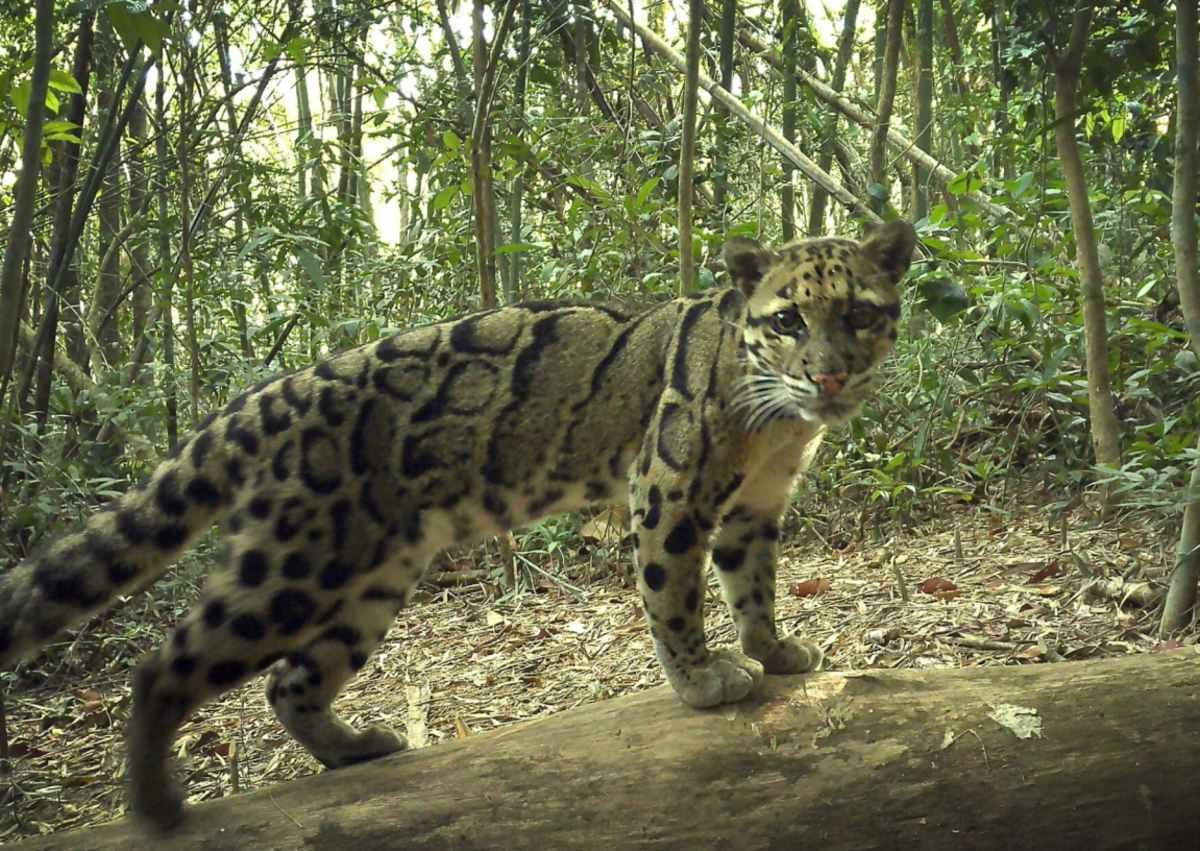
A clouded leopard is caught looking at the camera.
Elsewhere, species like stump-tailed macaques and Asian forest hornbills were recorded as they munched on fallen fruits while relaxing on tree logs and the leafy forest floor. A herd of Junior Jumbos, a.k.a. Asian elephants, seemed to be struggling to make room to roam around. These elephants, researchers said, are an extremely vulnerable species, as they are exposed to poachers and human-elephant conflicts.
The footage of wrestling sun bears is just as sentimental. In their home, they are strong enough to crack open a bee’s nest or shatter a concrete termite mound, but when encountering humans, they often become victims of illegal trade. Their bodies are slaughtered for their gall bladders and paws.
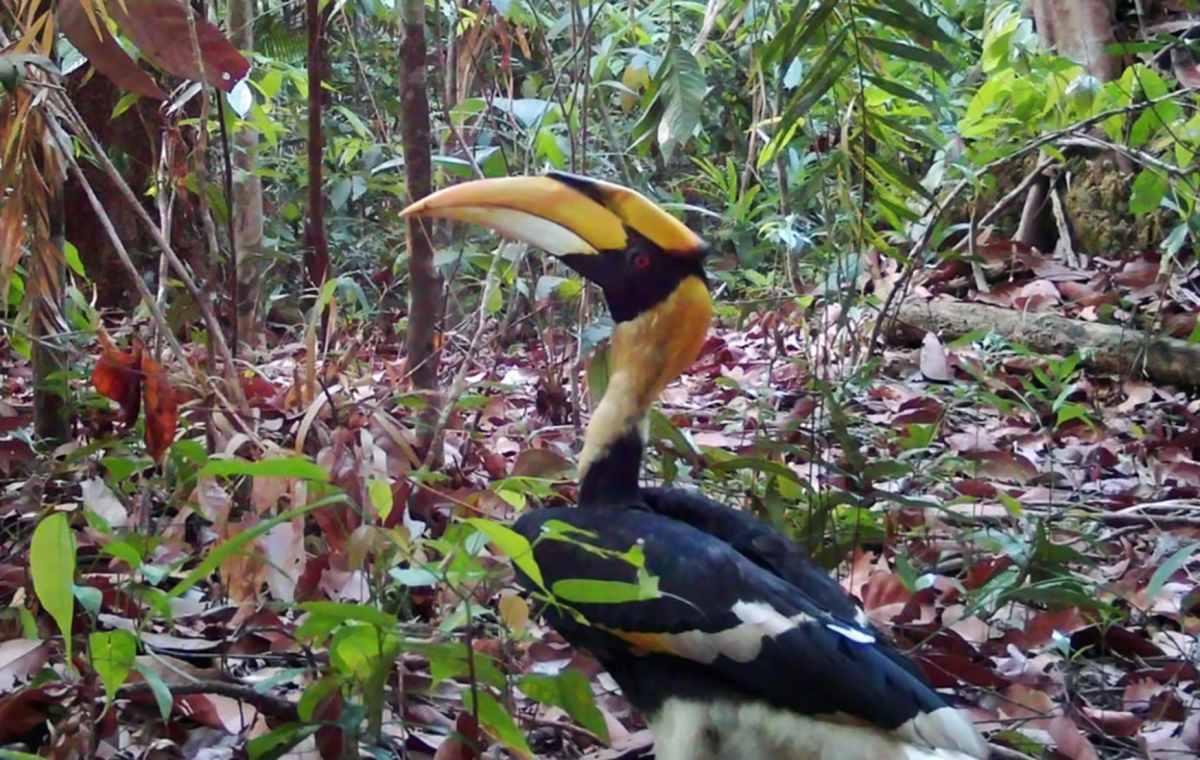
Camera trap set up by biologists captured a Grounded Hornbill perched on the leafy floor in Annamite mountains forest
The Asian leopard cats have an equally grim story. The shadowy black market is thronging with customers who demand these cats to be bought as exotic pets. In the town, these cats are forcefully bred with domestic cats to produce hybrid Bengal cats. On a camera trap, one of these cats was seen while she trotted around with a dead rodent dangling from her mouth, likely a fresh kill.
After poring through these photographs and videos, Goldthorpe asserts that they strongly suggest that the need of the hour is to consider both the needs of these animals and the needs of local human dwellers. People living in these protected areas are just as dependent on the wellness of the forest as these animals. Plus, the forests also play the role of carbon sequestrers by pulling enormous amounts of gas from the skies, contributing to the deceleration of global heating. Harmonizing these conservation goals with local development needs is no longer just a social goal but an ecological necessity, without which the entire ecosystem might come to the point of collapse