
Scientists Reveal a “One-Two Punch” is Causing Antarctica’s Ice Cap Collapse
Published Jan. 7 2026, 7:38 a.m. ET

Melting ice cap in Antarctica due to climate change
Imagine scientists visiting a place and digging up the land only to discover a treasure vault jingling with glittery jewels, ancient artifacts, books of magic, or things like these. The ice sitting in Antarctica is not much different than this treasure vault. Each hunk of ice holds an invisible library of geological stories running back millions of years in time. The crumbs of ancient ice, the gas bubbles from the prehistoric times, the isotopes, the sediment signatures; every little aspect of ice is a valuable archive. In a study published in Nature Geoscience, scientists chronicled a startling revelation they had after they drilled out some ice cores from Antarctica and investigated their geological stories. Antarctica is going through a staggering one-two punch that is slowly, subtly, making its ice sheets more vulnerable than ever before.
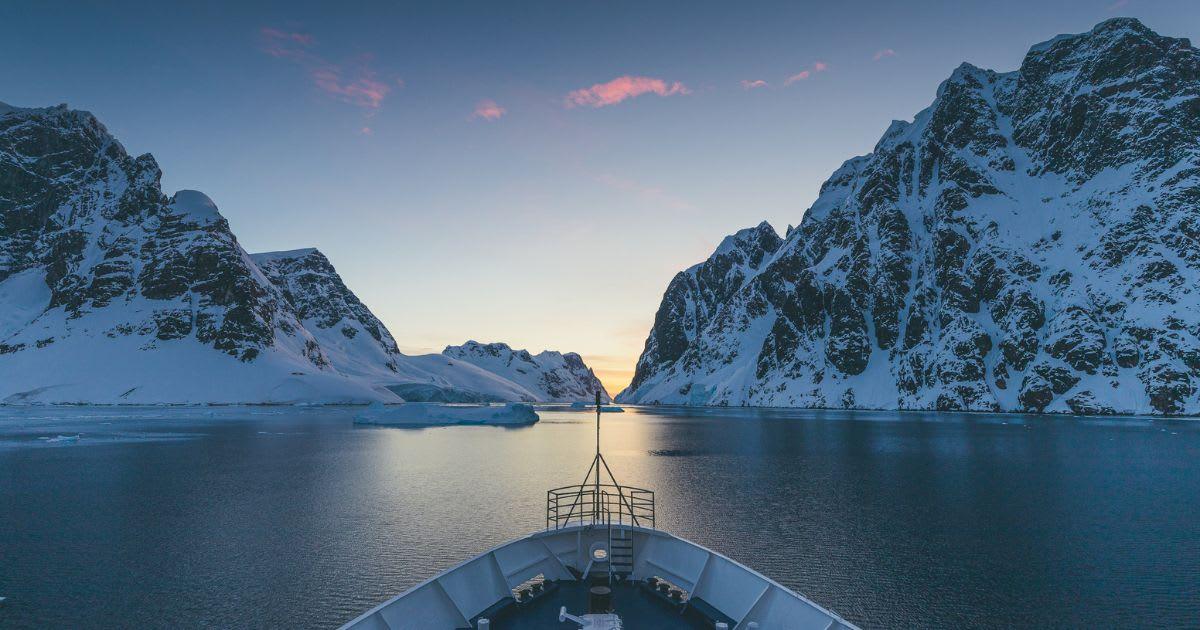
Gorgeous landscape of Antarctica with an icy river flanked by snow-dusted mountains
Between 2.8 and 3.2 million years ago, which was the warmer period of the Pliocene, Earth was beginning to cool down. That was the time when Antarctica and other regions of the planet started to dress up in the blankets of ice. As years passed by, the initial blanket of fresh ice got layered with several layers, each layer safeguarding the story of their generation as well as the heirlooms of their ancestral ice entombed underneath. Scientists unraveled these evolutionary stories from the ice cores and examined them for something called climate forcings.
Climate forcing, as the term suggests, is the force that triggers massive shifts or influences in the climate, thereby catalyzing the evolution of an ecosystem. It is an inevitable process that governs everything from the energy balance to the tectonic shifts. For instance, the balance of incoming and outgoing heat determines how cool or hot the Earth will become.
Two researchers drilling a hole on an icy plain
Non-human factors like the tectonic clashes, the volcanic eruptions, the sunspots that happen every 11 years, the Earth’s changing orbits, all these put together drag a region’s climatic geometry with changes like glacial melts or rising ocean levels. In this study, scientists examined different types of climate forcings and concluded that one was influencing Antarctica’s collapse more and greater than the rest: the rising ocean levels.
The research was led by 44 scientists from Binghamton University, with lead being taken by Molly Patterson. Patterson explained that these geological archives from the Pliocene era are useful analogues for understanding what a future with this level of warming might look like. The initial objective was to identify the sensitivity of the Antarctic ice sheet to Earth’s shifting orbital configurations under an array of climate boundary conditions.
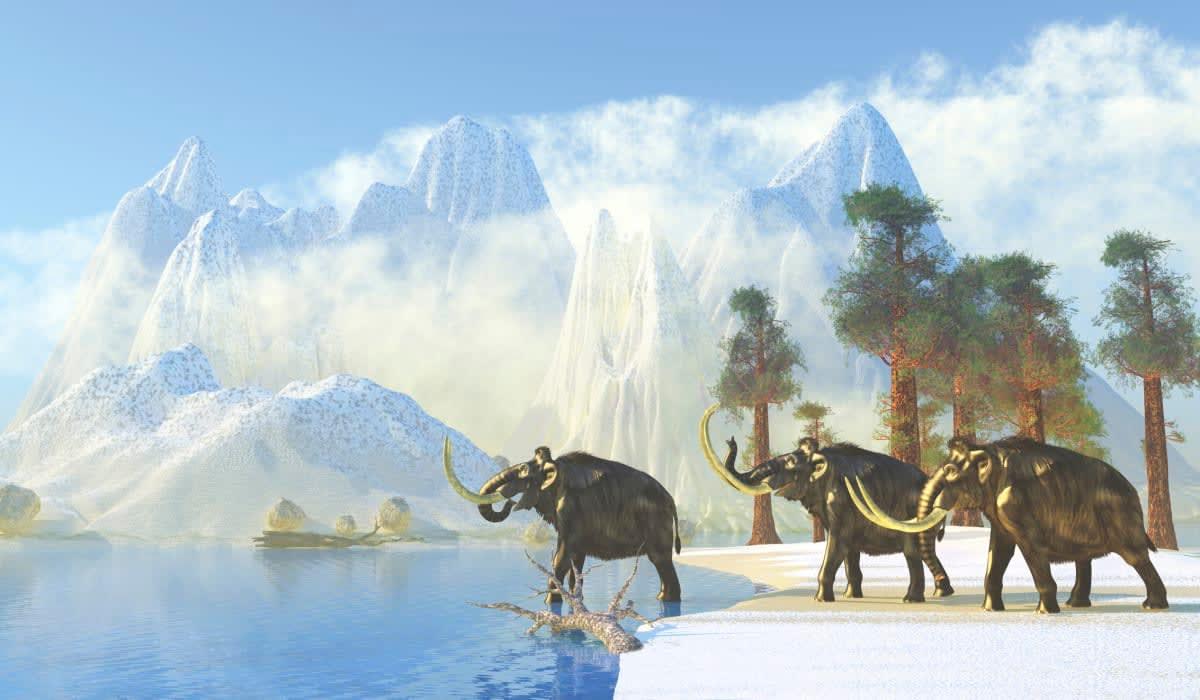
A herd of mammoths roaming around an icy lake in Antarctica during the Pliocene period
It is known that the West Antarctic ice sheet sits below the ocean, while the one in the East sits above the land. The ice cores revealed that, during the warm Pliocene period, large portions of the West and several low-lying portions of the East ice sheet experienced significant melt, contributing to a 3-to-10-foot rise in global sea levels. It isn’t just a one-directional blow. It’s a feedback loop fed by a one-two punch system. The first punch comes from global warming. The warmer the climate gets, the fewer ice deposits on the ice sheets. Lesser ice and constant warming turn the oceans warmer. That which sits under the ocean melts first, and then that which sits above the land follows the course and makes the retreat.
Each ice sheet leaves a fingerprint. Depending on the gravitational effects similar to the Moon’s effect on ocean tides, the ice loss in the Southern Hemisphere affects the coastlines in the Northern Hemisphere and vice versa. This sequence of ice loss and the underlying mechanisms, when put together with modern-day climate models, have enabled scientists like Patterson to project the future of Antarctica as well as of the oceans sloshing across the globe.