
Scientists Find an Animal Never Seen Before in the U.S. at the Bottom of the Great Salt Lake
Published Jan. 7 2026, 6:27 a.m. ET

Rippled sands of the Great Salt Lake in a national park in Utah
“It’s so salty,” a biologist from Utah University told Julie Jung, another biologist, as they dipped their feet in the Great Salt Lake in 2022. With water so saline, it was evident that not many lifeforms resided in the undertow or on the lakebed. Scientists around the world have spent years believing the same. Still, just for the sake of research, Jung and her fellow researcher shoveled scoops of lake sediment into tubs and hauled them all the way to their laboratory, excited to see what they would find.
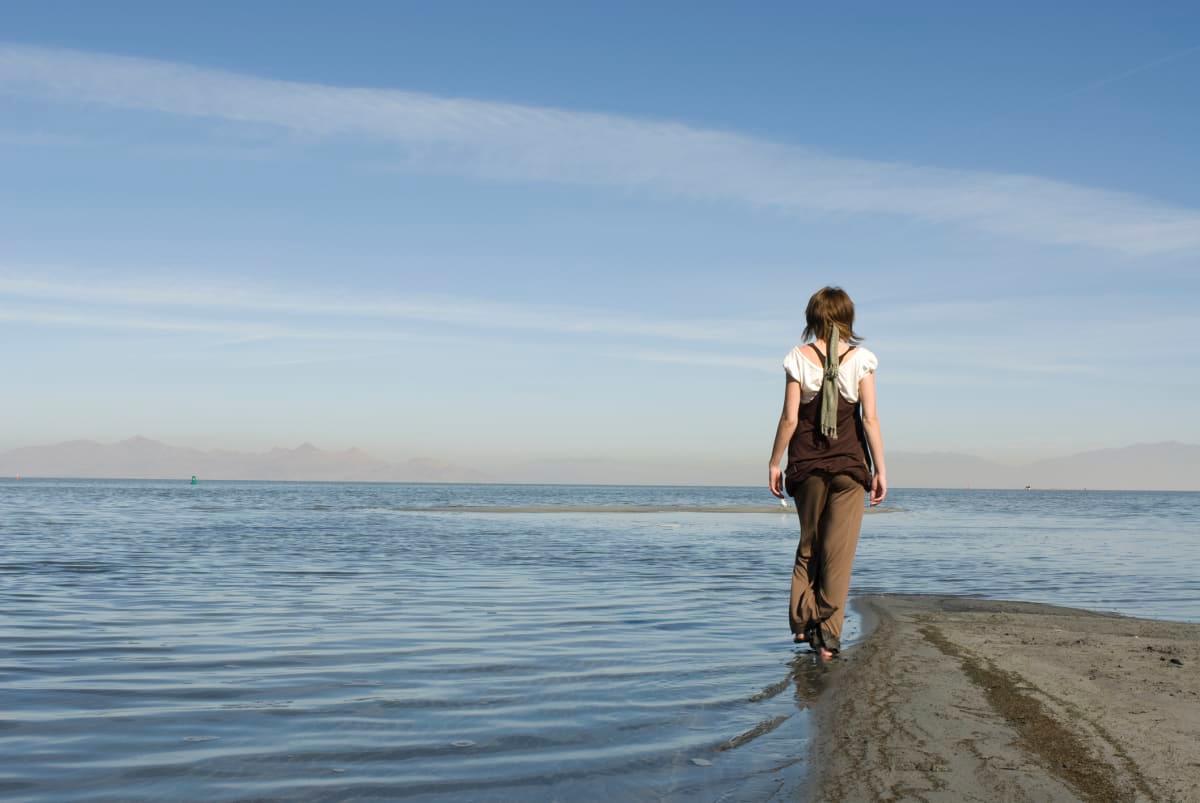
Woman walking along the shore of Utah's Great Salt Lake
By the time they reached the lab, it was pitch dark. Their pants were caked with silt and mud, hard as cardboard, and after examining the soils under the microscope, their spirits too became dismayed with utter hopelessness. It was just soil, nothing more. So they changed the methods and found the first sign of life, a fuzzy little creature wriggling in their glass petri dish. In a study published in the Journal of Nematology, they documented a wealth of details about this rare organism and the trove of exciting possibilities it has opened up for nature science.
Three years of research revealed that the teeny, tiny worm was a nematode, likely belonging to a genus that thrives in brackish, salty waters. The tiny roundworm was not more than a millimeter long and was found to be residing on the algal mats on the lake’s bottom, dining on abundant bacteria. When Jung brought it to the laboratory, the worm was still covered in crumbs of this bacteria.
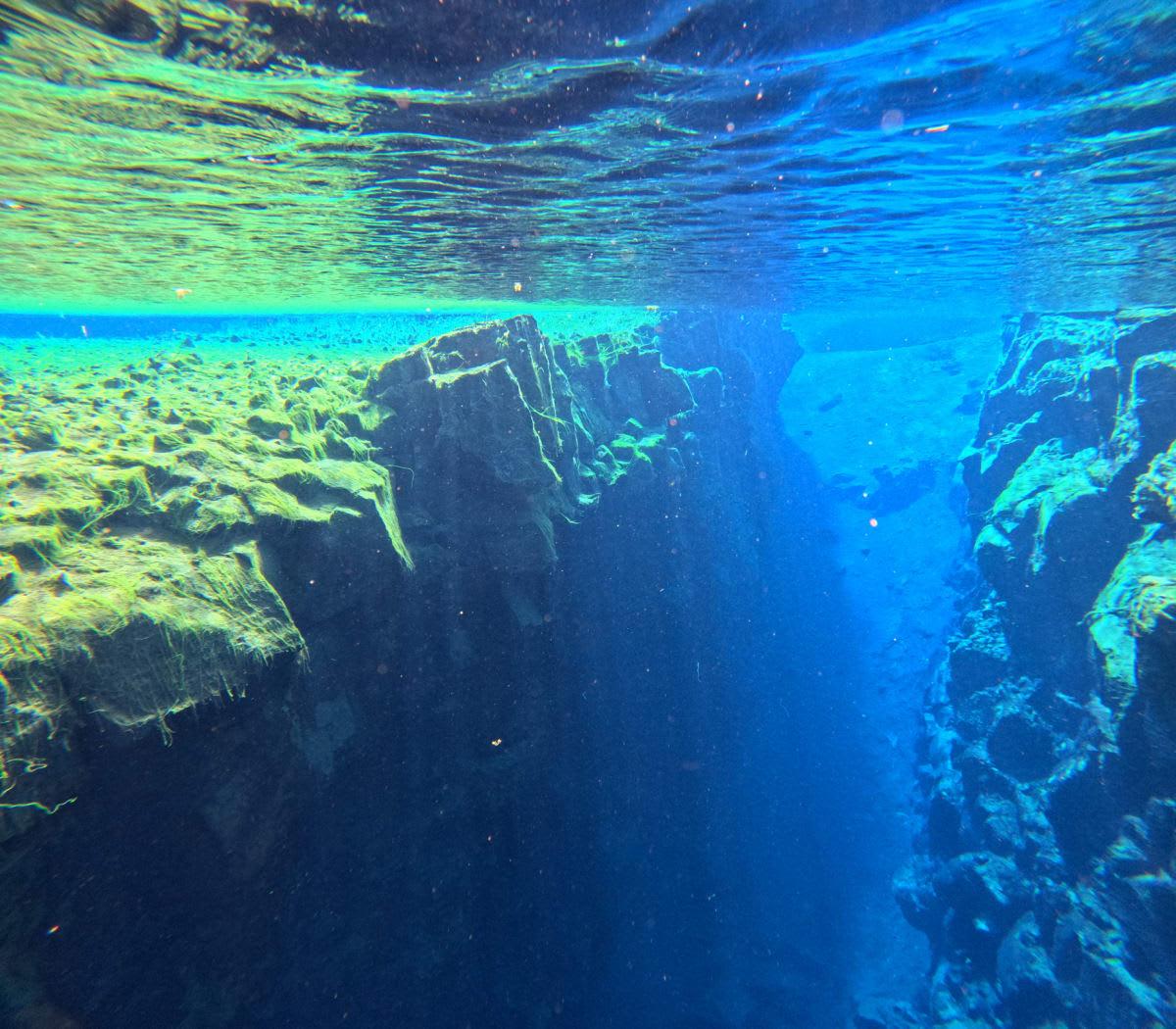
Sediment and algal colonies formed along a fissured cliff underwater
With a size as small as the tip of a pencil, the noodle-shaped worm challenged the long-standing assumption that the waters of Great Salt Lake are inhospitable to these life forms, which are also among the toughest. There are billions of nematodes crawling on the planet, from the scorching gold mines of South Africa to the icy cold soils of Antarctica. This one, however, is special. So researchers had to give it a biological identity with a name. They approached a local indigenous group whose ancestors lived around the lake. Clipping the Shoshone word “wo’aabi” for worm, they named it Diplolaimelloides woaabi.
D. woaabi exists only in this lake and belongs to at least one species never observed before. It was confirmed from the very beginning that the species was a nematode, but it took Jung and her team three years to taxonomically verify their suspicions. She suspects that the worm has unusual survival strategies it uses to survive in the extreme salt concentrations of this Utah lake.

Biologist examining worms with microscopes, tubes, and petri dishes in a laboratory
But how did it end up here? From brainstorming sessions and cohorts of additional research work, they churned out two hypotheses. One came from the past. The team travelled 5 million years in time and found that at one point, a violent tectonic activity caused the Colorado Plateau to lift. This uplift carved north-south mountain ranges and intervening basins that were constantly fed with precipitation and snowmelt, with no outlets for the water to escape.
While the water evaporated, it left rich concentrations of salt inside the basins. Over the years, the wet, salty environment gave birth to these tiny worms. The worms remained trapped until Jung found them. So the first hypothesis says that “they’re here because they’ve always kind of been here.” But researcher Michael Werner argued that the lake in this region wasn't saline at least 20,000 to 30,000 years ago. Then came the second hypothesis, which was even crazier. Werner and others proposed that the worm arrived here clinging to the feathers of the birds that migrated from South America and picked them up from the saline lakes there. The fact that these worms are so sensitive and persistent also makes them fabulous bioindicators of environmental health. By studying D. woaabi’s strategies and history, scientists can create an “early warning system” for tracking ecosystem change.