
Decade-Long Study Reveals Zombie Worms Are Missing from the Sea—Scientists Flag Concern
Published Dec. 29 2025, 5:15 a.m. ET

The zombie worm, Osedax.
The sudden disappearance of species may raise concern, more so if the organism is a blessing in disguise for nature. Recently, a valuable marine species went missing, causing alarm among scientists. Osedax, the zombie worm or "the bone devourer," plays a crucial role in the marine ecosystem, and its disappearance can disrupt the decomposition cycle. The deep-sea creature survives by feeding on the bones of dead whales. Despite lacking a mouth or digestive system, they use root-like structures to burrow into the bones and rely on their microbes for nutrients. When Fabio De Leo, a senior staff scientist with Ocean Networks Canada (ONC) and adjunct assistant professor with the University of Victoria’s (UVic) Department of Biology, co-led an experiment, he found something disturbing.
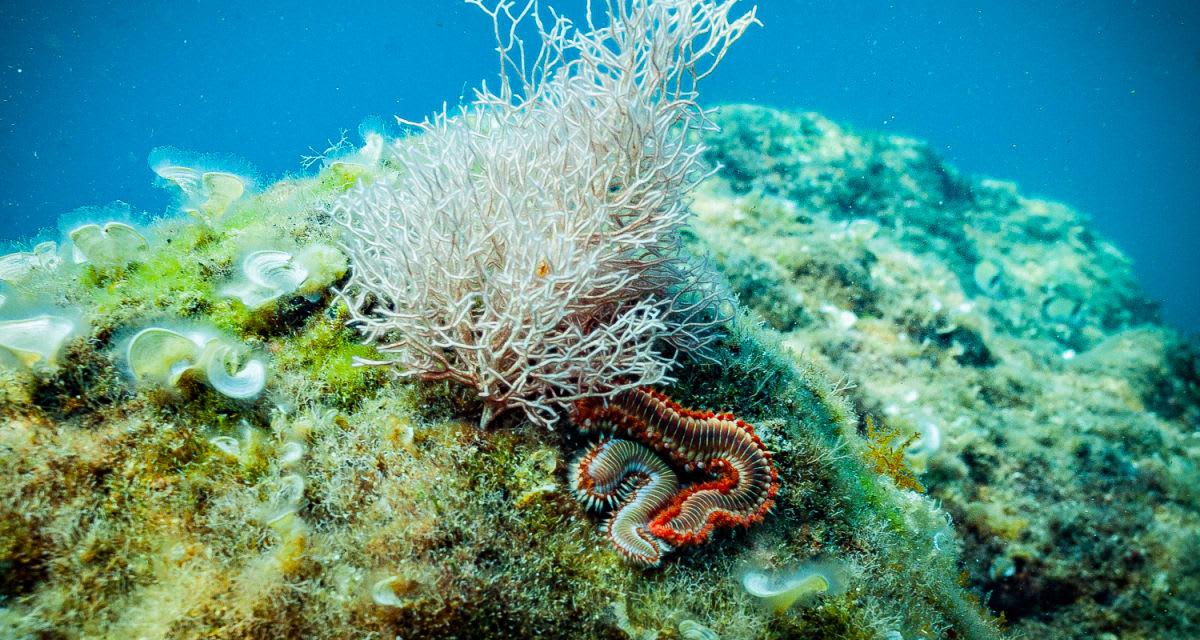
Worms underwater.
The experiment focused on studying humpback whale bones present on the deep ocean floor off the British Columbia (BC) coast. However, the researchers didn't find any evidence of zombie worms that are crucial to decompose the bones of the deceased whales. Dr. Leo was astounded by the lack of evidence and disappointed by the waste of resources like ONC’s high-resolution underwater cameras. The researcher found it troubling that no zombie worm colonization on the bones was observed in over 10 years. However, the prolonged absence of the species helped them determine that the observation site has a low concentration of oxygen. “This was a remarkable observation in such a long-term experiment,” the researcher said in a statement.
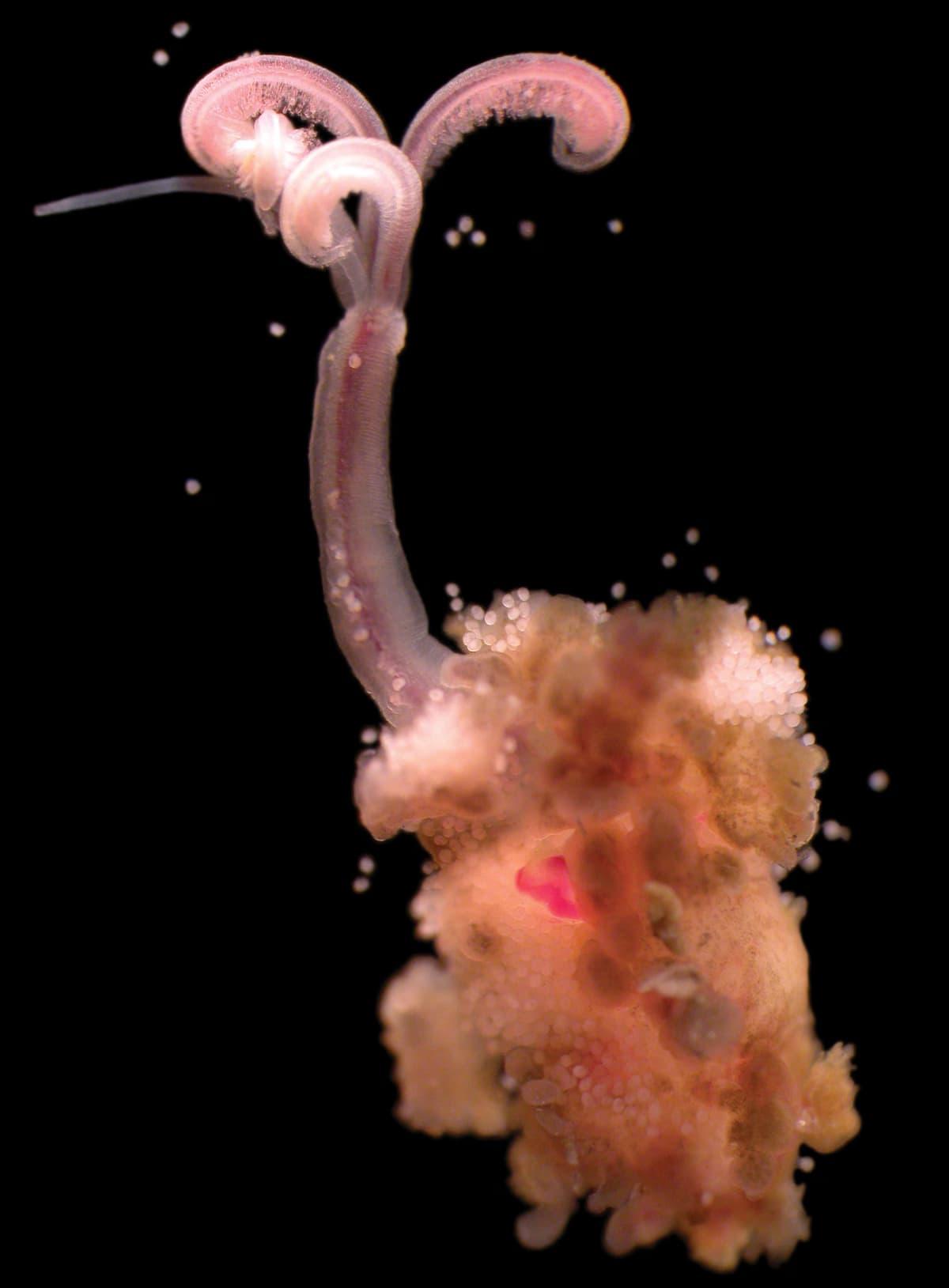
The zombie worm, Osedax.
Barkley Canyon is an area naturally low in oxygen concentration that comes on the migration route of humpback and grey whales. When whales are deceased for whatever reason (natural causes or human activities), they start to plummet towards the sea floor, creating something known as “whale falls.” They eventually become a new hotspot for species to inhabit. But the absence of zombie worms in the site highlights that the oxygen minimum zones (OMZs), increasing with climate change, can have a drastic effect on the rich marine ecosystem. Speaking of zombie worms, they are important in the "whale falls" for more than just decomposing the bones.
Picture of the sea floor with corals.
If these species don't colonize the whale bones, other species will also fail to colonize and utilize essential nutrients from the carcasses. Dr. Leo explained that the "whale falls" are almost like an "island" necessary to grow and support biodiversity. While the Osedax live, grow, and reproduce exclusively on the whale carcass, their larvae get released and dispersed in the water covering hundreds of kilometers. This long-distance dispersal is essential for populating other whale fall ecosystems. If this dispersion doesn't happen, the species might go extinct. “Basically, we’re talking about potential species loss," the researcher said. “So, this connectivity, these island habitats, will not be connected anymore, and then you could start losing a diversity of Osedax species across regional spatial scales,” he added.
The Osedax isn't the only species or ecosystem engineer that is getting affected by the expanding OMZs. Wood-boring Xylophaga bivalves are also being affected due to the lack of oxygen. Although the recent experiment located the species attached to submerged woods, their population appeared extremely low. “It looks like the OMZ expansion, which is a consequence of ocean warming, will be bad news for these amazing whale-fall and wood-fall ecosystems along the northeast Pacific Margin,” said Craig Smith, professor emeritus from the University of Hawaii and co-lead of the experiment.