
Scientists Finally Solve Major Evolution Puzzle Regarding World’s Oldest Animals
Published Jan. 12 2026, 8:56 a.m. ET

Tropical yellow and blue fish wander around in a cluster of beautiful lavender-colored stove-pipe and elephant-ear sea sponges
More than 500 million years ago, life wasn't the same. Life did not have a skeleton yet, at least not in sea sponges. In research published in "Science Advances", a team of researchers documented the exploration of the ancestral line of sea sponges, one of the oldest animals on the planet. Starting from a timeline discrepancy, they noted that the sponges didn't always have skeletons. The great-great-great-grandpas of the present-day sponges were more like a jelly candy that was dissolved into the oceanic mouth than a lollipop that leaves a stick behind.
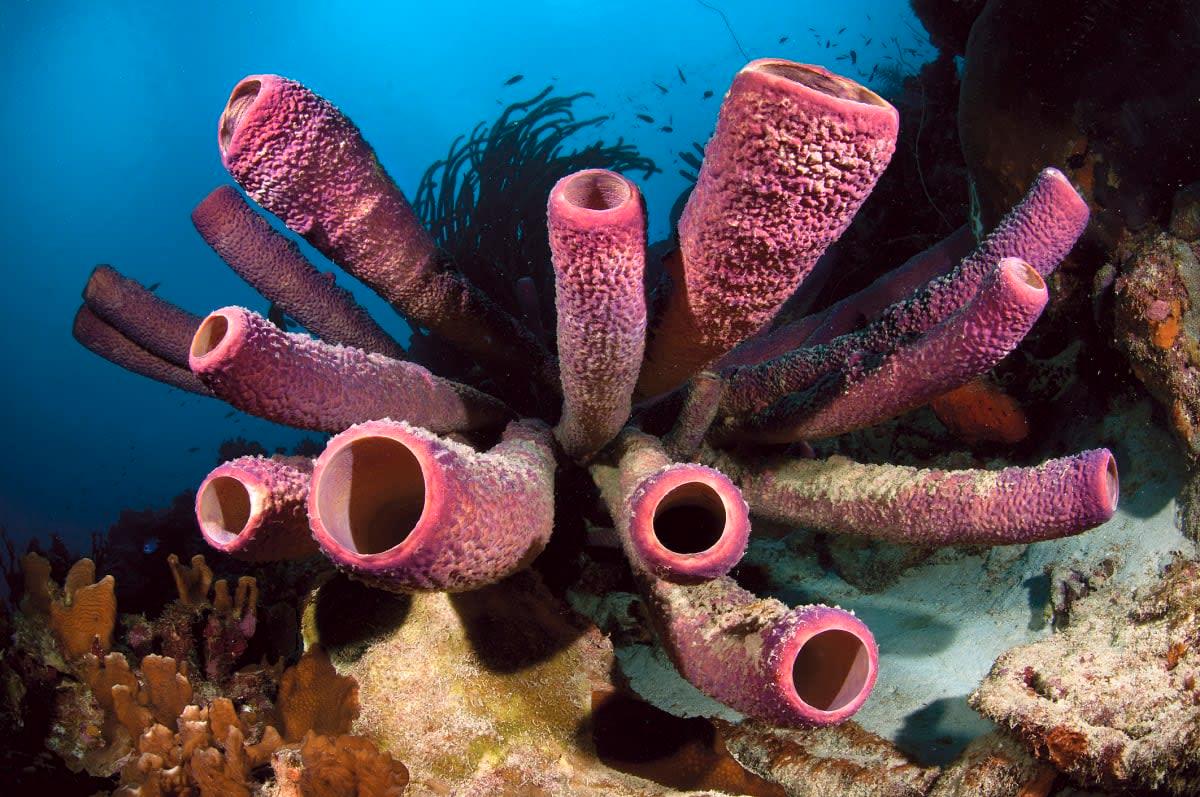
Tube-like sea sponges featuring pinkish colors latching on the sea floor in the Yellow Man Reef, Klein Bonaire
Led by Dr. M. Eleonora Rossi of the University of Bristol's School of Biological Sciences, the research followed a mystery that was revealed through two triggers. The first was a discrepancy in the timeline, and the other was an inconsistency in the fossil records. Since an organism needs to have a skeleton to leave behind a fossil once it dies, the existence of a skeleton is a clue that the organism had a skeleton. However, the oldest known fossil records of sea sponges have a discrepancy with the earliest known sponge ancestor. Studies of molecular clocks suggested that sea sponges emerged in the Tonian or Cryogenian period, from 650 million to 1000 million years ago. Whereas, the earliest fossil records turned out to be from the late Ediacaran Period, from 543 to 600 million years ago. Why were the fossil records absent from the Ediacaran Period? Herein lies the mystery. The sponges are known to have millions of tiny, glass-like hairs on their body. Then why were they not there in the fossil records?
The question and the 100-million-year discrepancy in the ancestral timeline prompted Dr. Rossi and her team to delve deeper into the discrepancy and solve the mystery. By investigating the DNA of sea sponges, together with the chemicals trapped in ancient rocks, they deduced that the sponges were not only the oldest animals on earth, but also somewhat of a wild demeanor.
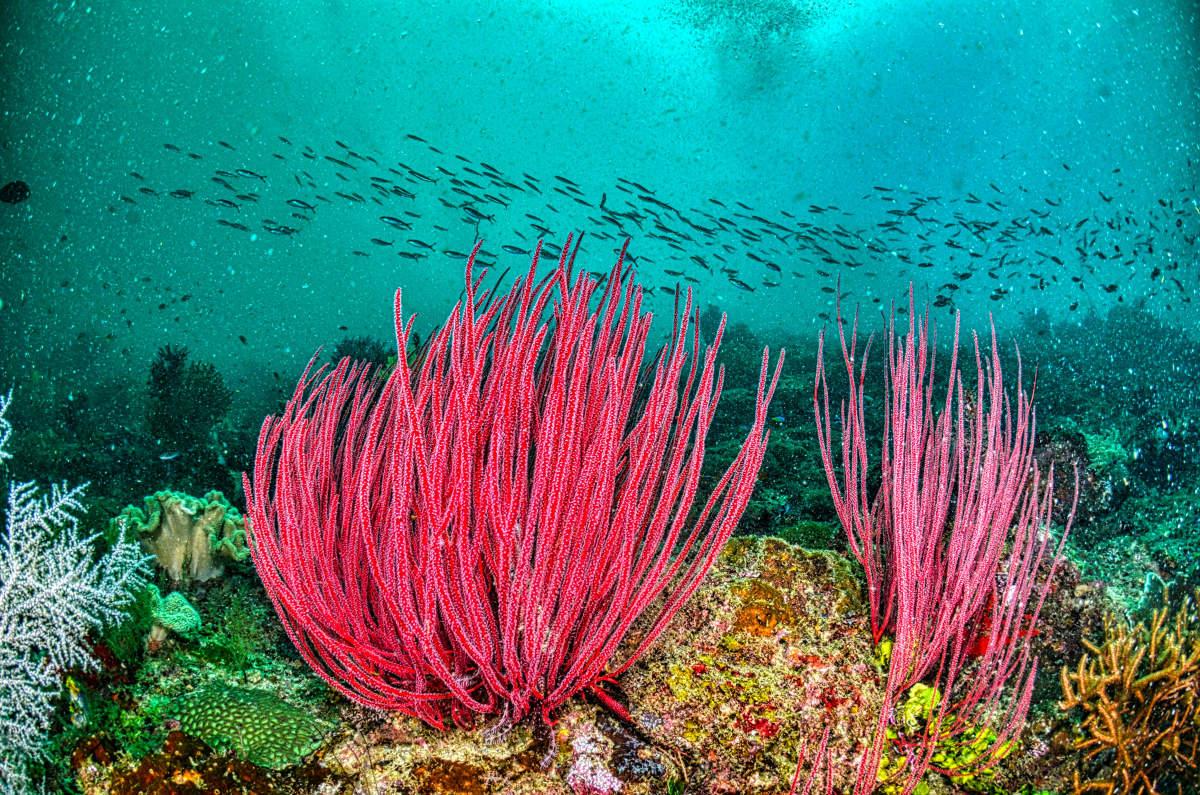
A carpet of pink ribbon-like sea sponges sticking to the sea floor
Unlike most species, the family of sponges did not follow a single route of evolution. In their earliest phases of evolution, they were soft-bodied animals, devoid of skeletons. As they died, their jelly-like bodies got squashed and swallowed up by the ocean's mouth and were, therefore, incapable of building a fossil record for future generations. "Early sponges did not have skeletal elements made of silica," researchers wrote in the study.
The missing link was unraveled through an event called the "Cambrian explosion." Before this event, the planet was inhabited mostly by soft, squishy, skeleton-free animals. It was only after this explosion that animals started evolving hard shells, eyes, and skeletons in their bodies. The link suggests two important facts about the earliest sea sponges. First, their earliest ancestors were like jellyfish and sea cucumbers, rather than the skeleton-studded filter feeders that we see today. Second, since they existed before the Cambrian explosion, they were among the oldest animals on the planet.
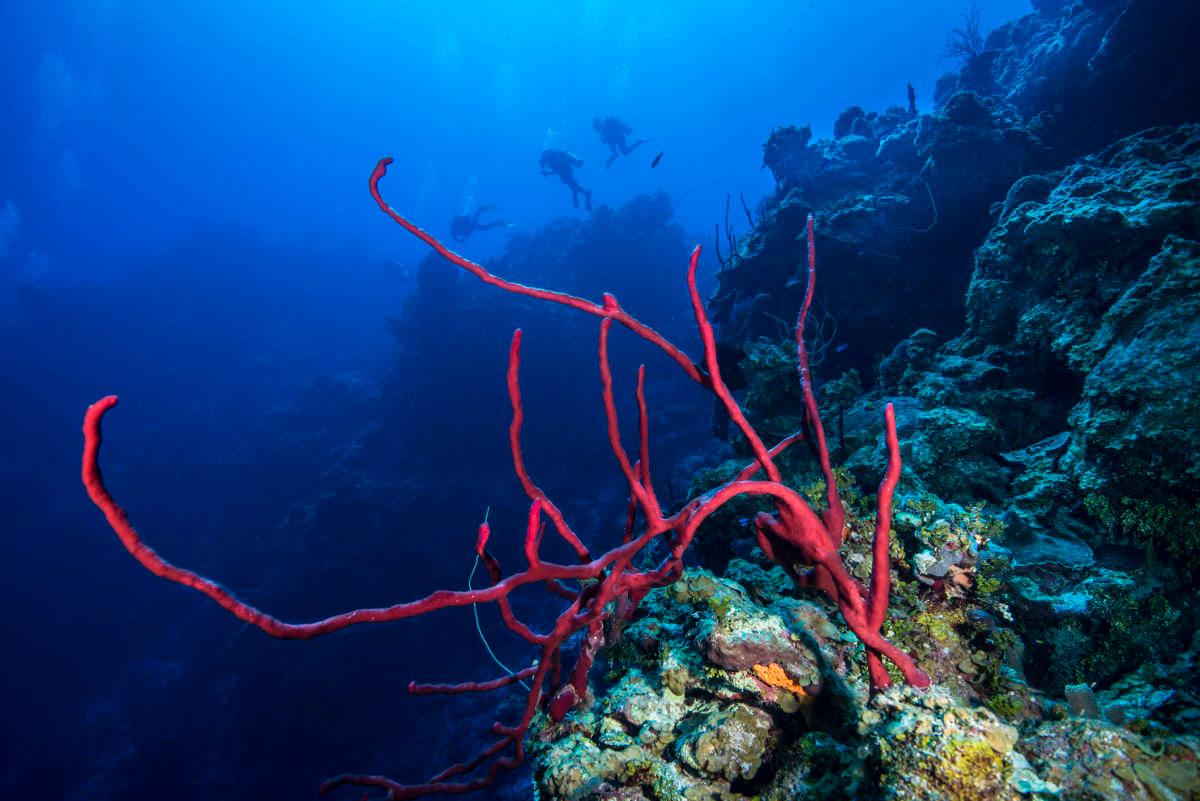
Red-colored threadlike sea sponges in Little Cayman
To decipher the mystery, Dr. Rossi employed a two-step approach. First, she and her team created the timescale for sponge evolution by combining high-quality data from 133 protein-coding genes with fossil evidence. Second, they examined the evolutionary trail of sponge skeletons, separating them into groups based on whether they had or did not have skeletons.
"Our results show that the first sponges were soft-bodied and lacked mineralized skeletons. That's why we don't see sponge spicules in rocks from around 600 million years ago — there simply weren't any to preserve," Dr. Rossi confirmed in a press release. The team also used a Markov model to model transitions between different skeletal types, ultimately "rejecting" the hypothesis that calcareous skeletal elements in sponges were present in their crown ancestors. The great-great-great-grandpa was simply a skeleton-less jelly, while the current generation has only lollipops with stick-like skeletons.