
Scientists Capture Footage of Sea Lion Mom Teaching Her 11-Month Old Pup Important Survival Skills
Published Feb. 11 2026, 9:17 a.m. ET

Images from camera attached to female Australian sea lion, showing pup (a) traveling across a sponge garden habitat, (b) swimming over bare sand, (c) ascending, (d) at the surface
It was some homework time for an eleven-month-old Australian sea lion pup living in a colony at Sea Bay in the heart of South Australia’s Kangaroo Island. Its mother had called it for an underwater foraging trip across sponge gardens, kelp reefs, and sandy plains to teach the pup a lesson or two about foraging, predation, and self-defense. On the way, she even trapped a giant cuttlefish and hauled it to the surface to devour, her pup sitting close and munching on chopped fish pieces. A few days later, when the mother returned to the colony from the sea, a team of scientists unstrapped the cameras, dive recorders, and GPS trackers they had attached to her body, downloaded the recordings, and documented the details of their trip in a study published in the Australian Journal of Zoology.
Most seals around the world give birth to their pups at around the same time each year and spend a cycle of almost 12 months nurturing and training them. Australian sea lions are different. Their routines are a bit out of sync with most seals. Instead, they spend 18 months caring for their pups, with the extra six months added probably to train them in interesting foraging strategies.
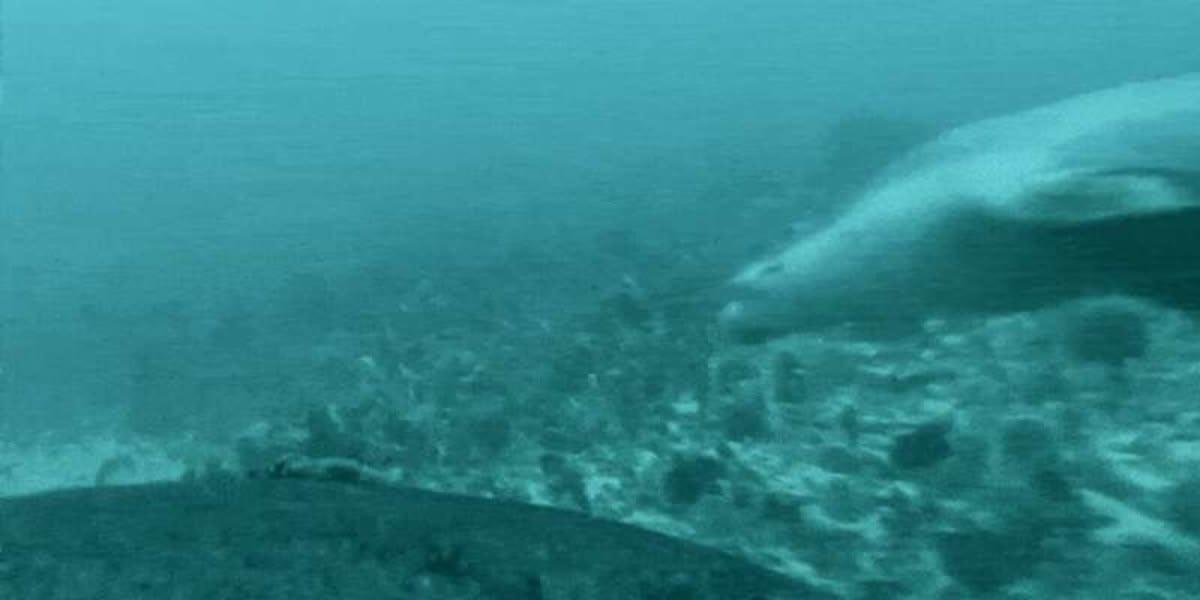
A shot of the sea lion swimming by.
Led by Nathan Angelakis, an evolutionary biologist from Adelaide University, the team of biologists captured footage of this mother-pup pair as they ventured on an eight-hour foraging trip. “This footage provides the first direct evidence we have that Australian sea lion mothers pass on foraging skills to their pups – which may have helped shape the unique life and reproductive patterns of this endangered creature,” Angelakis said in The Conversation.
Analysis of the video was conducted using the open-source Behavioral Observation Research Interactive Software, including factors like distance matrix, dive performance, and statistical differences between bottom duration, dive duration, and bottom depth. The team also recorded the duration of time spent in different benthic habitats, the duration of predation events, and the various tantrums and behaviors of the little pup. Unlike humans, mammals don’t have schools or institutions where they can learn lessons of math and grammar. Their fierce moms take up the entire responsibility on their shoulders to train their kids in the essential traits they need in life.
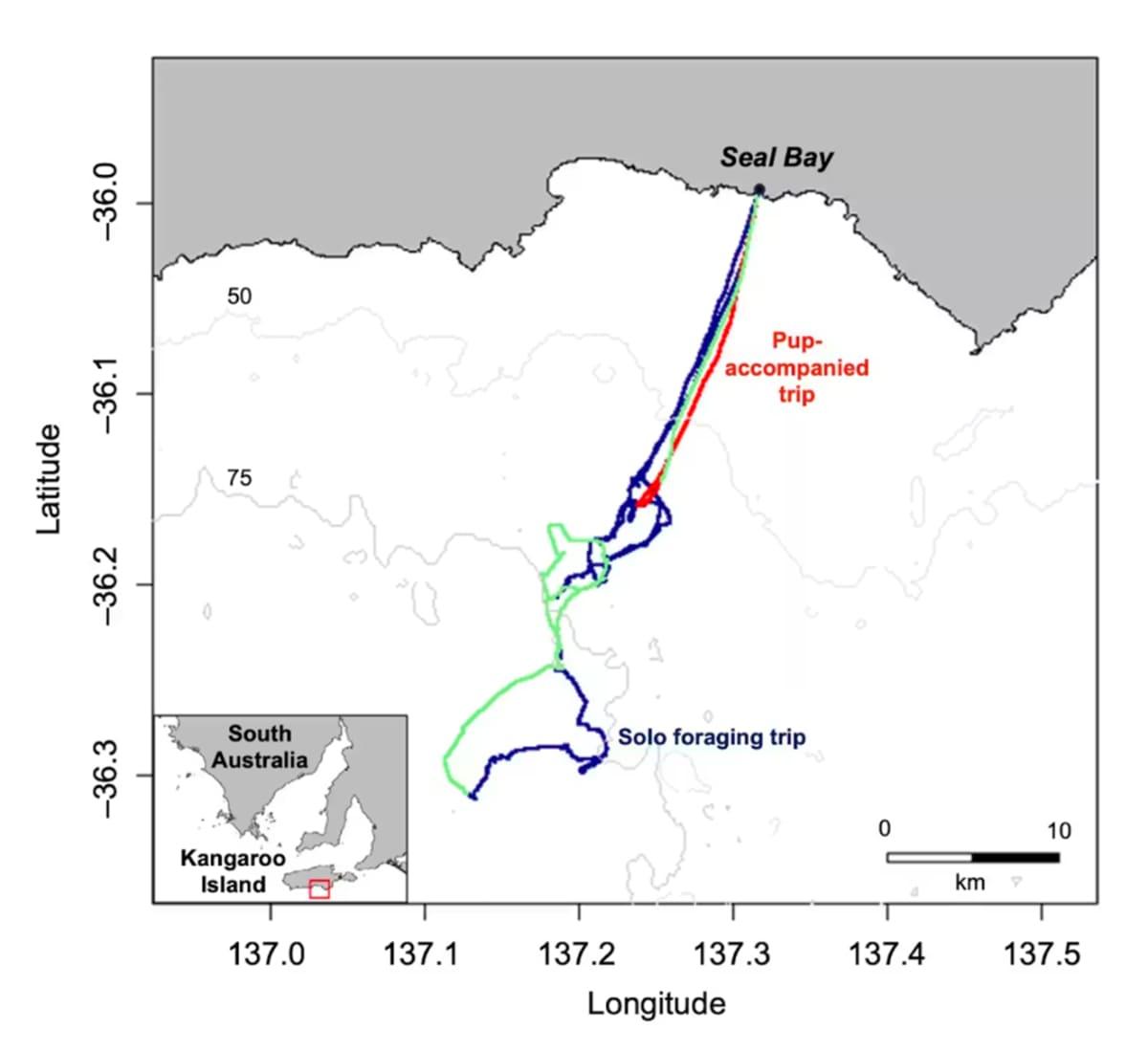
A map showing the mother sea lion’s trip with the pup compared to her solo travel.
Eastern chimpanzee mothers, for example, demonstrate the use of sticks for “termite fishing” to their young. Bottlenose dolphins teach their children to use sponges to protect their rostrums while foraging on the seabed. Pinniped pups accompany their mothers at sea in walruses. Australian sea lion moms also pass on their knowledge to the young, often assisting them in learning how to utilize different or difficult situations to exploit prey and make the best use of their habitats. They vigorously train their pups in social learning, pass on foraging skills, and teach them how to locate, capture, and consume prey. For years, scientists have speculated that these sea lions might use social learning, but they never got to have evidence of it. Until this footage came out.
With advanced deployments of animal cameras and biologging technologies, scientists can keep a better eye on adult females and their pups and also understand the importance of timing and social transmission in foraging trips. Meanwhile, they will continue the research to gain a deeper understanding of the ecology and evolutionary biology of the species, which will also unlock the strategies they need to protect this intelligent population.