On November 3, 2024, the U.S. Fish and Wildlife Service shared an image of two small tanks filled with muddy lake water, on X (formerly Twitter). It was originally taken by the Partnership for the Delaware Estuary, per the source. The muddy water in each tank contained sediment and algae but one of them was complemented with about 15 mussels. The experiment was done to showcase the filtration abilities of the mussels and rightfully so, the tank had crisp clear water within 90 minutes of the mussels' inclusion.
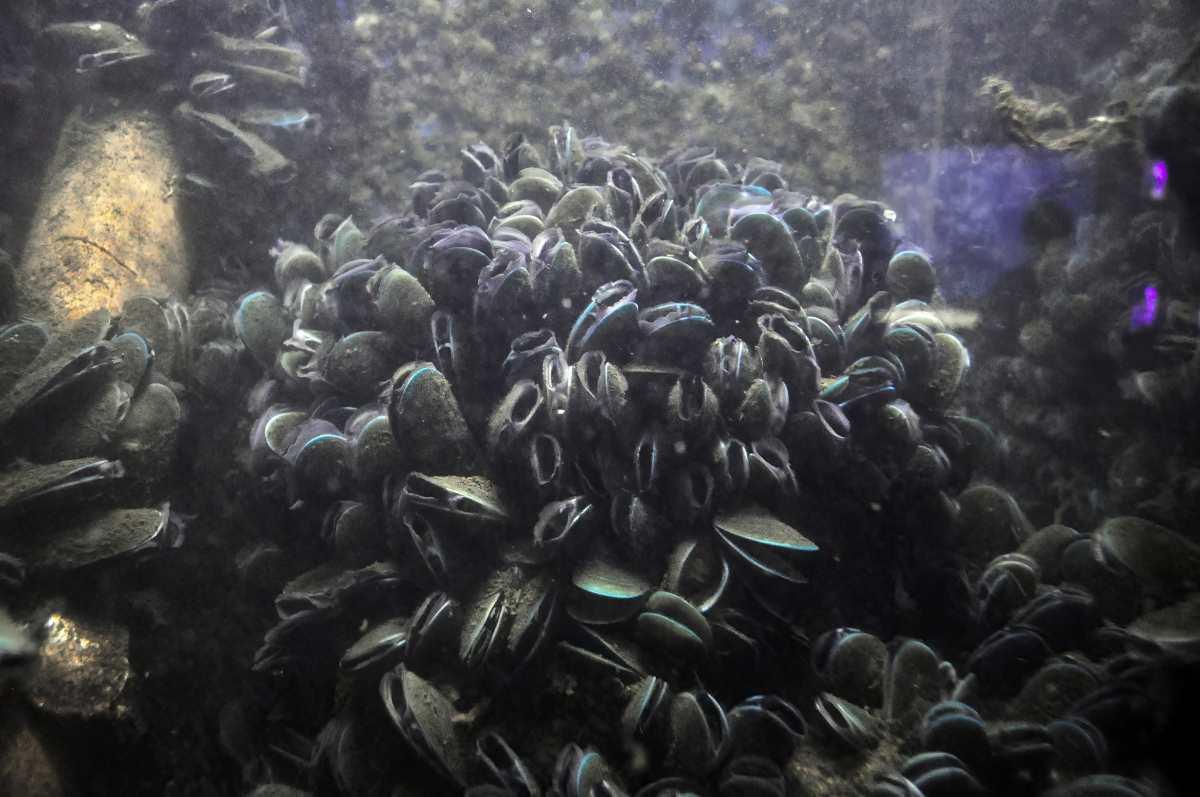
Authorities have witnessed an increase in mass mortality rates of freshwater mussels over the years, particularly across Michigan, Minnesota, North Carolina, Ohio, Oregon, Virginia, Washington, and Wisconsin, the FWS reported. For those wondering about the lifespan of mussels, these creatures live up to a century. So, the increased deaths are not linked to their life cycle but due to habitat changes and degradation.
However, a 2020 study discovered a new virus of the Densovirinae subfamily prevalent among the sick and dying mussels compared to the healthy ones. Experts deduced the virus could potentially pose a risk to the mussel population at large. Therefore, Tony Goldberg, author of the study and professor at the University of Wisconsin-Madison said in a press release, “If we lose mussels, the rivers, lakes, and things that depend on them will never be the same.”
Additionally, their populations are said to be at an all-time low currently due to pollution, infrastructure development, and overharvesting done in the early 1900s, per the source. The Minnesota Department of Natural Resources revealed that 28 out of 51 native mussel species are either endangered, threatened, or of special concern in Minnesota. Mussel biologist, Nick Utrup said the massive sedimentation in the Minnesota River is one reason for the low populations of freshwater mussels. Zebra mussels, an invasive species, have also contributed to the endangering of freshwater mussel populations.