
Once a Year, This Yosemite Waterfall Looks Like It’s on Fire — And It’s Happening Now
Published Feb. 11 2026, 6:51 a.m. ET

General view of the Yosemite Firefall natural phenomenon at Horsetail Fall ending in a pinkish hue
Just ahead of spring each year, El Capitan, Yosemite’s towering granite rock, turns into a mirror that reflects one of the most breathtaking spectacles of the year. In the midst of Valentine’s week, when the air is exploding with the scent of romantic desires, the waters of Yosemite turn into glaring, fiery fire. Over the west side of the rocky cliff, the Sun gets in the mood to retire behind the horizon. While it sinks slowly, a moment comes when its bright orange eye comes face to face with the southern bulge of the rock.
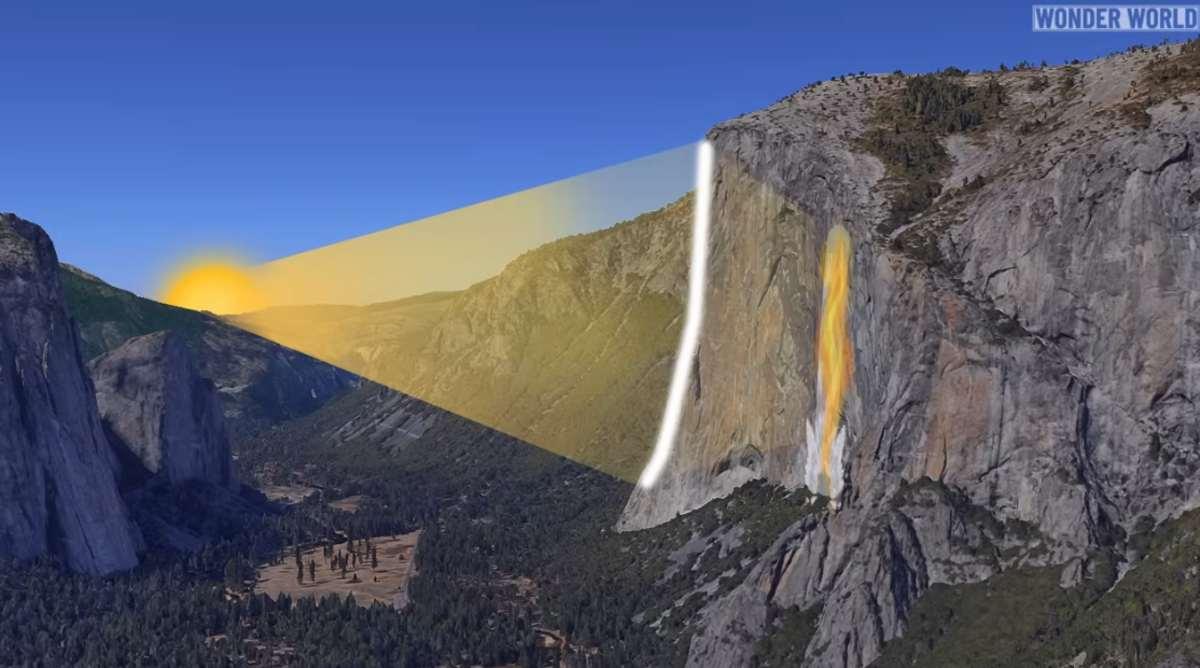
Science and precise geometry that enables the appearance of glowing waterfall at Yosemite's El Capitan
Light claps with geometry, and magic unfolds on the canvas of El Capitan. For a few minutes, about 5 to 15, the outpouring deluge of water dresses up in a deceptive orange-golden glow that looks like a flaming limb of fresh embers rolling from the lip of El Capitan. Beneath the pinkening-orange skies, this barrage of volcanic, molten-looking fire is known as “firefall.” This year, the park is inviting visitors to witness the stunning phenomenon from February 10 to February 26.
El Capitan, it seems, is destined for hosting these firelight shows. From the 1870s to the late 1960s, the owner of the old Glacier Point Hotel used the rock for carrying out a bizarre practice. Each day, he would kick glowering embers from the lodge’s campfire. He would push the embers down the edge each night, which would then tumble down the slope in a blazing stream. Years later, after the practice was banned, the rock revealed the natural phenomenon of firefall. Ever since, it has been attracting whopping crowds of people from across the town.
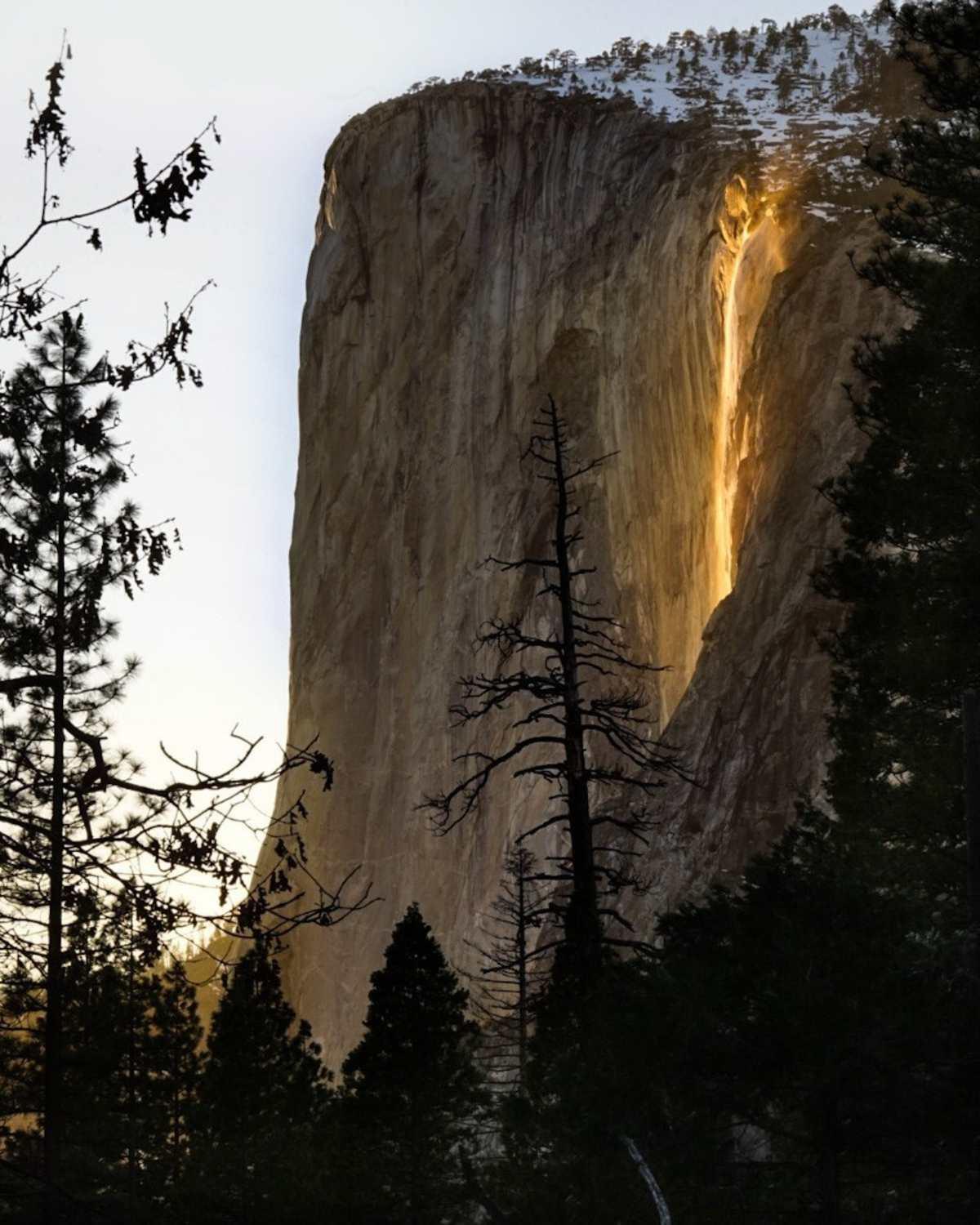
Spectacular optical phenomenon that unfolds in Yosemite National Park as sunlight turns the water into fire
Towing SLR cameras, telephoto lenses, flashlights, torches, tripods, water bottles, snacks, lawn chairs, and lots of excitement, visitors flock to the valley floor, as eager as curious to unravel the glowing sight. The previous year, the government shutdown imposed prolonged closure on the park, limiting the free-entry days and adding hikes in prices. This year, the officials have decided to loosen the restrictions. Visitors no longer require a reservation to witness the February firefall, per NPS. One downside of this would likely be overcrowding, with thousands of people flocking to watch the scene. The park’s rangers and crowd management officers have already planned different strategies to prevent any disruptions.
Park Superintendent Ray McPadden shared with the Mariposa Gazette that “a bunch of boots on the ground is going to be their principal strategy” in preventing traffic buildup and bottlenecks. They are also encouraging visitors to carpool and arrive early. Photographer Aaron Meyers, who has famously shot the event in the last few years, suggests that visitors arrive at the El Capitan picnic area on Northside Drive, as the areas on Southside Drive will likely remain closed.
The Southside Drive, he said, will be open to vehicles, but parking or unloading passengers will be prohibited. Pedestrians will also be prohibited from traveling on or adjacent to the road in the area. The trail along the Cathedral Beach Picnic Area to Sentinel Beach Picnic Area, between the road and the Merced River, will also be closed to all entry. Outside Magazine mentions that the Groveland-based Rush Creek Lodge and the Evergreen Lodge will also offer shuttle services with guided tours from a naturalist and an inclusive dinner for visitors interested in watching the firefall.