
This March Will Bring the Best Northern Lights Until The 2030s. Here's How to Spot Them
Updated March 5 2026, 7:03 a.m. ET

A man watching the Northern Lights.
March is the month of glow. This glow will materialize out of the gases accumulated in the sky, with a little help from the Sun. Oxygen will produce green and red glows. Nitrogen will cause blue and pink glows. It seems almost unreal how the very gas molecules we breathe might turn into little prisms exploding with a kaleidoscope of colors, but it’s courtesy of a celestial geometry that this will be made possible at the arrival of spring. Choregraphed by cosmic math, Earth will shift into one of the “most aurora-friendly positions of the year,” which, experts believe, makes this March one of the best months to witness auroras in nearly a decade. The credit for this visual feast goes to a cosmic combo: the solar mechanics and a geometrical alignment powered by the “equinox effect.”
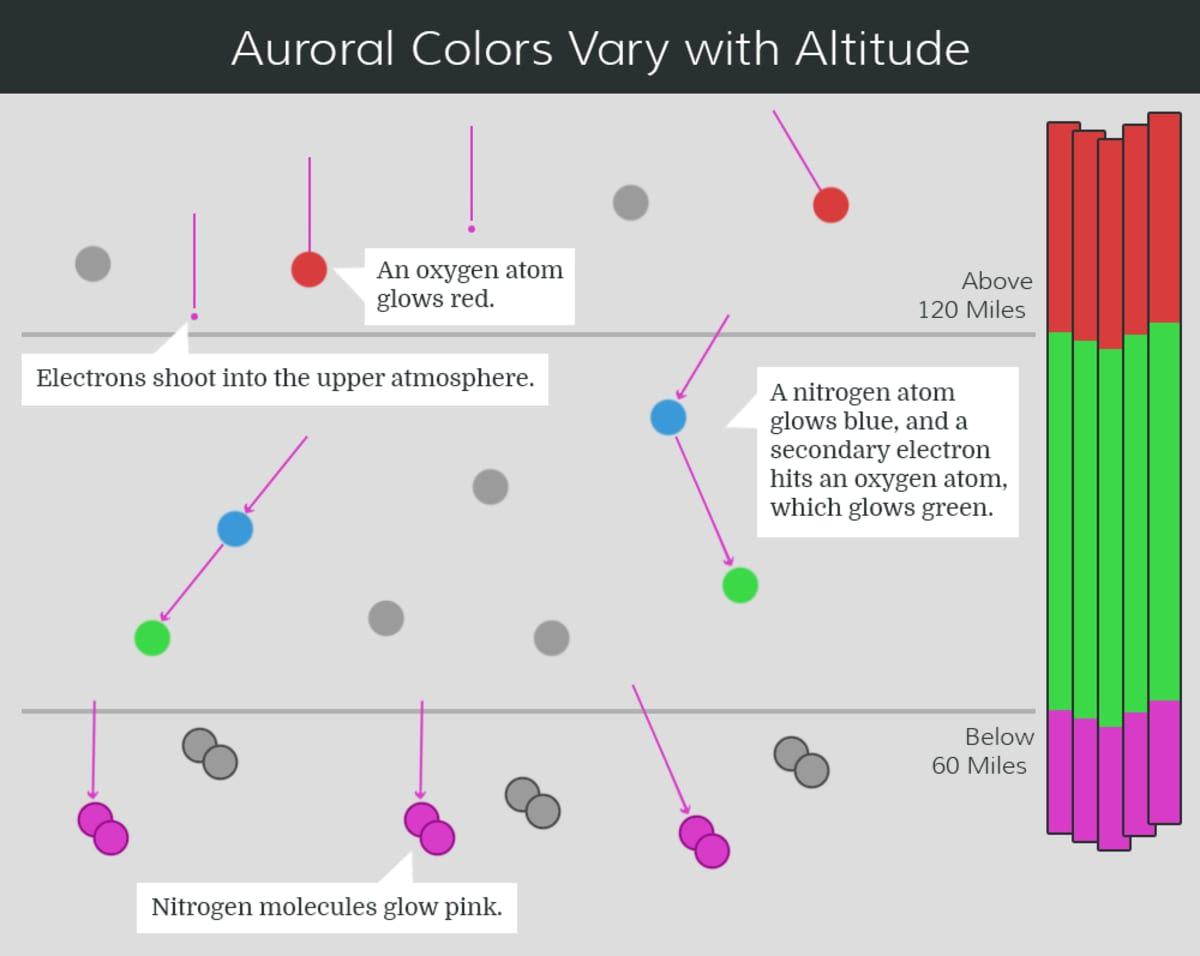
The colors of an aurora reveal where the lights were created as well as what atoms and molecules created them.
Equinox is the time of the year when Earth’s magnetic axis tilts in such a way that causes the Earth’s magnetic field to come at a right angle to the direction of the solar wind. This makes things easier for the solar wind. For the charged particles arriving from the Sun, it becomes easier to open the Earth’s magnetic gates and breach through the boundary. When they do, they collide with the gas molecules, turning them excited.
Also known as the Russell-McPherron (R-M) effect, the equinox effect, which increases chances of auroral activity significantly, was first explained by scientists Christopher Russell and Robert McPherron in the Journal of Geophysical Research. They said that auroras are most likely to be seen in March and September because south-pointing magnetic fields in the solar wind cancel out Earth's north-pointing magnetic field. This, in turn, makes it easier for solar winds to flow along magnetic field lines, which help charged particles to collide with oxygen and nitrogen atoms in the upper atmosphere, hence causing auroras.
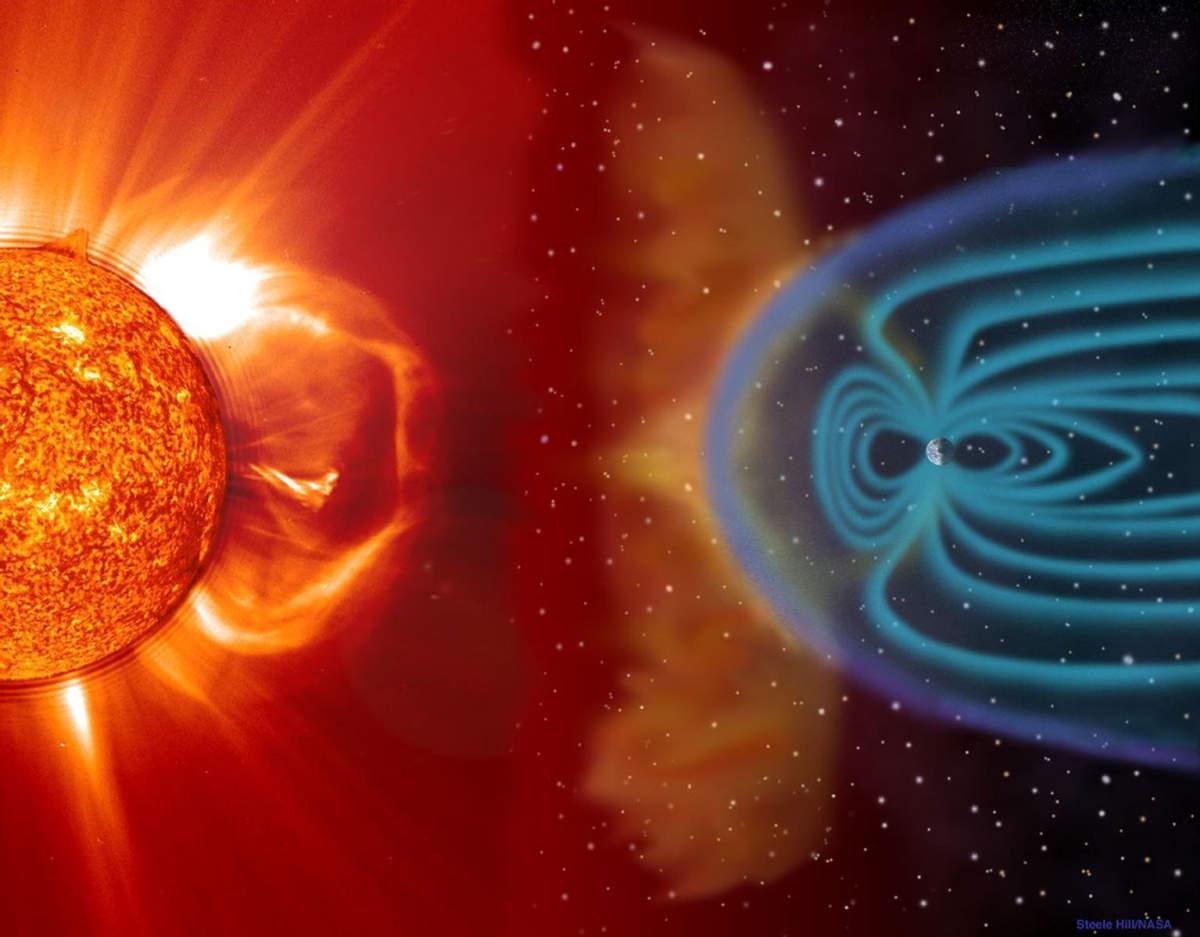
Illustration of the invisible magnetic field that shields Earth from solar wind and other space radiation.
At about 10:46 am EDT on March 20, the Sun will cross the equator, marking the spring equinox in the Northern Hemisphere and fall equinox in the Southern Hemisphere. This time, the effect is paired with intense solar activity as the Sun's 11-year solar activity cycle is coming to an end.
The most active regions will remain those in high-latitude regions, including Alaska, Northern Canada, Iceland, Greenland, Norway, Sweden, and Finland, per PEOPLE. In the U.S., you may be able to see auroras from March 5 to March 6 in parts of Washington, Idaho, Montana, North Dakota, South Dakota, Minnesota, Wisconsin, Michigan, and Maine. Faint auroras may light the skies in northern regions of Oregon, Nebraska, Iowa, Illinois, Indiana, Ohio, New York, Vermont, and New Hampshire, according to Forbes.
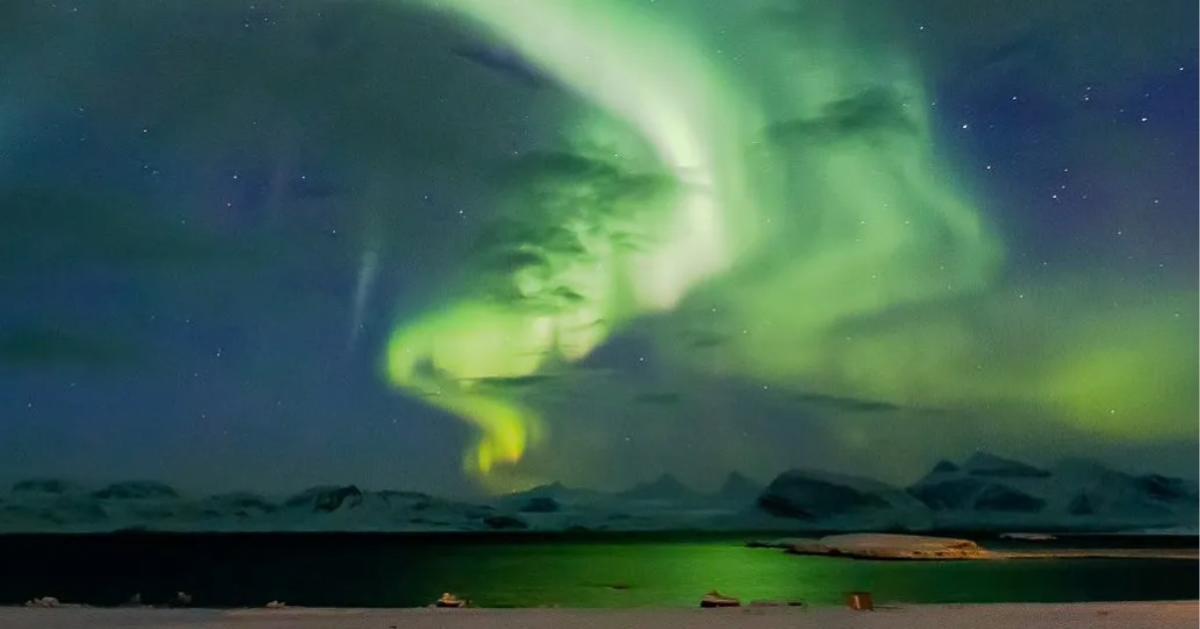
Green hues of Northern Lights seen across the sky
Experts suggest a location that offers unobstructed views and is away from the polluted glare of city lights. Switch off your car headlights and torches that might interfere with the aurora’s view. Gary Macleod, an amateur photographer, suggested that he sometimes likes switching off the camera for a while and just watching, “because there is no better memory card than your own memory.” You can also choose to view the Northern Lights from many of the dark-sky parks that host glass-roofed lodges and wilderness hotels. “You just need to be in the right place,” Jonny Cooper, founder of Nordic travel company Off The Map Travel and the creator of the aurora-forecasting app Aurora Buddy, told Condé Nast Traveller.