
Green Ice Forms in Lake in Czech Republic — And Scientists Think They Know Why
Published Jan. 29 2026, 3:05 a.m. ET

Emerald green carpet of cyanobacteria concealing South Bohemia's Lake Lipno along with pieces of cracked ice
On Christmas Eve last year, hydrobiologists from the Czech Academy of Sciences’s Biology Center came across an unusual sight that prompted them to initiate research. Nestled within the rolling Sumava foothills, South Bohemia’s Lake Lipno seemed to be dressed up in a “green ice” that resembled a carpet of emeralds or a pea soup. Flanked by spruce-pine woodlands, gentle sandy slopes, grassy coves, rugged plateaus, and peat bogs, the carpet lingered close to the surface in the frozen lake.
When scientists couldn’t hold back their curiosity, they scooped out several water samples. Back in the laboratory, when they examined the samples, the mystery cracked. A blue-green organism trapped beneath the ice was quietly colonizing the lake’s waters, suffocating fish and other residents. The organism is behaving like a chameleon, changing colors from blue to green to brown to yellow. And it even has eyes.
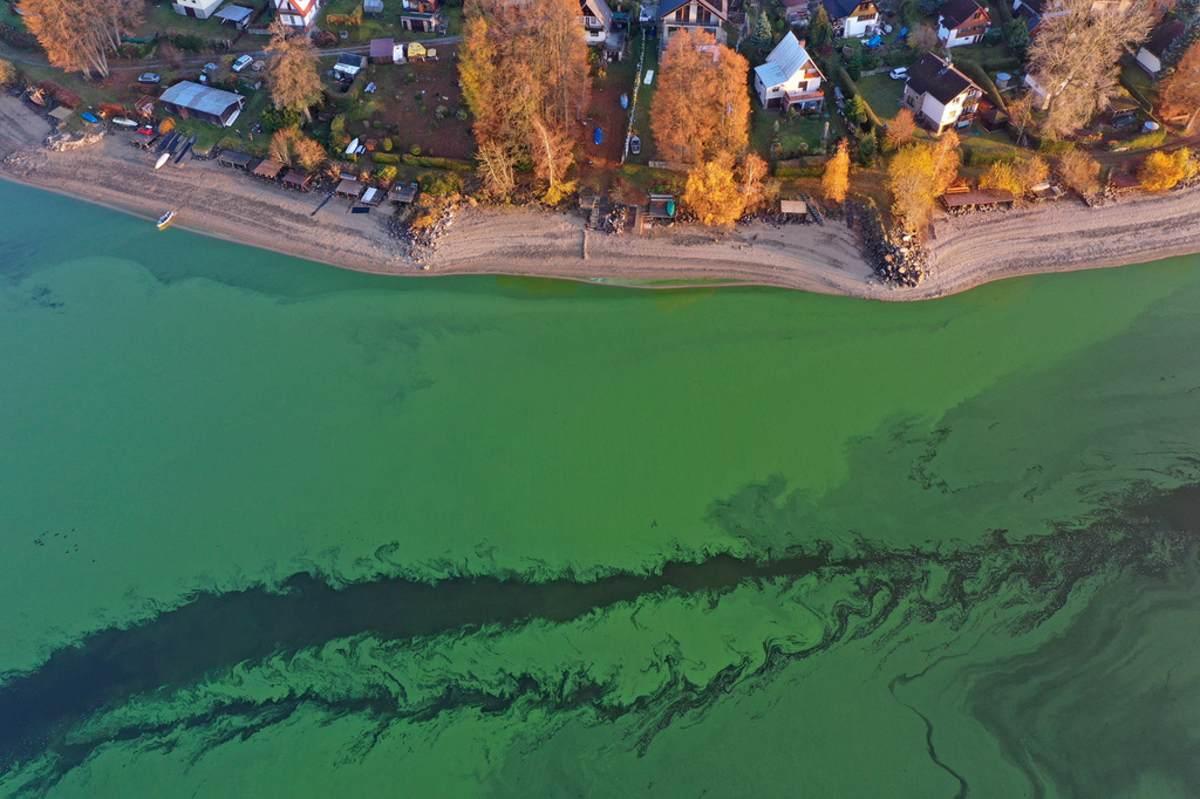
Emerald green carpet of cyanobacteria concealing South Bohemia's Lake Lipno along with pieces of cracked ice
After the reservoir froze, a mix of calm weather, lazy winds, and glaring sunshine triggered the proliferation of cyanobacteria. After materializing in the lake’s waters, it started reproducing itself, ultimately invading the entire territory and forming this squishy greenish blanket beneath the thin, transparent layer of glassy ice.
Shortly after the temporary warming period in late 2025 gave way to a colder season, the biologists also noticed what they called “cyanobacterial eyes” emerging in the blanket of emerald ice. These eyes, they explained, were actually areas of clear, thick ice that concealed the dark cyanobacterial aggregates due to differences in the absorption of solar radiation. Like a mat decorated with an embossed polka-dot pattern, different patches of ice absorbed the sunlight differently. Those who absorbed more remained green, while the rest of the patches were wrapped by little disks of ice.
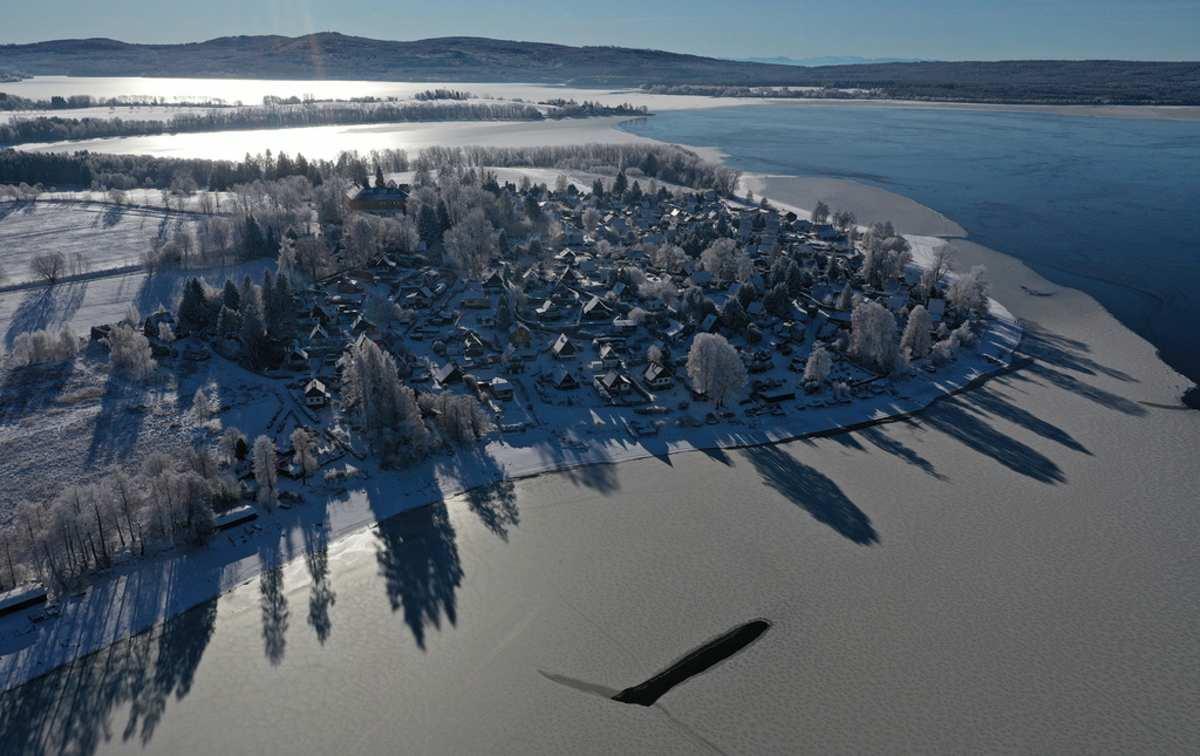
Terrain surrounding South Bohemia's Lake Lipno
Microscopic analysis revealed that the lake is sloshing with an abundance, a burden in fact, of this cyanobacterium, also called Woronichinia naegeliana. In most lakes, algal blooms disappear by September, but Lake Lipno is exhibiting an exception by hosting the blooms till November, sometimes even January. This is an unusually long time for an algal bloom to persist, which is not good news for the lake’s residents.
The culprit, as it turns out, is humans. Inundations of agricultural runoff, fossil fuels, sewage, and garden fertilizers started the whole drama. The drama was then fuelled by environmental conditions like recurring storms, rain, snow, and winds. Add to it the poopy droppings that local animals left near the shore or in the water, plus the heaps of sediments sitting on the lakebed. Over several years, all these factors combined bombarded the water with nutrients like phosphates and nitrates, a process called eutrophication, per NOAA.
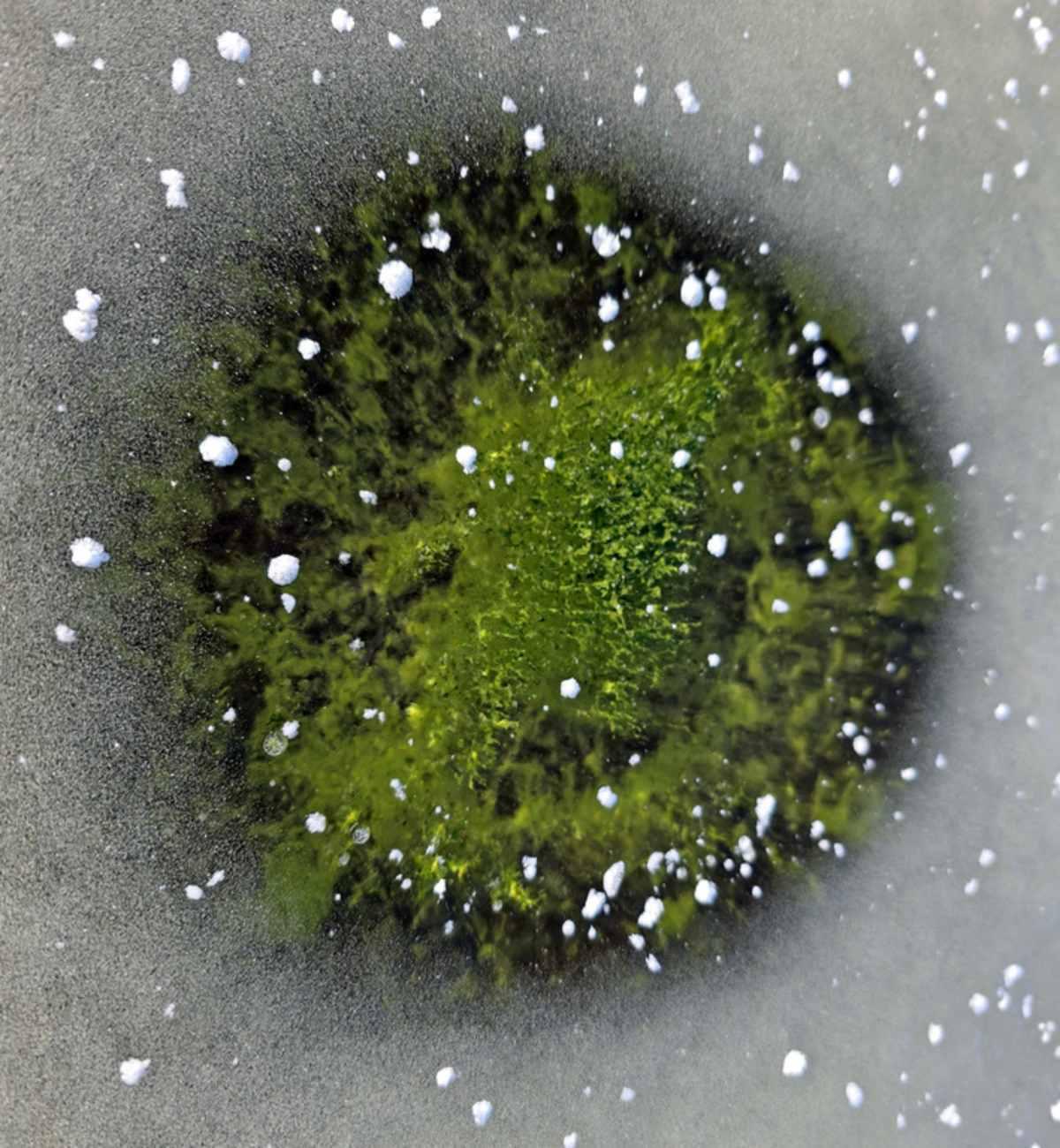
Eyes of ice appearing in the emerald green carpet of cyanobacteria concealing South Bohemia's Lake Lipno, along with pieces of cracked ice
After getting overwhelmed by an excess of plant nutrients, the lake developed algal blooms that went out of control. The more these blooms invaded the waters, the more oxygen they started consuming. Their opaque green carpet started blocking the sunlight, stealing the very source of food fish and other animals need to survive.
Researchers from Radio Prague International reflected that it’s a combination of several factors. “To put it simply, the cyanobacteria that were present in large quantities at the end of summer and the beginning of autumn managed to persist into winter and then froze there,” they described. This, they say, is one of the “best documented cases globally.” But hydrobiologist Petr Znachor suspects that we may witness similar surprises more frequently in the future.
While any lake looks best when it is glassy and crystal clear, Lake Lipno is still contributing interesting insights about nutrient dynamics, water quality, and climate change. Meanwhile, researchers suggest visitors avoid swimming until the green ice melts away. Skating is fine, though.