
Florida Zoo Creates ‘Ridiculous’ Plan to Stop a Wild Rhino from Going Blind. Surprisingly, It Worked
Published Feb. 19 2026, 4:33 a.m. ET

Daniel Terblanche shows Imvelo Safari Lodges staff how to handle Thuza, an endangered white rhino with a life-threatening eye infection, in Bulawayo, Zimbabwe, August 2025.
Experts have applied a unique strategy to save the eyes of endangered rhinos in Africa. The method was used by animal behaviorists collaborating with the Palm Beach Zoo & Conservation Society in Florida, according to Syracuse. The animal behaviorists traveled to Africa in August 2025, intending to assist an endangered white rhino suffering from a life-threatening parasitic eye infection.
In light of the situation, the experts devised a plan on the spot. They decided to bring the wild rhinoceros into a small chute and then deliver eye drops to it. “Believe me, we didn’t think of it; it was a completely ridiculous idea to us,” Daniel Terblanche, a security manager with Imvelo Safari Lodges, shared. ”But without trying all of the things that we could to rectify that situation, we would have been in trouble, I think.”
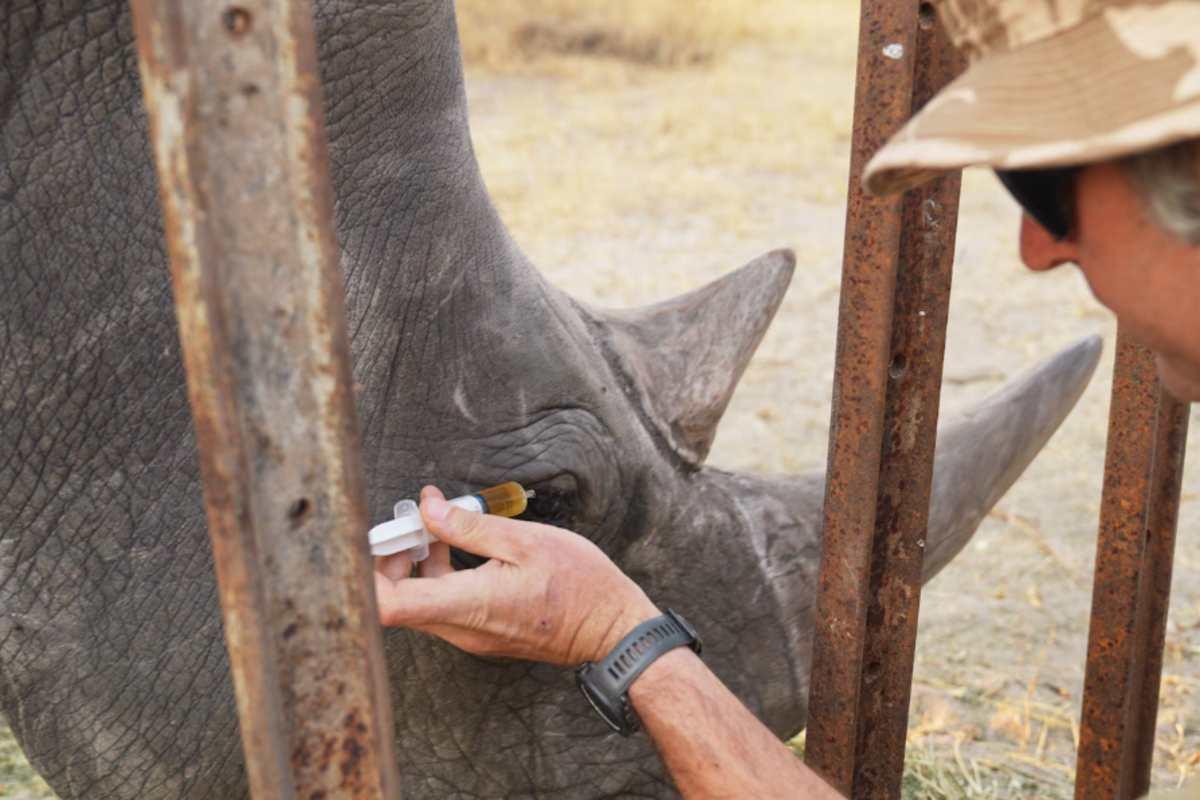
Daniel Terblanche applies medicine to an endangered white rhino's infected eye at the Imvelo Safari Lodges in Bulawayo, Zimbabwe, August 2025.
Imvelo Safari Lodges managing director Mark Butcher informed Palm Beach Zoo CEO and President Margo McKnight regarding a male rhino named Thuza suffering from eye infection, according to NBC News. The rhino had bleeding eyes and was constantly rubbing them. Caretakers were tense that the infection could cause vision loss. Thuza resides in the area where the Community Rhino Conservation Initiative and Imvelo Safari Lodges engage with Zimbabwe’s local communities to reintroduce southern white rhinos on their communal lands.
Southern white rhinos are categorized as “near threatened” on the IUCN Red List. Only about 16,000 remain in the wild. This species has been hit hard by habitat loss and poaching. Efforts like the one presided by Community Rhino Conservation Initiative and Imvelo Safari Lodges are crucial for the sustenance of these vulnerable creatures. According to Butcher, Thuza’s condition could hamper the project’s potential. Therefore, he requested the Florida zoo's help in dealing with the condition.
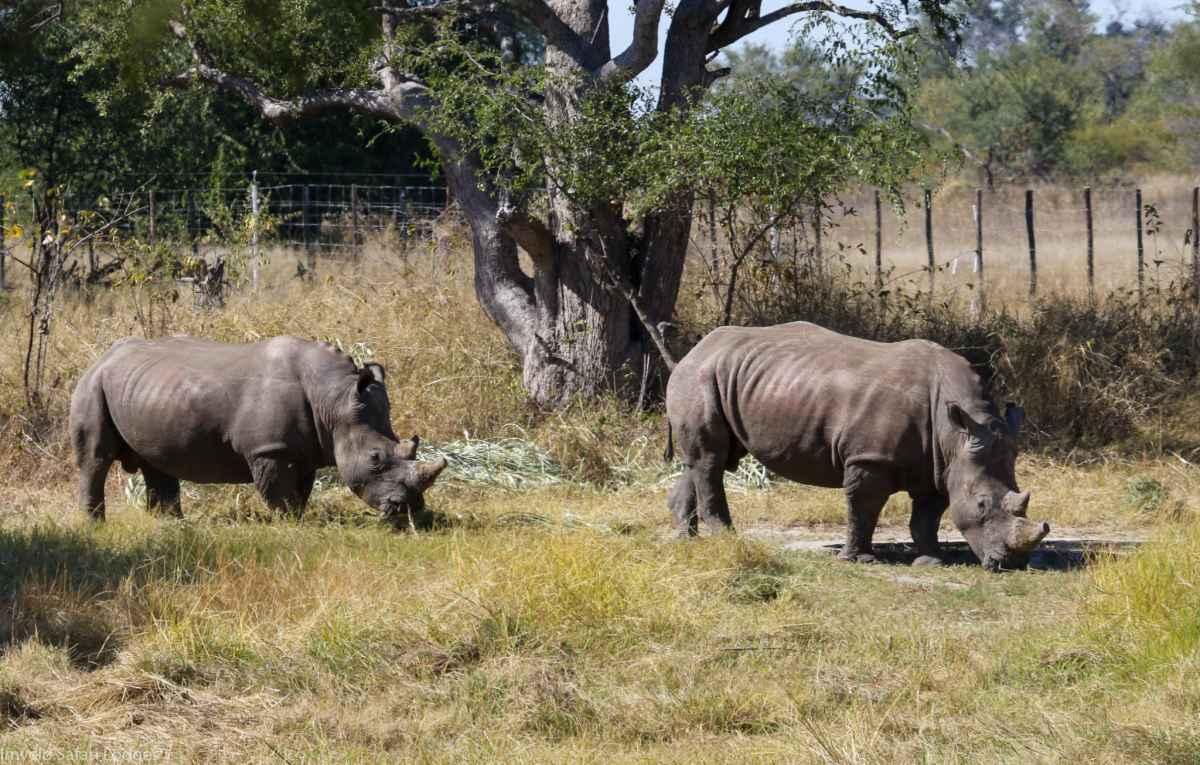
Thuza and Kusasa in Matabeleland North Province
Thad and Angi Lacinak, founders of Precision Behavior, went to Zimbabwe to collaborate with anti-poacher scouts. The duo had also worked with the Palm Beach Zoo and were sent to the site to help Thuza. After analyzing the situation, they developed a plan based on the lessons from their experiences in the zoo. During their zoo tenure, they had seen many animals voluntarily participate in their own care. The duo wanted to make something like that happen on this site.
At first, they lured the rhino into a confined space by filling it with its favorite food. Thereafter, through behavioral techniques, they desensitized it to human touch. Initially, they were squirting water on the rhino’s face, and then they slowly advanced to eye drops after a week. By the end of two weeks, the project guards were fully trained to deliver eye drops, so the process could go on even after the duo’s departure.
The duo was willing to try any and every idea, as the infection could spread fast amongst the small rhino population in the area. “With this few animals in this location in Africa, it was essential that we save all of them,” Angi Lacinak said. “So when they called and said Thuza is going to lose his eye, a blind rhino is a dead rhino. So no matter what it took, we were going to go over there and try.” The idea seemed to have worked, as the rhinos are thriving now.