
FDA Recalls Raw Milk Cheese Due to E. Coli Contamination — Check Your Fridge Now
Published Oct. 28 2025, 6:16 a.m. ET

A woman is looking at a block of cheese in a grocery store.
Another major recall has swept the food industry. Twin Sisters Creamery of Ferndale, Washington, has recalled several of its cheese products due to suspected contamination. The products made with unpasteurized and raw milk are believed to contain Shiga toxin-producing E. coli and E. coli O103. The issue came to light after three people got infected due to the E. coli outbreak, as per Food Safety News. The contaminated products were shipped to distributors across Oregon and Washington, and they were likely transported to retail stores for re-packaging. Among the affected products are cheese wheels of Whatcom Blue, Farmhouse, Peppercorn, and Mustard Seed cheese products. The Washington State Department of Health is working towards identifying more victims of STEC infection caused by cheese consumption and raising awareness about the issue.
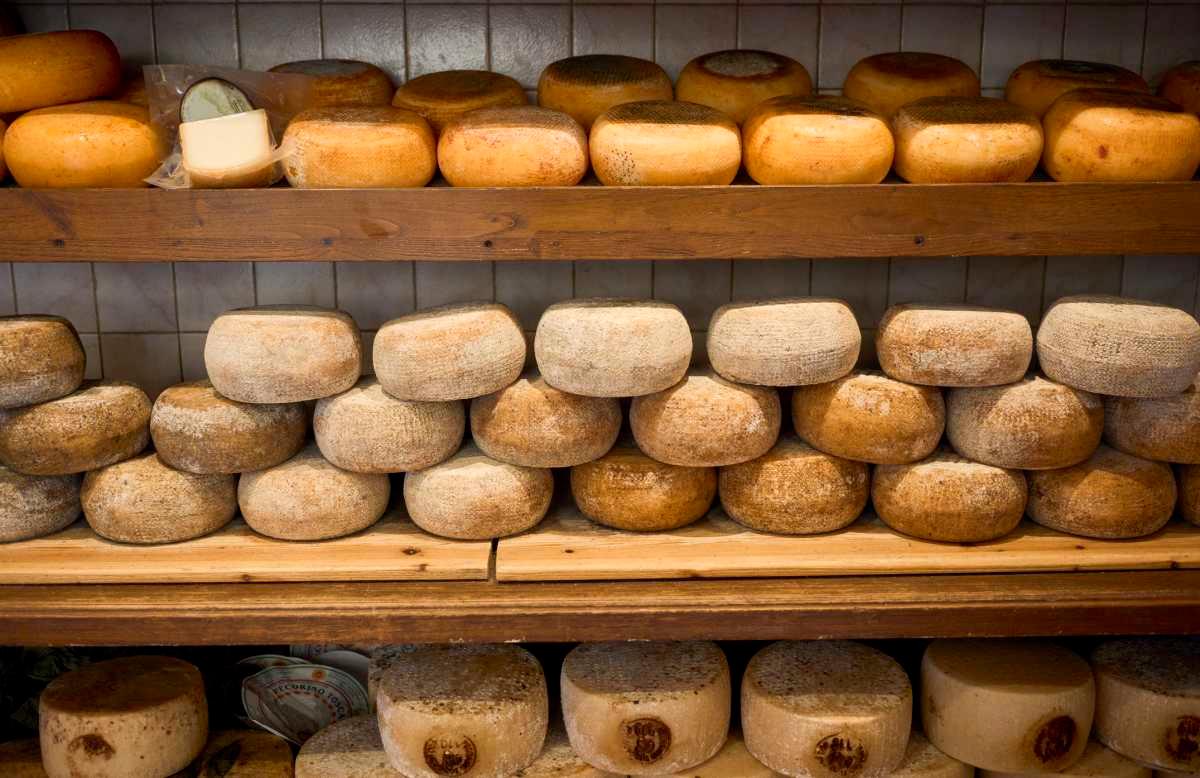
Locally produced cheeses are displayed on shelves
So far, two adults and one child have been infected with E. coli O103 between September 5 and September 16, 2025. Details of the product have been released, allowing people to distinguish the contaminated product from the rest. Batch Code 250527B, 250610B, 250618B, and 250624B for the Whatcom Blue product, Batch Code 250603F and 250616B for Farmhouse, Batch Code 250603P for Peppercorn, and 250616M for Mustard Seed were affected. If any consumer comes across these products with the above-mentioned batch numbers, don't purchase them at any cost. Although a recall has been announced, this step was taken to prevent further consumption of the rotten products that have already reached retail stores.

Woman cutting a chunk of cheese into slices
The challenging part is that some cheese products that reached retail stores underwent repacking and have a new lot number and expiration date. Since the original label won't be on those products, consumers must check the brand name of the cheese on the store/market label. According to the Washington Department of Health, tests on both opened and unopened Twin Sisters Creamery cheese samples have confirmed the presence of the E. coli causing agent. An opened leftover sample of Farmhouse cheese tested positive for E. coli O103, as did the sample collected from an unopened block of cheese from a retail store.
Woman shopping for groceries in a retail supermarket
Samples from multiple retail stores are currently undergoing testing, and Twin Sisters Creamery has been cooperating with the investigation. The recalled product is no longer available for purchase, and if it's available in the pantry of any consumer, authorities have advised to discard the product and clean and sanitize the surfaces they touched. In case of any symptoms, immediate medical consultation must be sought. Those who have been infected with E. coli after consuming the cheeses must consult a doctor as well and explain the extent of their exposure to the bacteria.

A woman with an upset stomach.
The symptoms of E. coli may vary from person to person. However, Food Safety News has mentioned that severe stomach cramps and diarrhea are common symptoms that the infected often encounter. Some may also show signs of fever or any other life-threatening symptoms. In case of moderate infections, a person can easily recover in a week, but severe cases might take more time. 5 to 10% of people are prone to developing a life-threatening kidney dysfunction or failure, known as hemolytic uremic syndrome. Fever, abdominal pain, exhaustion, reduced urination frequency, and random bruises and bleeding are major symptoms to detect kidney failure.