
Experts Find Oddly-Shaped 1,400-Year-Old Skull That Sheds New Light on Ancient Rituals and Identity
Published Dec. 30 2025, 7:19 a.m. ET

Two archaeologists at work
Archaeologists have uncovered an ancient skull with an unusual deformity that reveals far more than meets the eye. Mexico's National Institute of Anthropology and History (INAH) announced the find, revealing that the 1400-year-old skull was discovered in the Balcón de Montezuma Archaeological Zone in Tamaulipas for the first time. Further analysis revealed that the skull belonged to a man in his forties, who lived during the Mesoamerican Classic period and originated from the Sierra Madre Oriental region. Researchers believe that the deformation is not a reflection of evolution, but of cultural customs practiced between 400 and 900 AD. According to the translated text of the INAH press release, the archaeological zone found its first evidence of modification of skull structure, something that was previously found in regions like El Zapotal in Veracruz.
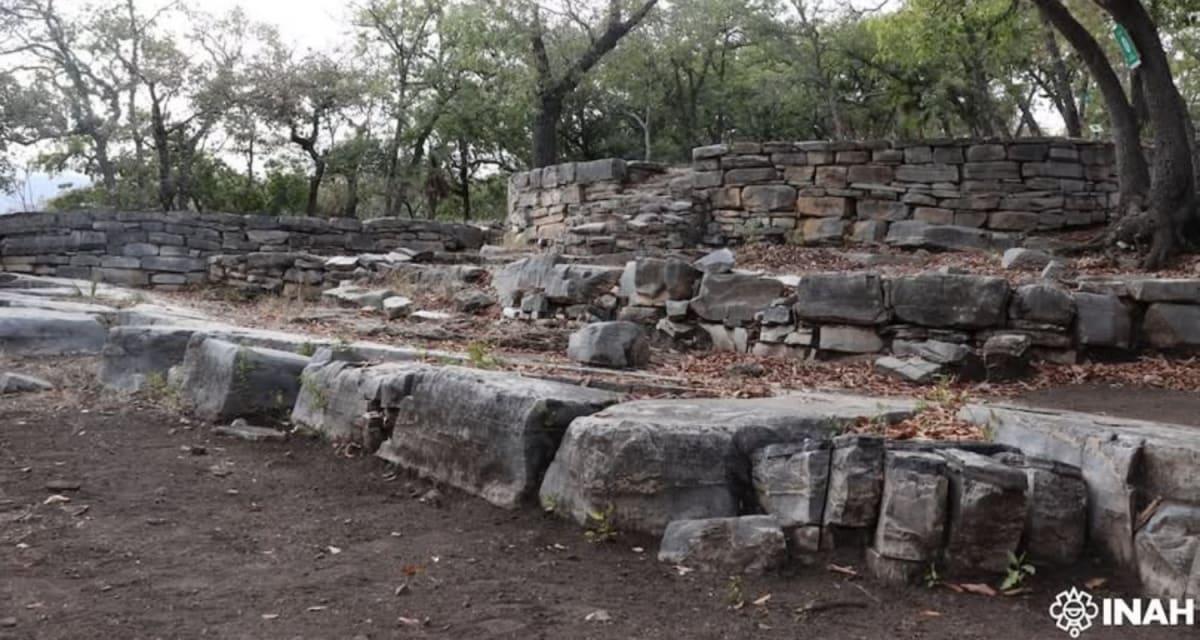
Balcón de Montezuma Archaeological Zone.
The recent finding was helmed by the INAH project called New Explorations in the Balcón de Montezuma Archaeological Zone, from the Formative to the Classic Period in the Sierra Madre Oriental. Anthropologist Jesús Ernesto Velasco González and archaeologist Carlos Vanueth Pérez Silva studied this, and other specimens discovered in the site during the course of the research. To understand the settlers of the Mesoamerican period, the researchers conducted new archeological excavations and used the previously recorded data. “As a result, not only was intentional cranial deformation identified for the first time for this type of site, but also a variant of the models recognized in Mesoamerica, not previously reported in the area," they said in the press release.
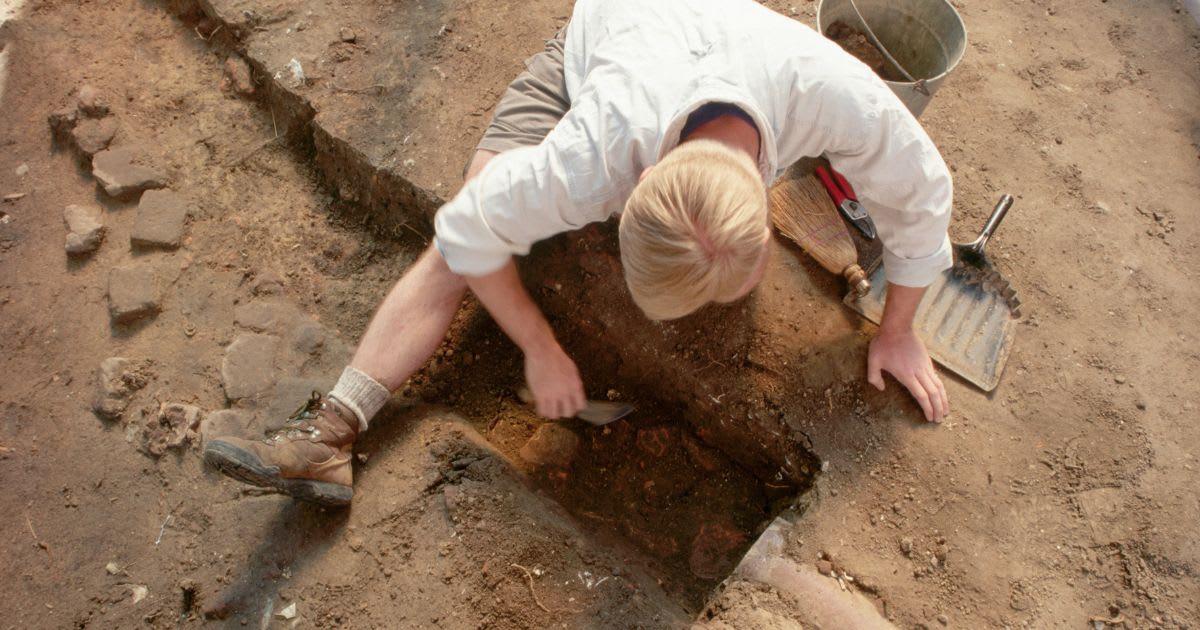
An archaeologist is seen digging for artefacts.
The skull recorded at the Balcón de Montezuma is found to be a Mesoamerican variant called superior tabular or parallelepiped, in which the skull appears cubical in structure. “The type recorded at Balcón de Montezuma is tabular erect, but it has an upper plane that had not been seen before in skeletal remains recovered in the Huasteca region," the researchers said. "Unlike other common types, this shape is tabular superior or parallelepiped, so named by some specialists, given the polyhedral appearance it creates in the skull," they added. It is a superior tabular deformity also found in the ancient remains recovered from the El Zapotal site in Veracruz, but there were major differences found in the degree of modification. The researchers tried to find a migratory link between the ancient inhabitants of Veracruz and the Huasteca region, where Balcón de Montezuma is located.
Archaeologist working on an ancient site.
However, the research dismissed any migration suspicions, confirming that the 40-year-old man spent his entire life and died at Sierra Madre Oriental. "Stable oxygen isotope studies in collagen and bioapatite samples from bone and teeth, a technique used to infer the geographic origin of the second individual's skeletal remains, indicate that he was born, lived, and died in this part of the mountains. Therefore, the results rule out a direct mobility relationship with the groups of El Zapotal or those further south," the researchers said, ruling out any possible connection between the two groups.
In a translated written statement to Fox News Digital, INAH researchers explained what this discovery means for the future. "This new discovery provides highly relevant data on the nature of intercultural relationships in the Huasteca region — especially with the North and the Sierra Madre Oriental of Mexico," they said. They emphasized that these variants showcase the ethnic diversity in ancient humans.