
Expect Later Sunrises and Earlier Sunsets as the Winter Solstice Nears — Mark Your Calendar
Published Dec. 12 2025, 7:49 a.m. ET

Sunset beams of light shine through heart-shaped hands of a woman looking at winter landscape.
Every year, thousands of people flock to Wiltshire to witness one of the most spiritual spectacles in the world. On the Winter Solstice, Stonehenge comes into perfect alignment with sunrise and sunset. As the Sun sets, its last light dances behind the Heel Stone, concentrated with sparkle that not only mesmerizes but triggers a golden wave of awakening among the viewers. At this time of the year, when Earth's northern tip experiences its coldest, darkest days, Stonehenge turns into a channel that makes people recall what ancient sages talked about: the cycle of dormancy, rebirth, and awakening. This year, astronomers have forecasted the Winter Solstice on December 21, 10:03 a.m. EST (15:03 UTC).
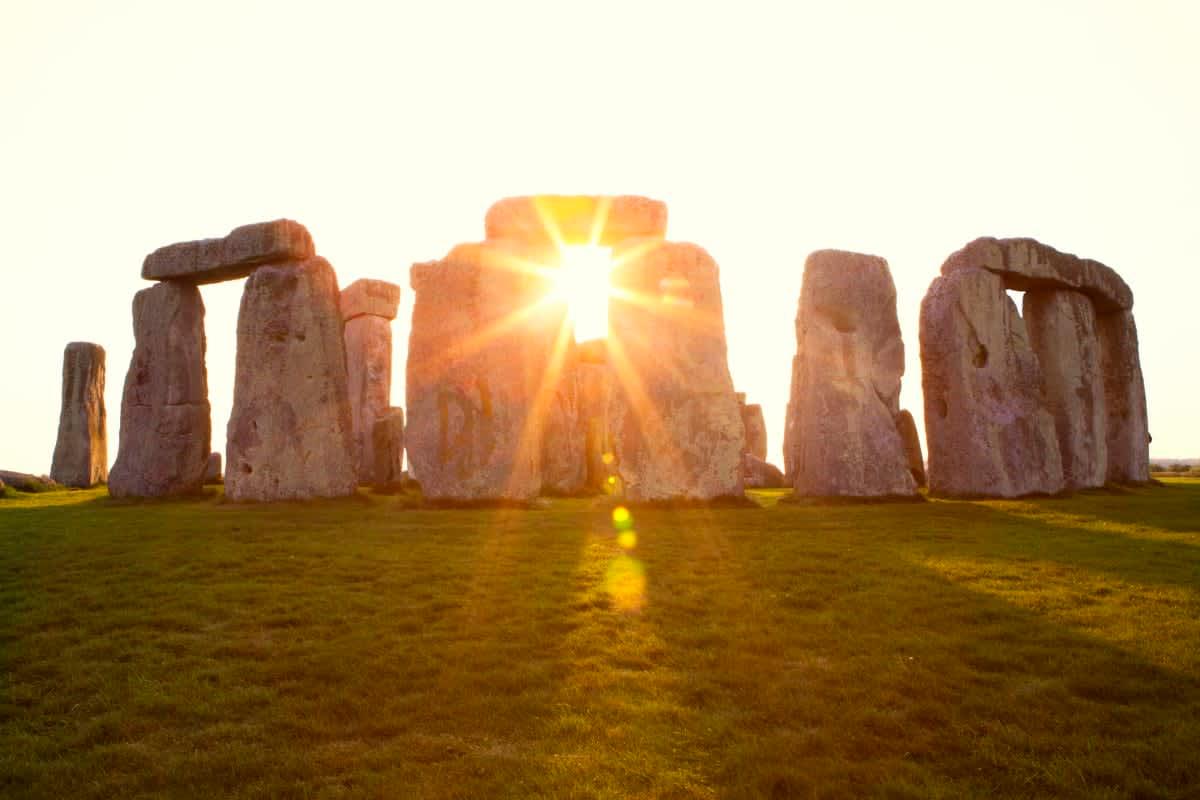
Glittery sunset concentrated on Stonehenge
As Stonehenge depicts, our ancestors somehow understood the mystery of the planets, the appearance and disappearance of constellations, and the surreal geometrical dance that continues to unfold between the three celestial rulers–Earth, Sun, and Moon. While modern-day meteorologists predict and chart seasons based on 12 months of the year, ancient people looked directly at the Sun's position to take most of the cues.
According to EarthSky, it is the tilt of Earth’s rotational axis that causes winter and summer, not its distance from the Sun. Looking from this perspective, there comes a day in the year when Earth’s axis is tilted in such a way that the Northern Hemisphere moves away from the Sun while the Southern Hemisphere moves closer. On December 21, the Northern Hemisphere will experience its longest night and shortest day, marking the solstice as Earth’s axis is tilted by 23.5 degrees. Days will start getting longer and nights shorter, until eventually the Earth will reach its vernal equinox, short for “equal night,” on March 20, 2026.

Earth's magnetic field glowing blue
The winter solstice will also mark the beginning of astronomical winter, which differs from the meteorological winter that starts with December 1. Weather forecasters mark the start of winter based on standard calendar records that divide the year into four quarters of three months each. March to May is the spring, June to August is the summer, September to November is autumn or fall, and December to February is the winter. In contrast, the astronomical winter is estimated based on the tilt of Earth’s rotational axis. At one point in time, the axis is tilted in such a geometry that the Sun stops its southward motion and starts moving northward again, indicating the coming of the winter solstice.
Solstice comes from Latin sol (Sun) and sistere (stand still). This is exactly what Sun does at this moment in time. It comes directly above the Tropic of Capricorn. People living in the northern portions experience the longest night and the shortest day. In the Southern Hemisphere, people experience exactly the opposite.
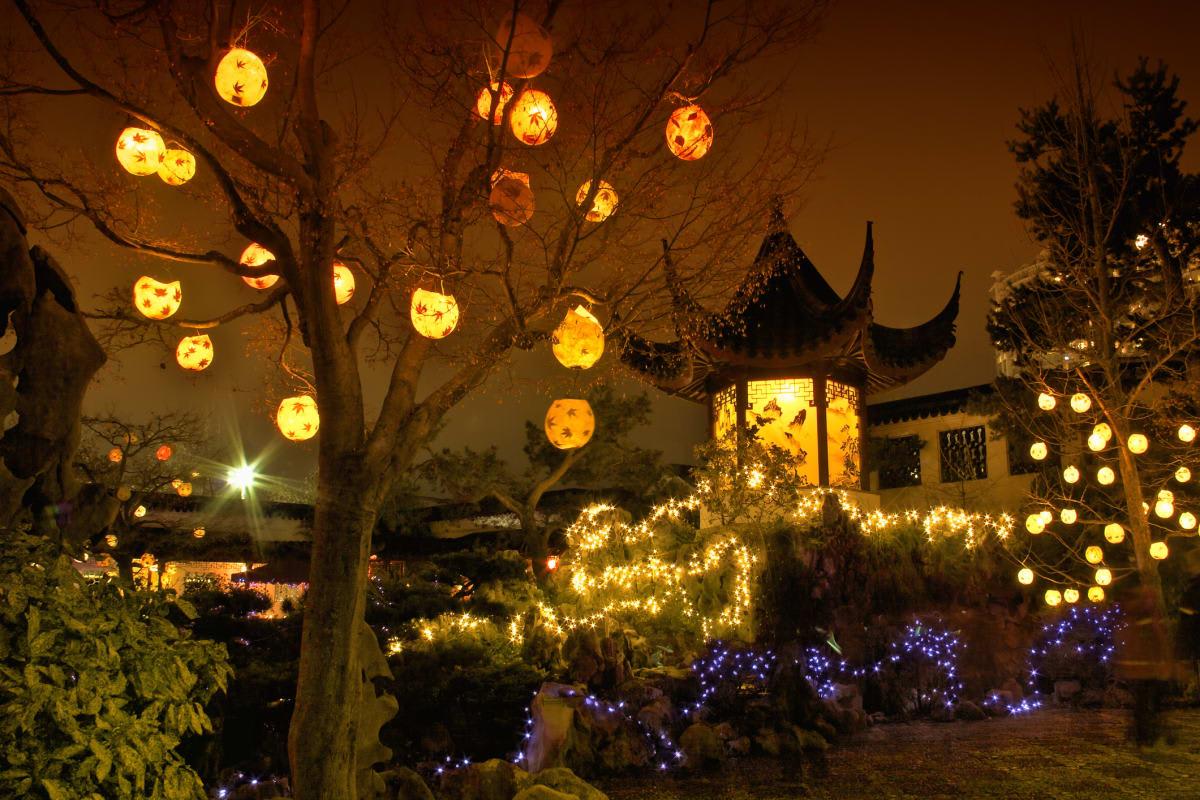
Houses and gardens illuminated in sparkling lighting on the winter solstice
Contrary to the North, the South marks its winter solstice in June and the summer solstice in December. It’s like a seesaw play that continues to happen between the North and the South. When one experiences the longest day and the shortest night, the other experiences the shortest day and the longest night, and vice versa. When one is at its darkest, the other is at its brightest. On December 21, the North will be the darkest, but it’s also the North that will become illuminated by bonfires, candles, and lanterns that people will light over meals, stories, and self-reflections.