
Evolution Keeps Turning Animals Into Crabs. Research Reveals What This Means for Humans
Published Jan. 12 2025, 10:45 a.m. ET

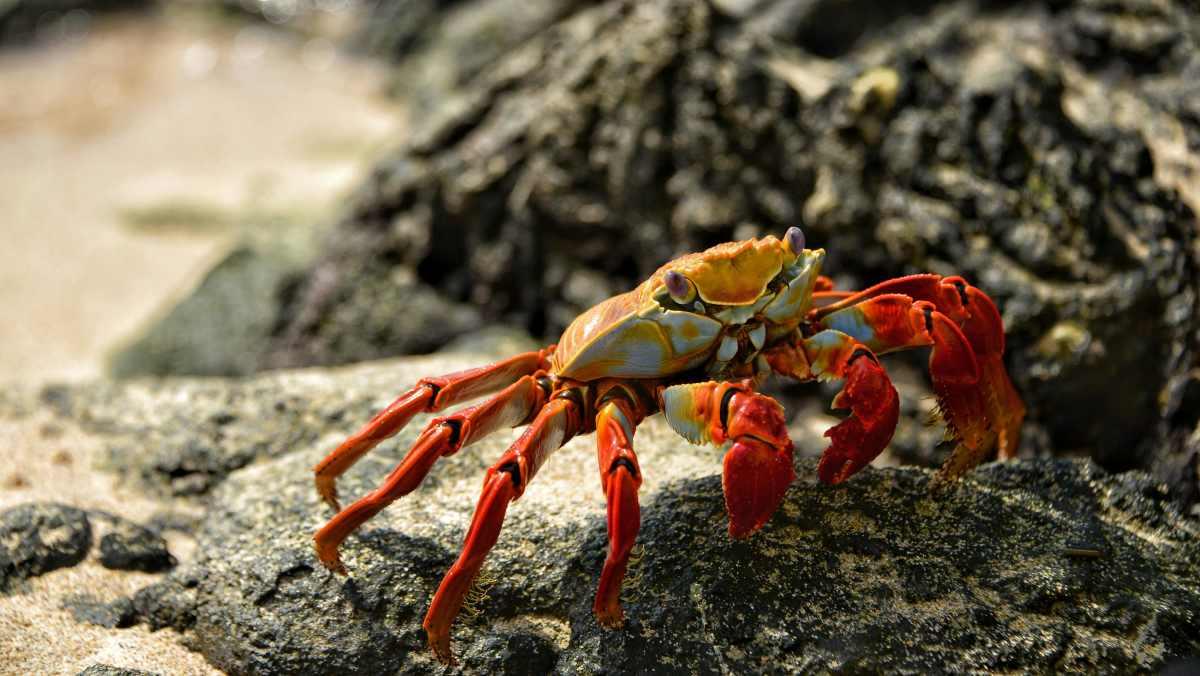
A close-up image of a red crab on a rock.
A certain group of animals have evolved crab-like features due to a process called carcinization that occurs throughout millions of years. But that does not mean you will be seeing a giraffe turning into a crab anytime soon, or humans. An evolutionary biologist at Harvard University, Joanna Wolfe, Ph.D., conducted research in Okinawa, Japan to study the process of carcinization in coconut crabs found in the remote tropical islands in the western Indo-Pacific Ocean, per the 2021 study published in the journal Wiley.
Orange crab on a shore.
Crabs are one of the oldest inhabitants on Earth as they have existed long before dinosaurs, about 300 million years ago in addition to other crustaceans. In the process, several other animals have crabified including the coconut crab to adapt to marine environments. Although marked as the largest land crab, the lead author of the study, Wolfe explained that coconut crabs are not true crabs but have instead evolved from lobsters.
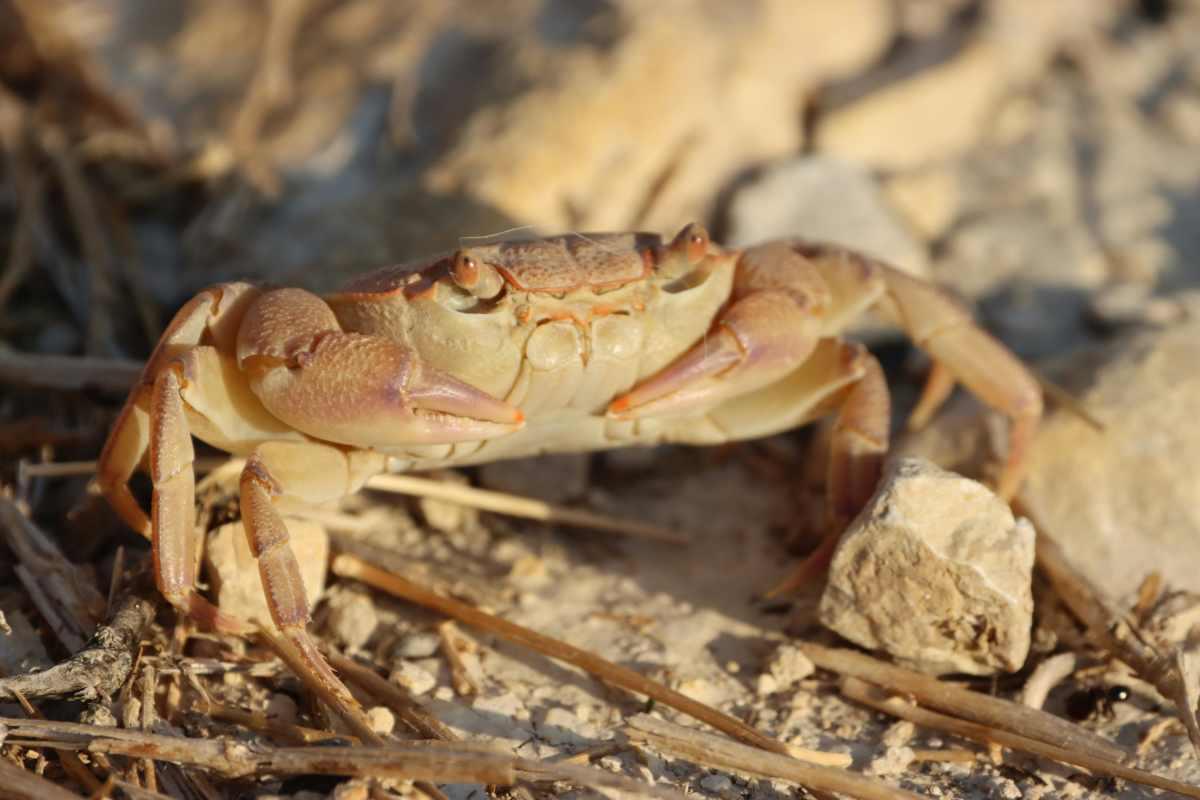
A crab camouflaging with its environment.
Whereas, this process of carcinization is highly unlikely to occur in human beings even after millions of years of evolution. “Could humans ever become crabs?” is one question Wolfe has faced in several interviews following her paper was covered in mainstream publications. She revealed that carcinization occurs only in arthropods which includes spiders, insects, and crustaceans. “Our body is not jointed and segmented like that. So we just can’t do it, because you have to be jointed in order to fold up the way that a crab does,” Wolfe explained. Hence, it is almost impossible that human beings will ever evolve into crabs as we are on a “different path” from crabs.
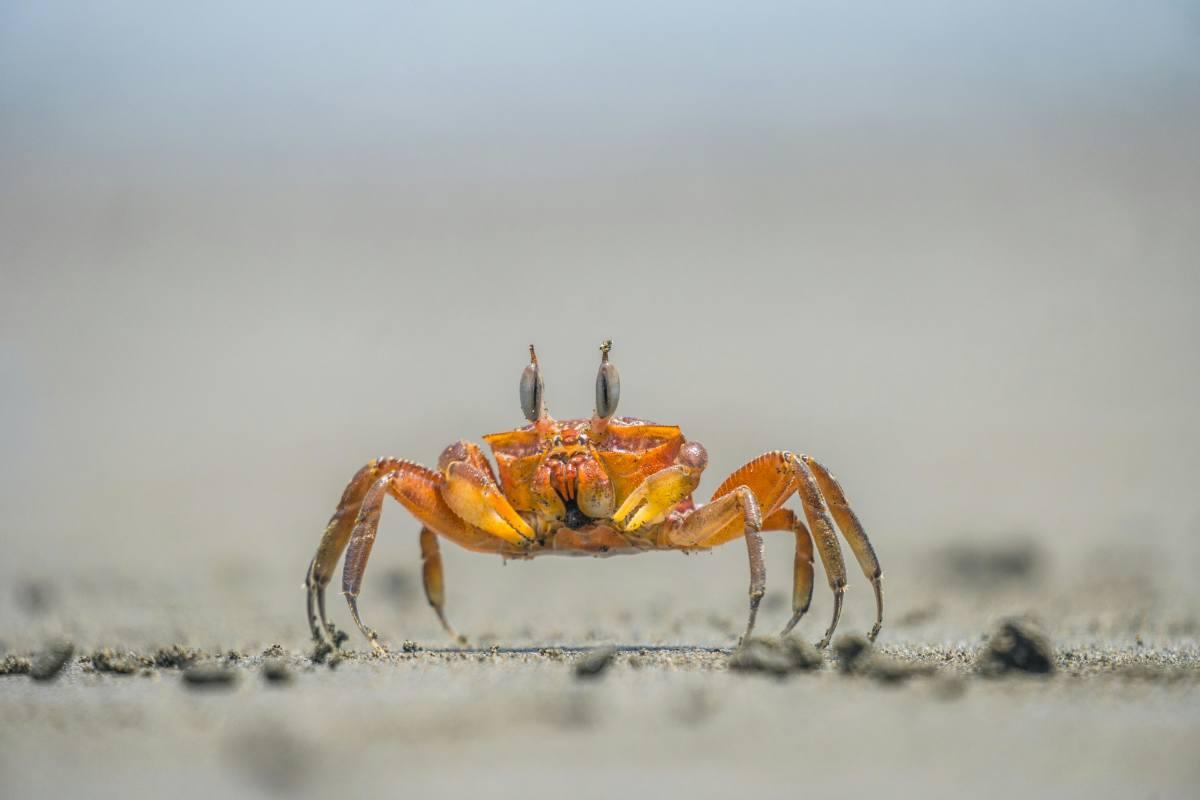
A crab walking on sand.
However, the Popular Mechanics report revealed the most recent common ancestor of humans and true crabs– the genus Decapoda. This species was said to be a worm-like animal called bilaterian that existed millions of years ago. Matthew Wills, Ph.D., an evolutionary biologist at the University of Bath, England, explained that “it is increasingly difficult to make a change in one place without deleterious effects in another” when considering a group of genes responsible for, say, the process of carcinization in this case. Wolfe and her team are still examining the gene pathways involved in the process and hope to determine the gene groups common in such animals.
Several clam shells of the crustacean family.
In addition, crabs or arthropods largely, undergo a presumably painful metamorphosis where they molt their entire outer exoskeleton, from the outside of their eyes to the inside first half of their gut. For those thrilled about a possible convergent evolution of humans with crabs, Wolfe highlighted it is not as exciting as it sounds. Crabs are flat-shaped and can fold their abdomen under their body to protect it from predators. Their outer body is made up of thick chitin and calcium carbonate that acts as a shield to their soft body and the flat shape allows them to easily hide under rocks. It’s not all advantages, though. Crabs are unable to escape as quickly as lobsters and shrimps which can fold into half and shoot away to escape danger.
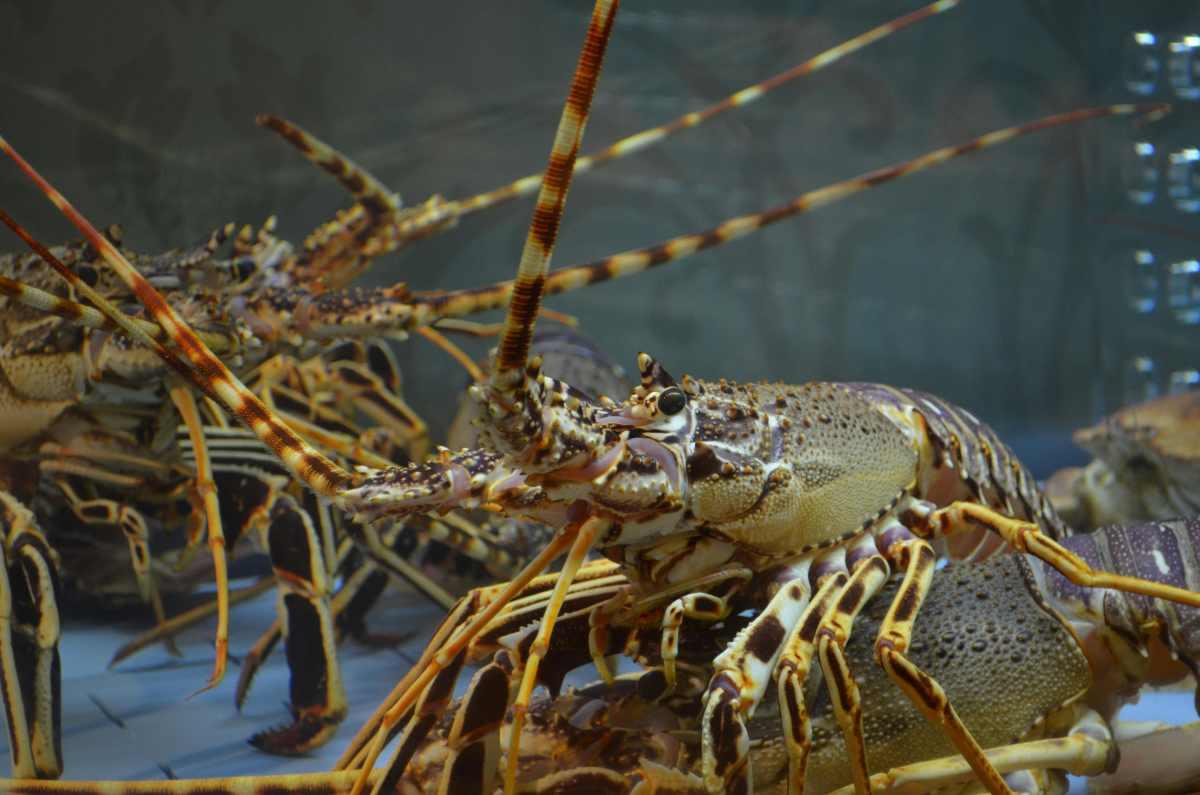
Close up photo of a lobster in water.
Finally, as much as many would like, humans cannot evolve into crabs in the distant future. But that does not mean humankind is not experiencing evolution at all. Orangutans are our closest relatives in the animal kingdom, per the National Institutes of Health report, and even within the human species, some groups have undergone evolution to better adapt to their external environments.