
Diver Stumbles on Sea Lions Trying to Attack a Pufferfish. The Reason Behind It Is Unexpected
Published Feb. 19 2026, 3:59 a.m. ET

A sea lion attacks a pufferfish in an attempt to seek a fix of drug-like toxin
With its fins flailing and wriggling in panic, the frantic fish did everything it could to escape. Too frightened by the predator stalking it, it inflated itself into a polka-dotted balloon. But the mischievous sea lions pulled it back again to the surface and kept on toying with it. The more it tried to swim away, the more the sea lion pestered it, its bulky chocolate brown body relentlessly pounding, trying to grab it in its mouth. For one moment, the fish succeeded in slipping away. It sneaked away in the refuge under a rock, but it was too late. The sea lions pulled the tail and dragged it again to the surface and again started grabbing it in its mouth, pecking bites.
Ocean filmmaker and dive expedition leader Matthew David Kaplan (@matthewunderwater) witnessed this dramatic scene for over half an hour, until someone told him that the group of sea lions doesn’t actually intend to eat the fish but is seeking to “get high.”
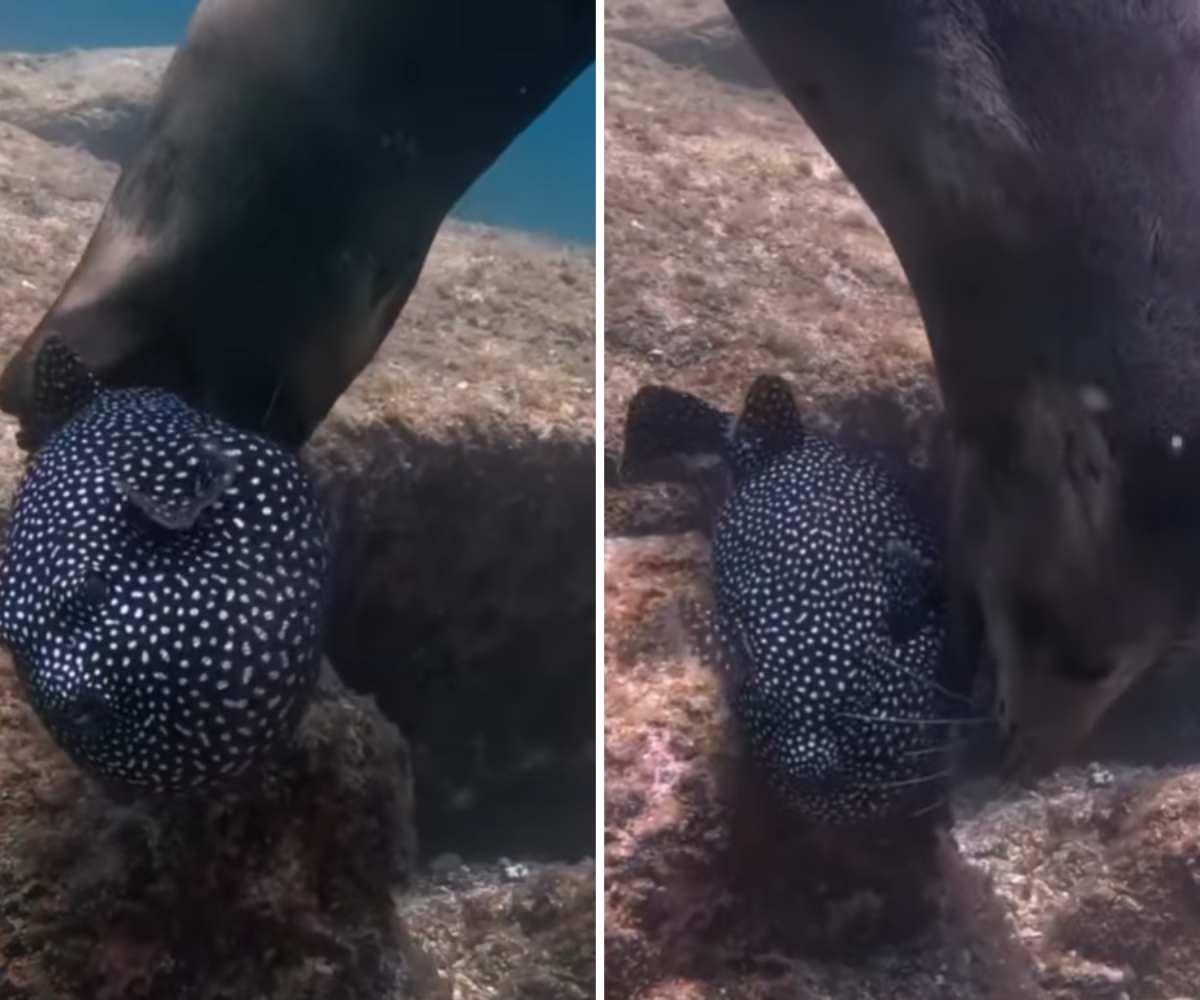
The sea lion attacking the petrified pufferfish.
Kaplan captured this scene in the Espiritu Santo Marine Park north of Mexico’s La Paz, inside the famous Los Islotes sea lion colony. In conversation with BBC Discover Wildlife, he shared that he has dived all over the world and spent years diving in Baja California Sur, but this was something he had “never seen before,” something darker and terrifying. A sea lion was relentlessly pestering the guineafowl pufferfish to seek some narcotic-like pleasure. It’s not "playfulness"; it’s “sea bullying,” viewers called out after watching the footage. Kaplan described the behavior as “abusing and mauling.”
For a sea lion, the pleasure comes from a toxin named tetrodotoxin (TTX), the same substance that makes a blue-ringed octopus so dangerous. When disturbed or threatened, the pufferfish inflates its body into a spiky balloon to make itself hard to swallow and starts releasing this deadly toxin as a self-defense mechanism.
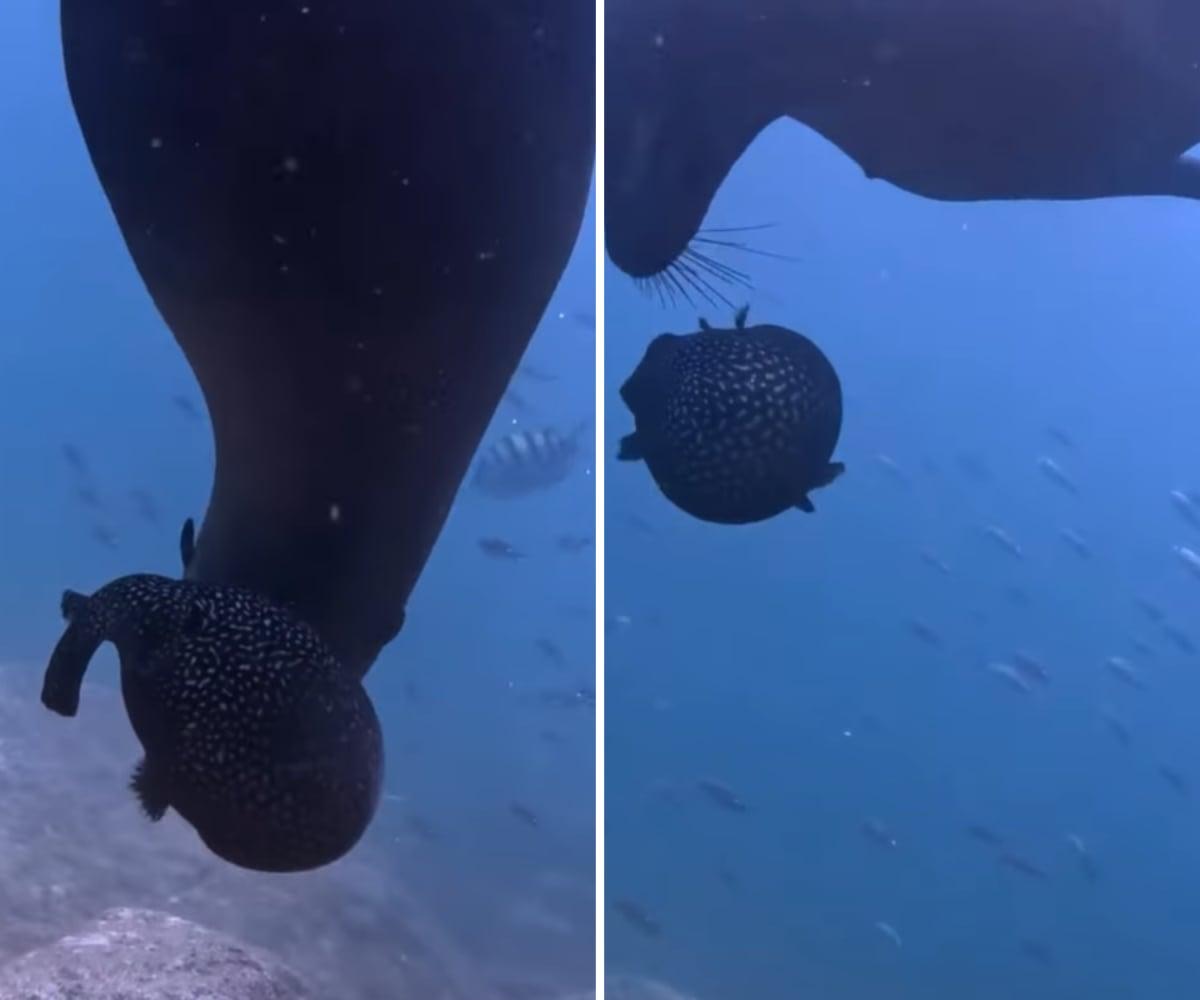
A sea lion abusing and mauling the pufferfish, in an attempt to 'get high.'
The sea lions, meanwhile, get the most benefit out of the petrified fish’s defensive gestures. Slurping high doses of this toxin makes it feel disoriented, blissed out, and in a trance-like state, like being on psychedelics, at least for a few moments. Once the pleasant buzz wears down, it starts chasing the fish again to seek the fix.
As also observed in the footage, the hulking, muscular sea lion is repeatedly poking the fish with its dog-like snout, its hairy whiskers pulsing in the water. Meanwhile, the terrified fish is seeking escape from the giant creature but is unable to free itself from its grip. After witnessing the scene, Kaplan was left wondering whether it was curiosity, fun, or something more. And even though he keenly wanted to help the fish, as an outsider to this underwater world, he couldn’t really intervene in the strange dynamics of life here. He tried to approach the scene and get the tormented fish out of there. But right after he left, the fish got pulled by the sea lion again.
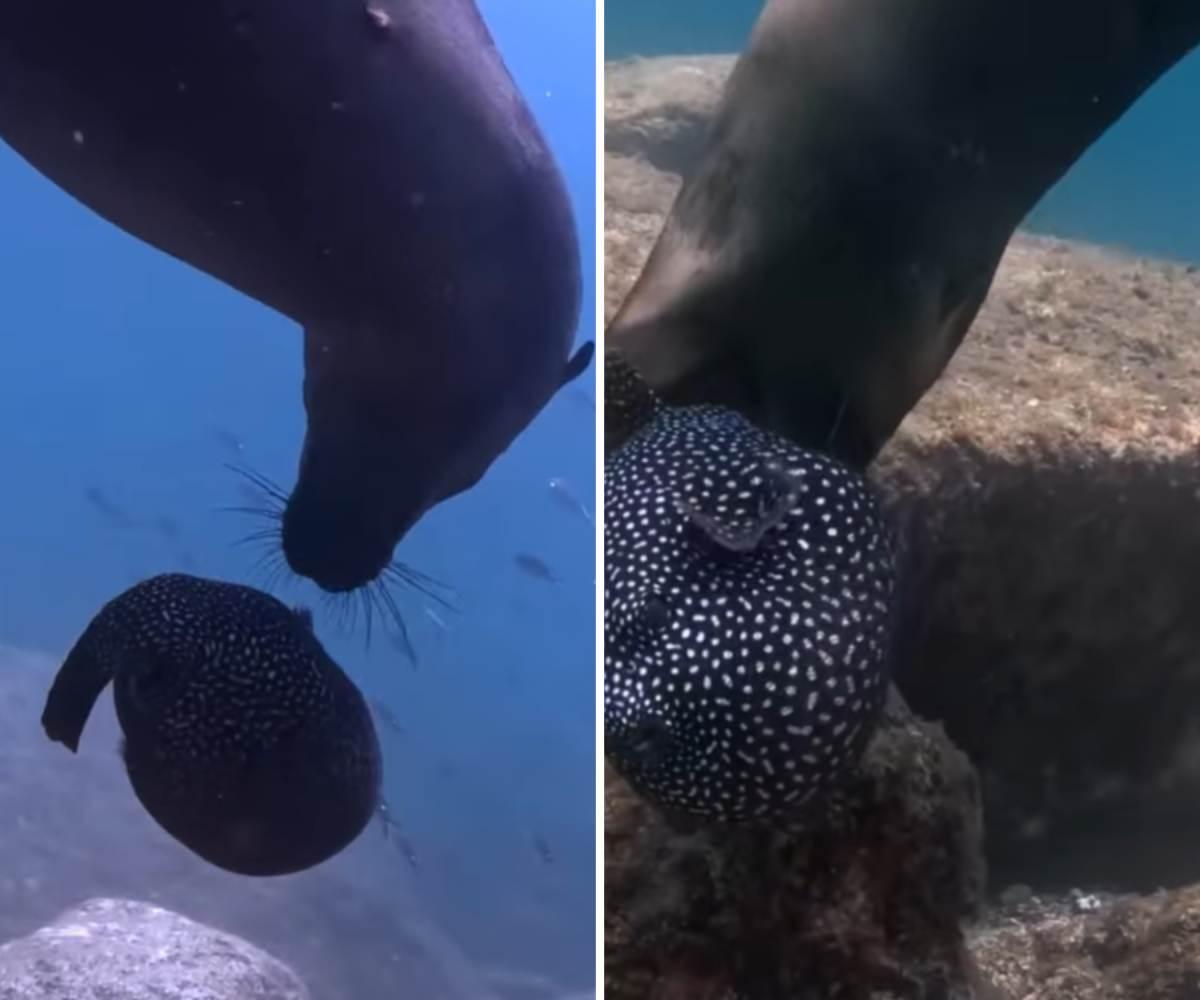
The pufferfish inflates its body into a spiky balloon when attacked.
At last, Kaplan and his fellow divers had no choice but to leave the fish behind and return to the surface with a heavy heart. He has no idea how much longer the sea lions kept on torturing it, an idea that made chills run down the spines of viewers. “Unbelievable to witness," he said.