
Death Valley Comes Alive With the Re-Emergence of a Rare Lake
Updated Dec. 5 2025, 6:22 a.m. ET

A woman taking photographs in Death Valley.
Until the monsoons of 2023, Death Valley was exactly what its name suggests. A parched, barren valley stretching for miles and miles, with no sign of life. Bare black mountains loomed from hot sands, steep, rigid, and devoid of emotion. Water from lakes evaporated faster than it was filled. For decades, Death Valley National Park remained its usual dry self, hopelessly depressed by the soaring temperatures, unhappy rain gods, and rigid landmass slathered with salt abandoned by dying lakes, and heat so scorching that birds dropped dead mid-flight, as backyard geographer Jeremy Patrich explains.
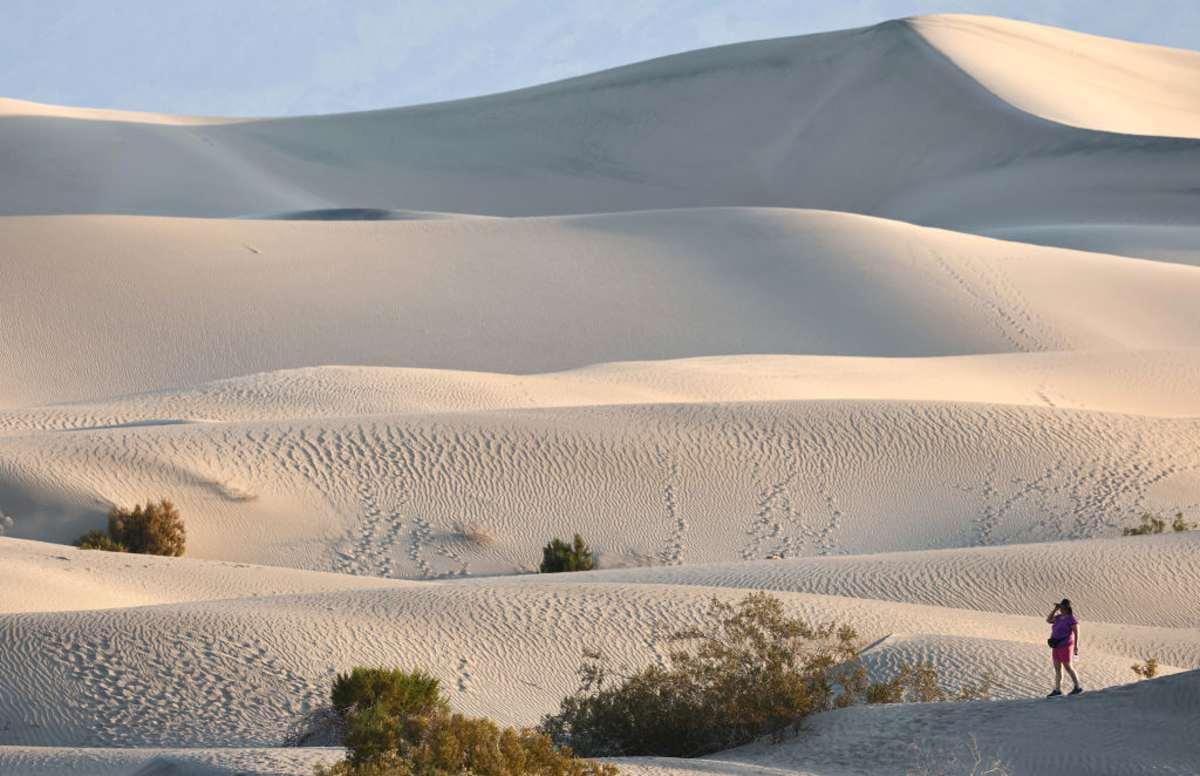
Sand flats of Death Valley
But today, the valley is not its usual self. It has transformed. Badwater Basin, a long stretch tucked on the south side, has now turned into a glistening mirror that reflects iridescent shapes as the Sun dances above it. Thanks to Hurricane Hilary, a new lake, named Lake Manly, has re-emerged in the basin. With this lake, Death Valley is no longer synonymous with the idea of death.
Death Valley National Park signboard
Patrich notes, Badwater Basin isn’t what it was in its former identity. Ever since the lake nestling in the basin dried up, the basin turned into a grand piece of land peppered with nothing but polygonal patterns of white salt flats that were left over by an ancient freshwater lake that bubbled during the Ice Age, about 10,000 years ago. As the lake flowed and dribbled along mountain slopes, it picked up minerals attached to rocks and cliffs. When the lake dried up, it left sediment and concentrated salt deposits accumulated in the basin. And like this, the basin sat there, undulating with desiccated geometry and sunbaked salt mounds, making Death Valley the hottest and driest place not just in North America, but on the entire planet.
Hurricane Hilary and the rains that followed changed everything. When Patrick Donnelly, the Great Basin Director for the Center for Biological Diversity, visited the basin, he couldn’t believe his eyes. “I said to myself, ‘Oh my God, this is incredible,’” he recalled while speaking to the BBC. Death Valley, this dry, wretched piece of land was suddenly gushing with "billions of gallons of water. It has been completely transformed,” he exclaimed.
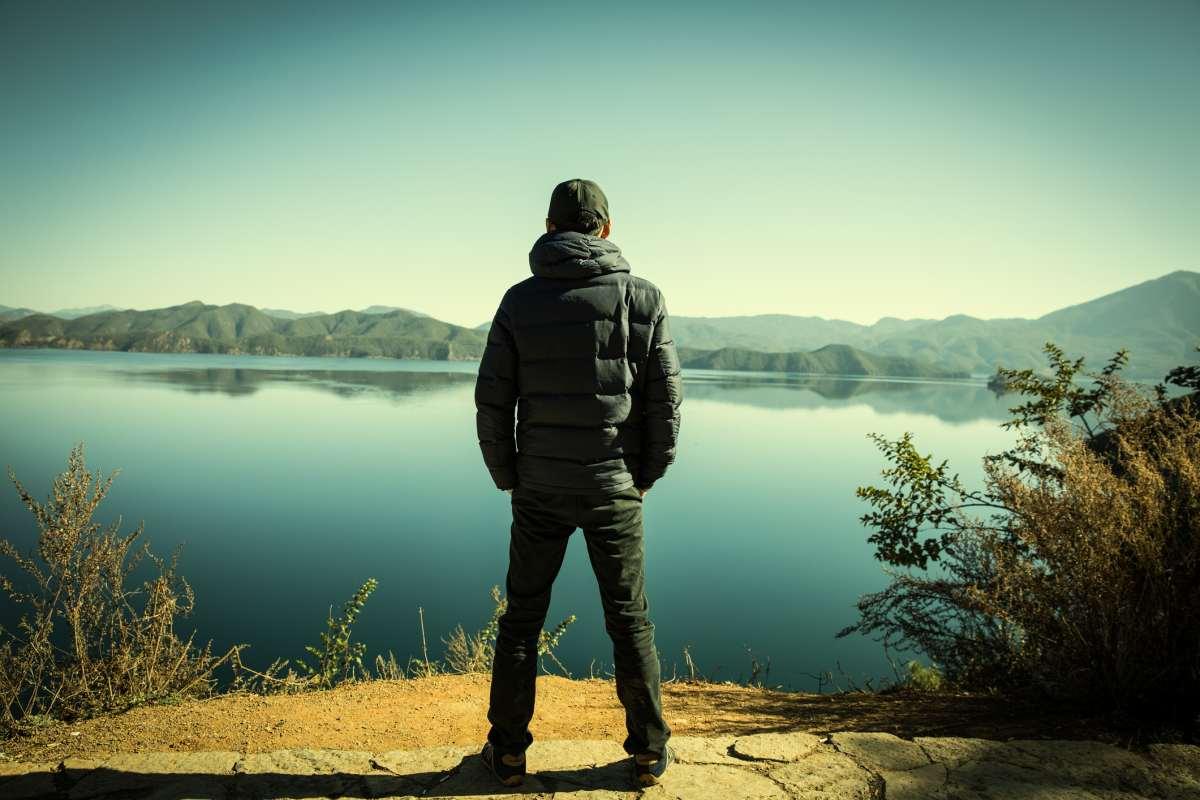
Man standing by a lake surrounded by clusters of bushes and plants
Elsewhere, NASA shared a set of three satellite images titled “Badwater Basin Refills,” depicting how the episode of rains dramatically metamorphosed Death Valley. An image dated July 5, 2023, shows a desert basin with a body of scanty turquoise water running like a mere vein etched into the basin. Another picture captured in the aftermath of Hurricane Hillary and atmospheric rivers displays several patches of sapphire blue color forming in the basin surrounded by dunes and desert vegetation, indicating the re-emergence of the lake. The last time the lake filled up was in 2005, ABC News describes. As if to surpass its dejected identity, the lake today is not just a puddle of water where people can walk. It even allows people to enjoy kayaking in inflatable kayaks, Donnelly shared.
Elyscia Letterman, an interpretive park ranger with the National Park Service, confessed that, “It doesn’t feel like we are in Death Valley.” She talked about how the crystal-clear lake offers striking views and vibrant reflections of everything that’s there in the basin – the snow on the mountaintops, for instance. On the nights of a full moon, the lake’s beauty is amplified with a pearly white glow that makes its waters appear even brighter. While visiting the lake after dark, Donnelly described it as “clear and still.” The sun, he said, was “glittering off the water,” and it was “incredibly beautiful.” Though glittering, the lake is ephemeral. No one is sure how long it will last, but it is disappearing. Mercy, rain god!