
80 Years Ago, Scientists Recorded Haunting Underwater Sound in Bermuda. Now, They Know What Made It
Published Feb. 20 2026, 4:08 a.m. ET

(L) Humpback whales are legendary for their long, haunting songs, which can travel thousands of miles through the ocean; (R) Gray Audograph (Cover Image Source: (L) Woods Hole Oceanographic Institution/Aran Mooney; (R) Woods Hole Oceanographic Institution
Unlike the present day, oceans were quieter during the 20th century. On March 7, 1949, scientists aboard the research vessel Atlantis were conducting acoustic experiments near Bermuda. When a microphone they installed underwater detected a mysterious sound, they transferred it to an audograph disc and stored it in their archives, as they didn't know what they were hearing at the time.
Recently, however, archivists at the Woods Hole Oceanographic Institution (WHOI) revisited these stacks of old tapes for digitization and accidentally picked up that 1949 tape. To their astonishment, they realized that all these years, they had been diving into the oceans, attempting to decode their mysteries, while one of the most intriguing mysteries lay inside their own catalogue, abandoned. The sound their microphone had recorded that day was none other than a humpback whale’s song. “This is the earliest known recording we have of a whale song,” Peter Tyack, a marine bioacoustician and emeritus research scholar at WHOI, said. The digitized recording was shared by WHOI.
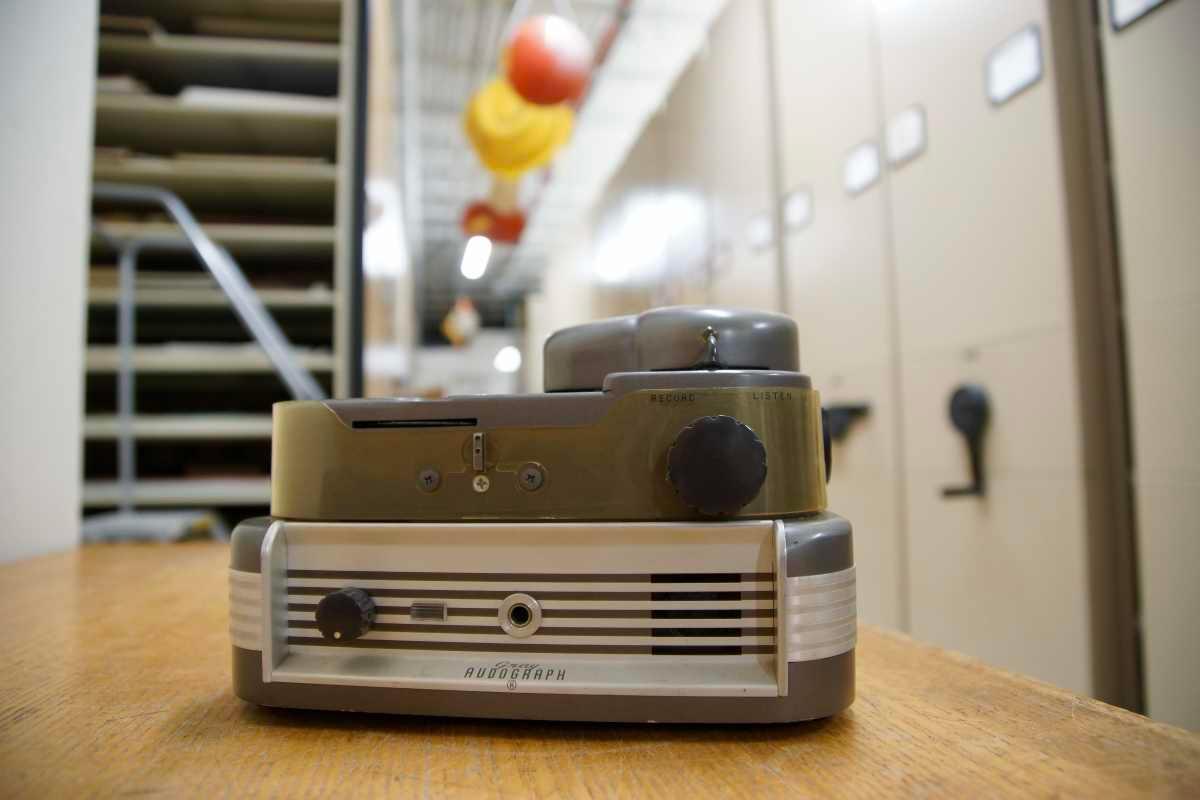
The 1949 humpback whale sounds were captured on a Gray Audograph, an office dictation device that etched audio onto thin plastic discs, and were likely recorded using the WHOI “suitcase,” an early experimental underwater acoustic recording system.
Almost eighty years ago, the hypnotic song was captured on a Gray Audograph, a device that etched the recordings on thin plastic discs, unlike modern-day magnetic tapes. It was likely recorded using the WHOI “suitcase,” which was an early experimental underwater acoustic recording system. It was the time when they relied on these devices to monitor the deep-water soundscapes. Today, WHOI scientists have the privilege to deploy more sophisticated instruments to record the sounds of the ocean, such as Slocum gliders, passive acoustic buoys, and autonomous hydrophones. Ashley Jester, Director of Research Data and Library Services at WHOI, said, "These audograph discs survived because of their material and careful preservation."
As part of WHOI’s Robots4Whales program, they also deploy autonomous ocean robots that are equipped with the Digital Acoustic Monitoring Instrument (DMON) that analyzes how sound frequencies change over time. The changes observed in these marine mammal calls are then converted into “pitch tracks,” which allow scientists to classify calls based on a known library and report results back to the shore via satellite in near-real time.
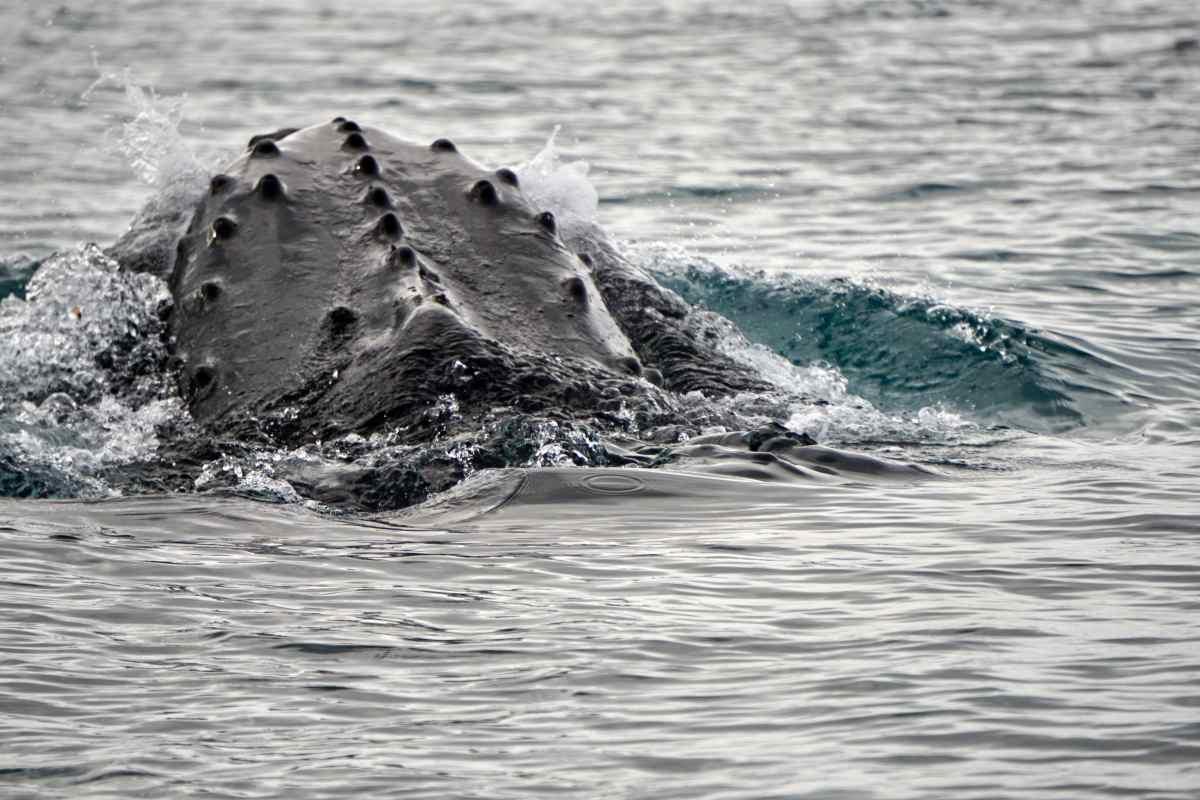
Humpback whales are found in all of the world's major oceans, spanning from polar waters to tropical regions.
"Underwater sound recordings are a powerful tool for understanding and protecting vulnerable whale populations. By listening to the ocean, we can detect whales where they cannot easily be seen," said Tyack. "At the same time, these acoustic tools let us track how human activity, from shipping noise to industrial sounds, changes the ocean soundscape and affects the way whales communicate, navigate, and survive," he added.
In contrast to 1949, the oceans today are much noisier, both in terms of different types of sounds and sound sources. In such a scenario, these details enable scientists to derive valuable insights about the soundscapes, not just for curiosity, but also for gaining a deeper understanding of the lives of ocean residents. Laela Sayigh, a marine bioacoustician and senior research specialist at WHOI, said, "This recording can provide insight into how humpback whale sounds have changed over time, as well as serving as a baseline for measuring how human activity shapes the ocean soundscape."
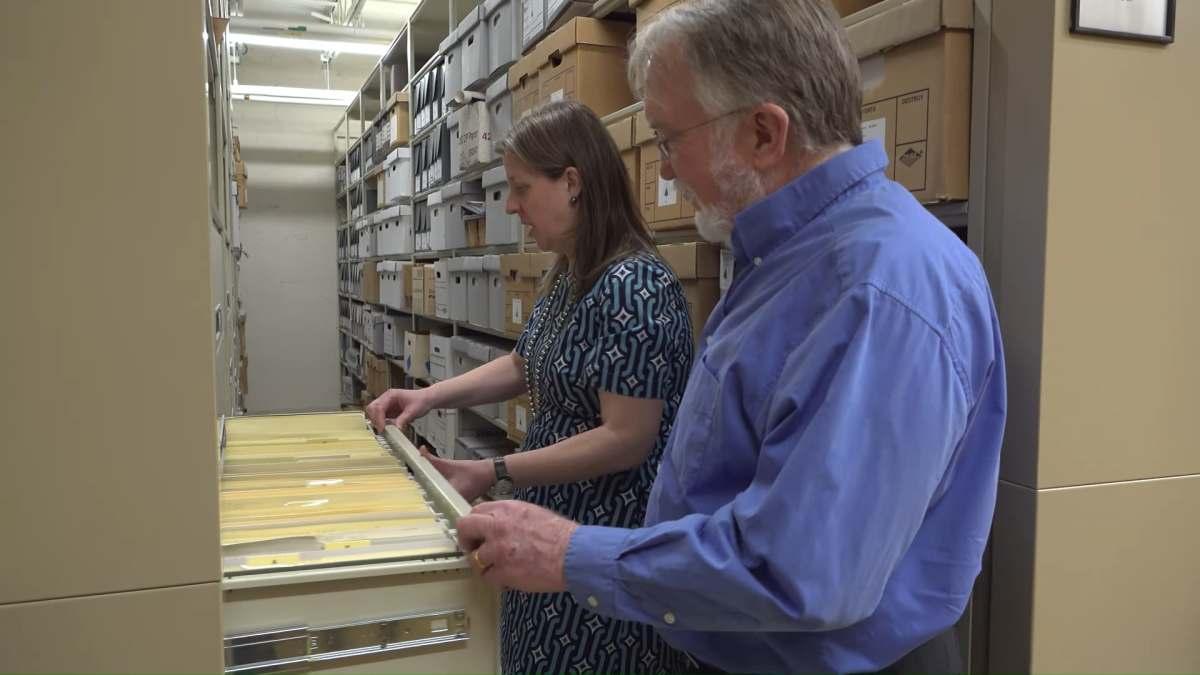
Peter Tyack and Ashley Jester are looking at old records.
But this is not the only record of ocean sounds that exists from that time period. Around 1949, WHOI scientist William Schevill and his wife, Barbara Lawrence, a mammologist, were setting up a system of marine mammal bioacoustics. They recorded sounds of beluga whales near the Saguenay River in Canada, which was the first recording that identified sounds from a marine mammal in the wild. In the 1970s, marine biologist Roger Payne rolled out an album called “Songs of the Humpback Whale,” featuring whale songs. In 1977, NASA packed whale sounds in the Voyager Golden Record that hurtled into interstellar space.