
7-Year-Old Boy Unearths Rare Gemstone Near His Home— First Such Find in 150 Years
Published Jan. 12 2026, 4:05 a.m. ET

7-year-old boy Ben O'Driscoll discovered a pearly crystal shining through the mud in a field in Ireland's Rockforest. The crystal turned out to be a rare gemstone
Seven-year-old Ben O'Driscoll had grown up listening to the stories of treasure hidden in a field near his home in Rockforest East, surrounding Mallow in County Cork, tucked along the River Blackwater in Ireland. His grandfather often encouraged him to explore the field. In late February of 2024, Ben was strolling in a freshly ploughed field in the same area when his attention was pulled towards a stone that was sparkling like a magical Crème egg through the mud. When his mother, Melanie, looked at the pearly, metallic stone, shining with a silvery luster, she knew that it wasn't an ordinary rock. On March 1, she hopped in the family car and introduced the stone to Patrick Roycroft, the geology curator at the National Museum of Ireland.
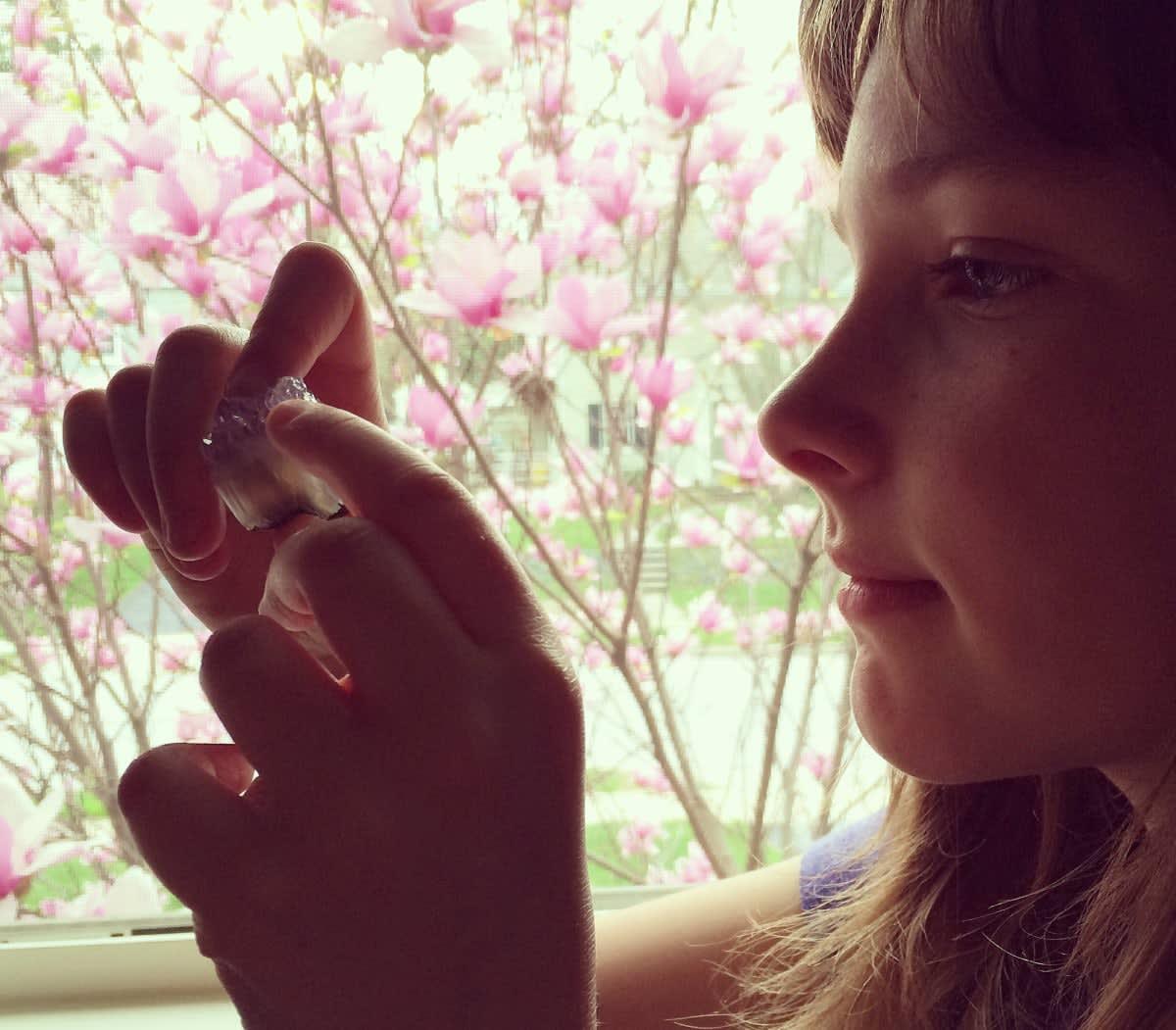
A representative image of a child holding and exploring a shiny gemstone
At first glance, Roycroft thought that it was a diamond. But as he investigated deeper, he couldn't hold back his excitement. He was about to decipher the curious mystery of rare minerals entombed in what is Ireland's Goldmine. Documenting it in the Irish Naturalists Journal, he named the stone "Ben O'Driscoll Cotterite."
Roycroft loves rocks more than most people, he said in an Instagram video. For him, rocks and stones hold the stories of times gone by, shaped by history, geology, chemistry, and character. When he realized that the stone Ben had discovered wasn't a diamond but a rare type of quartz, it sparked a "fire in his brain," which, he says, "continues to this day." What Ben found was the "first discovery" of cotterite in 150 years, according to a report by the Irish Times. Roycroft spent the next few months, probably years, investigating the stone and its alchemical stories.
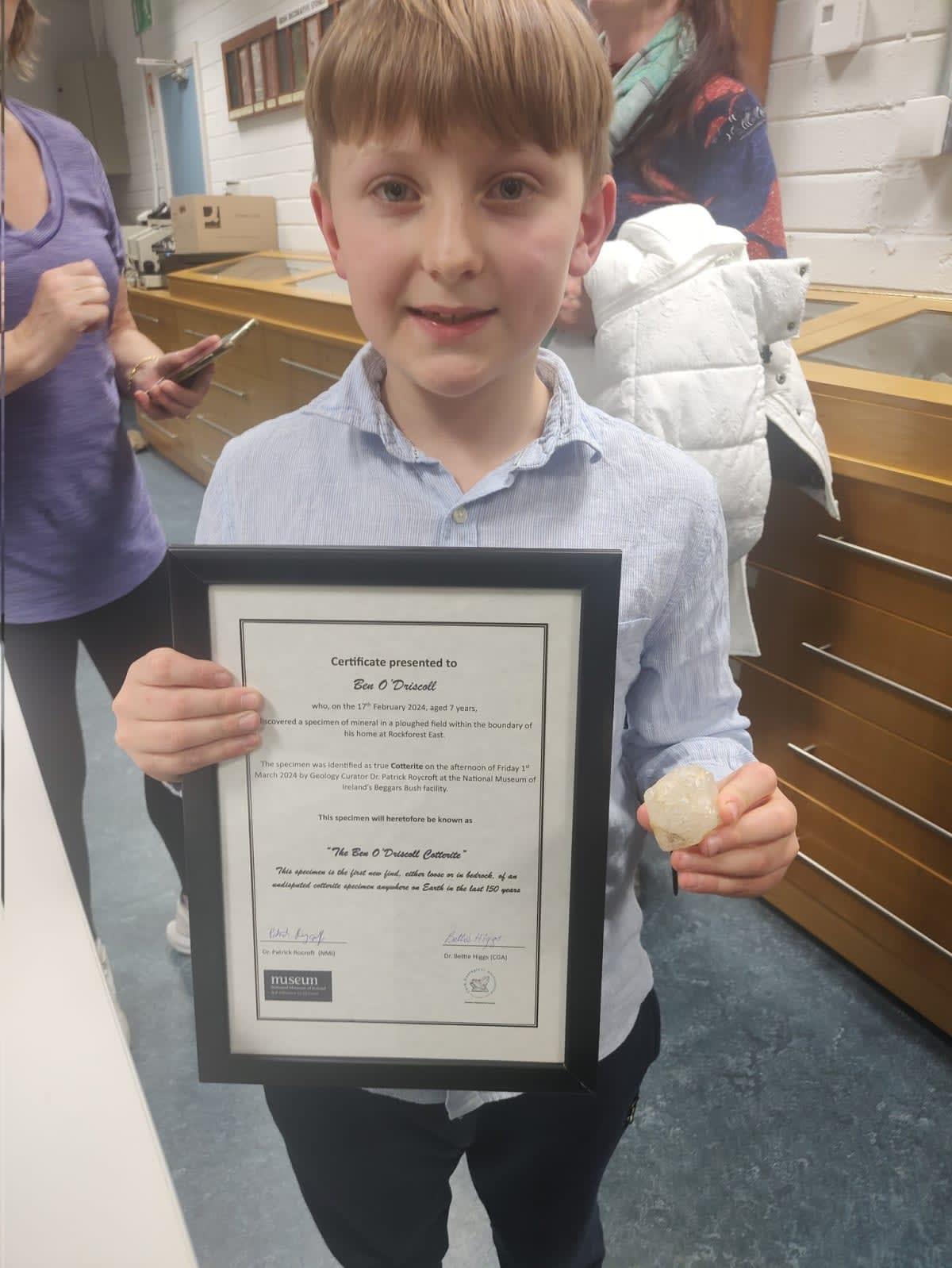
First discovery of Cotterite Quartz anywhere on earth in 150 years by 7-year-old Ben in Feb 2024
One speculation was that Rockforest offered a precise set of conditions for cotterite to form, including the exact blend of fluids and chemicals, as well as the specific temperatures and pressures. Like most minerals, cotterite also features a crystal formed by the clumping of atoms into chains and layers. Each layer, the Irish Times explained, is about 10 microns thick; in contrast, a strand of human hair is 50 to 100 microns in thickness. As the crystal grows in size, it gets enveloped in gossamer-thin cracks that generate a frosting effect, scattering light in silvery waves. The unusual geometry of atoms makes this quartz behave differently from other quartz minerals.
But this is not the first time a cotterite has come to attention. The report states that there are about three dozen specimens held by the museums in Cork, Dublin, London, and the Smithsonian in Washington. Most of the minerals were buried in a single vein of calcite, quartz, and ferruginous mud cutting through the Carboniferous limestone in Rockforest. An earlier account of cotterite's discovery goes back to 1875, when Grace Elizabeth Cotter, a woman from a town called Knuttery, reported the discovery of a similar stone inside a field owned by her uncle.
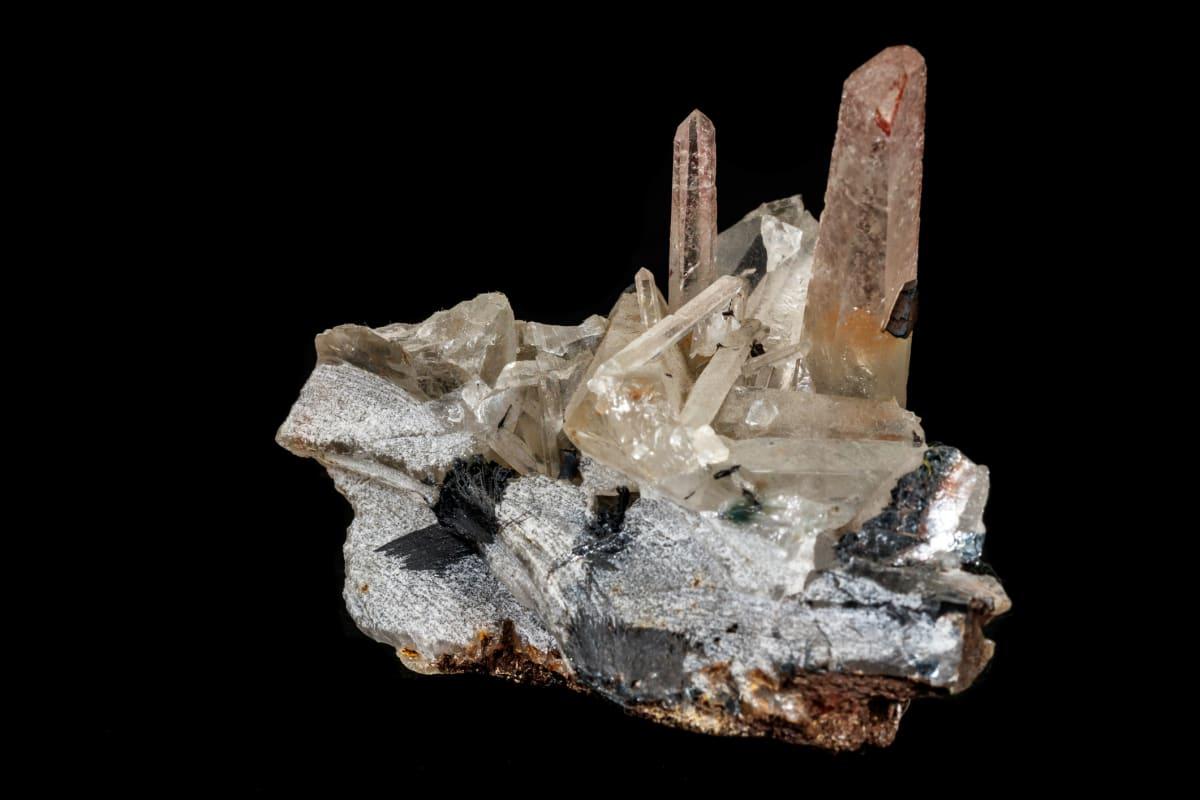
Macro stone mineral Quartz crystals
Cotter passed on the stone to a scientist named Robert Harkness. Harkness transferred it to the Mineralogical Society of Great Britain and Ireland, naming it "cotterite" in Grace's honor. Fast forward to today, the stone continues to intrigue, not just Roycroft, but the entire coterie of mineral enthusiasts and geologists. Musings run through the community as to why this mystical quartz forms in layered sheets, and do the reddish, iron-rich soils of Rockforest play a role in their formation.