
2026's Brightest Meteor Shower Will Shine in a Moonless Sky — How and When to Watch It
Published Jan. 28 2026, 5:38 a.m. ET

A view of the 2023 Perseid meteor shower from the southernmost part of Sequoia National Forest, near Piute Peak.
Around 3.9 billion miles away from Earth, a dirty snowball with a glowing tail is swiftly gliding in its orbit. Dubbed Comet 109P/Swift-Tuttle, the celestial object is twice the size of the asteroid that killed the dinosaurs. It last reached perihelion in 1992 and will not return until 2125, per NASA. Like strangers or people who come into our lives and depart, leaving bittersweet memories, the comet left behind a trail of dusty debris that is still thrumming in our galaxy. The trail is a memory of an explosive interaction it had with our Sun. The Sun’s fiery heat sublimated its icy core, which crumbled into this stream of dust, gas, and pebbly particles.
Every August, like wisps of autumn breeze, this cosmic debris, or meteorites, crashes into Earth’s atmosphere at unusually high speeds, up to 133,000 miles per hour. The intense friction of our atmosphere excites these particles with enormous heat, and they start glowing. As they drizzle from the dark skies, they resemble a rain of shooting stars, rivers of cosmic debris, invisible ghost trails, or bright fireballs. Scientists and meteorologists call it the Perseid meteor shower.
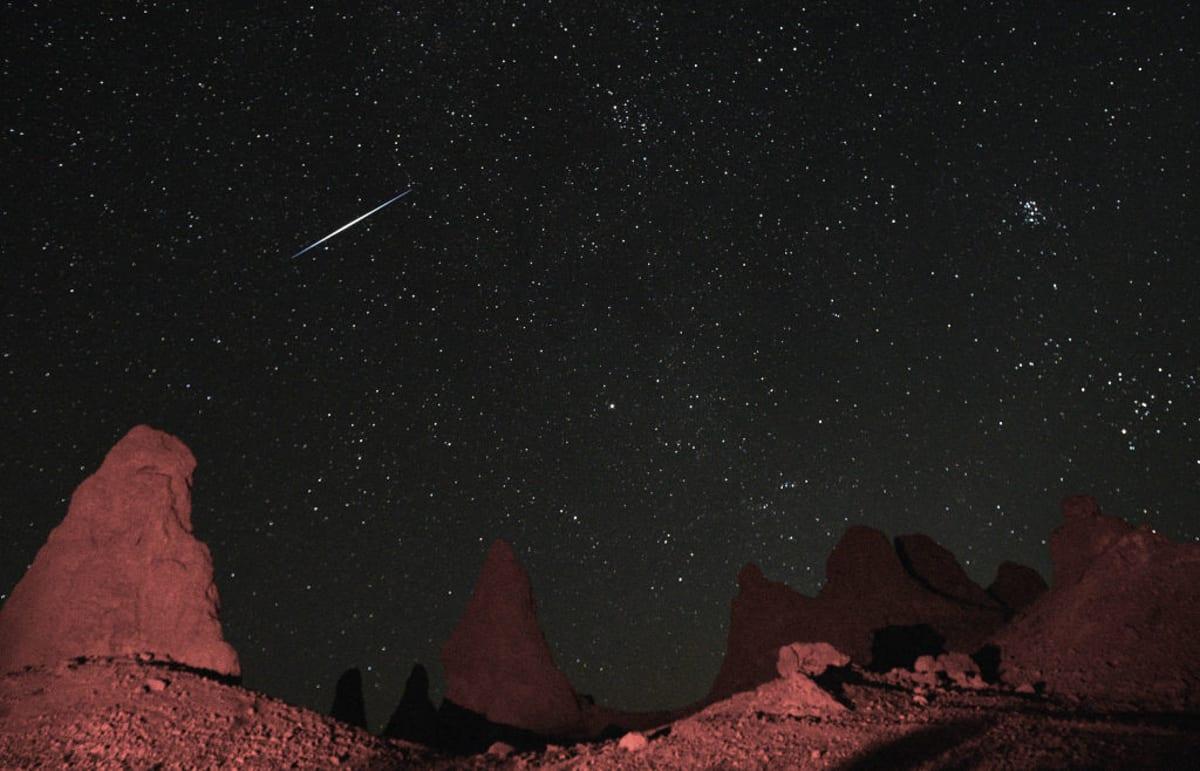
View of meteorite streaking over Trona Pinnacles near Death Valley, CA, during annual Perseid Meteor Showers, August 2, 2019
The Perseid meteor shower is the most beloved shower of the Northern Hemisphere that buffets through the starry night skies each year between July and September. This year, meteorologists have predicted that the Perseids are going to adhere to their title of being one of the brightest shooting star events. Casual observers, astrophotographers, and stargazers—everyone is urged to step out of their homes during this period and enjoy the sparkling celestial rain of stars.
This year, the Perseids are going to exhibit their glittering performance sometime between July 17 and August 24, according to the American Meteor Society. Shooting stars are expected to shower during its peak, from the night of August 12 till the dawn of August 13. Per hour, around 30 to 50 meteors would be visible to humans from rural locations. The shower will linger throughout the night, and thankfully, this year, there will be no interference from the dazzling Moon. Due to the new moon on August 12, the dark skies will present optimum conditions for viewing this shower.
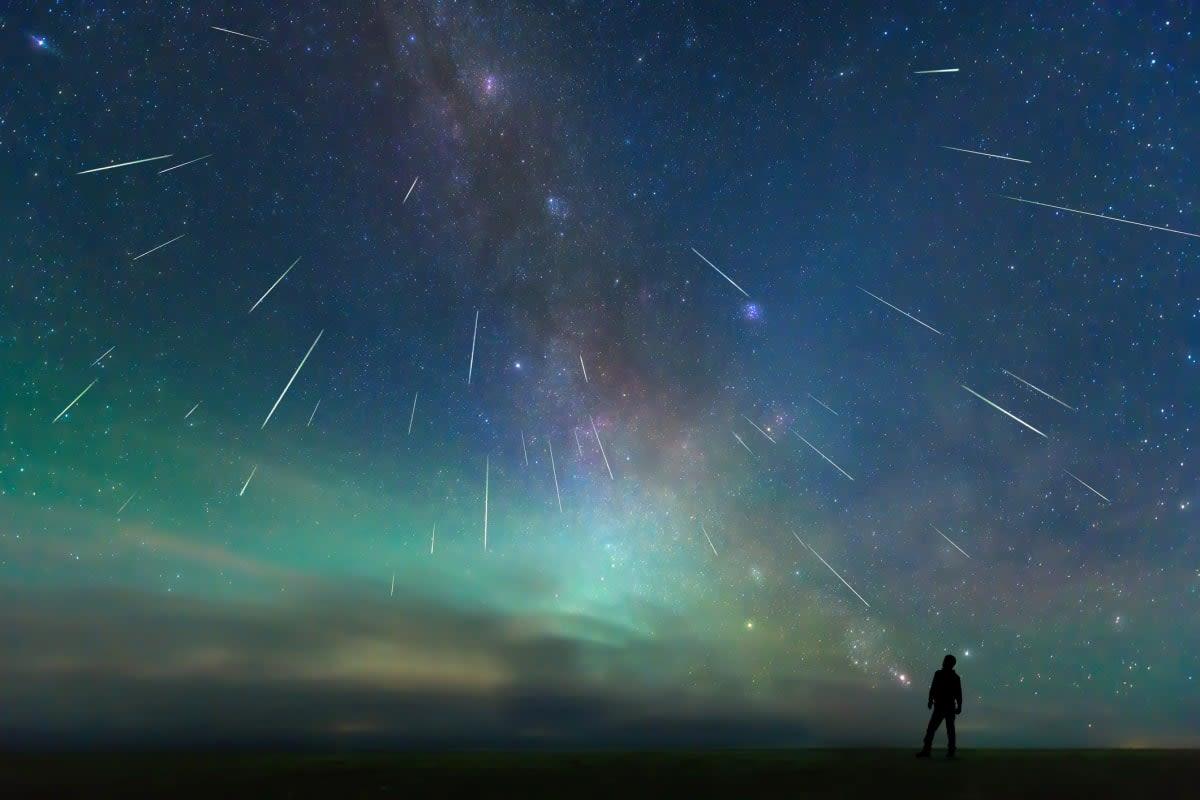
Person enjoying gazing at a glowing spectacle of shooting stars in the night sky dazzling with curtains of blue-green lights
With the deepening night, the number of showering stars will increase. The shower will rise to the peak and then fall off and dim down gradually, EarthSky reports. The shower is best enjoyed between late night and early dawn. The middle of the night will be the most radiant. In addition to having intensely high speeds and an abundance of cosmic material, what makes the Perseids one of the brightest showers is probably the location where it comes from: the Perseus the Hero constellation.
In mythology, people believe that billions of years ago, there was a snake-haired princess named Medusa who was cursed by a monster, so she became a monster herself, per TheCollector. Under the curse, the princess got a gaze so petrifying that whoever she looked at turned into stone. To liberate people from this monster, a hero named Perseus cut off her head, which now appears as a hook-like shape in the arm-shaped Perseus constellation. As it sprinkles down from the skies, the golden rain of stars burns up the atmosphere, calling people to burn up what is no longer needed in their lives.
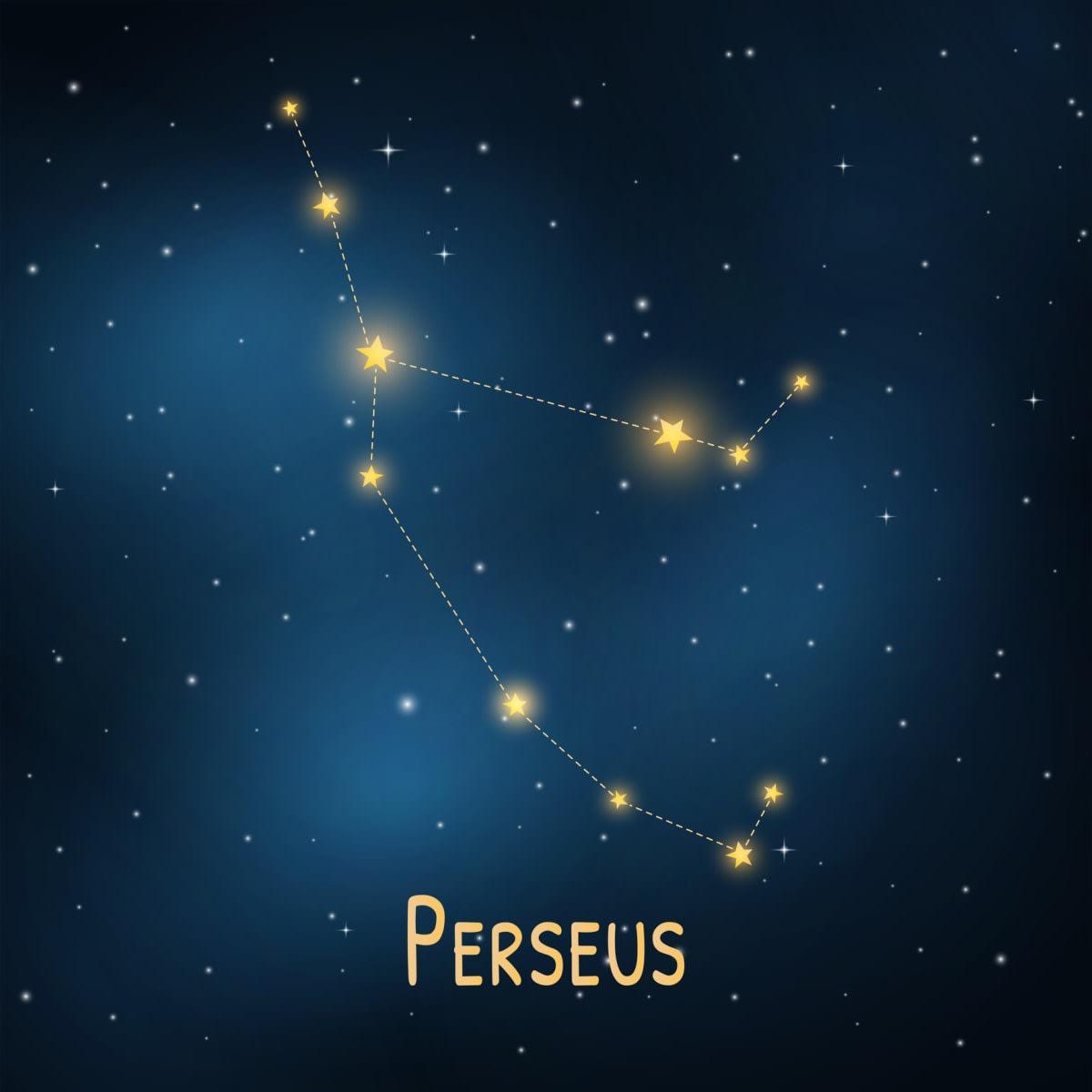
Beautiful Perseus constellation with a cosmic design decorating the starry night sky
There is another event that is making this year’s Perseids so special. In 2026, the shower coincides with the total solar eclipse on August 12, when more than 90 percent of the Sun will remain obscured. An eclipse like this won’t repeat until September 2090. The rare total solar eclipse will cross Greenland, Iceland, and Spain.