
A 'Snow Moon’ Will Rise Beside a Legendary Star This Week — Best Timings and Viewing Tips
Published Jan. 27 2026, 8:50 a.m. ET

The full Snow Moon rises behind the Statue of Liberty and Brooklyn in New York City on February 24, 2024, as seen from Jersey City, New Jersey.
On the night of Sunday, February 1, 2026, the darkening skies of the north will drape themselves in curtains of glittering stars, ready to exhibit a royal celestial show. Within the heart of winter, pulsing with the eerie cacophony of ice crystals and milky white ghosts of mist, the Moon will grow from gibbous to full and jump higher in the twilight sky. Soon enough, Regulus will join the show, emerging from below the moon.
Throughout the night, Regulus, a.k.a. “royal star,” and the Moon will remain close in the inky ocean of dark till sunrise. After January’s howling red Wolf Supermoon, February’s “Snow Moon” is the second full moon of the year, a cosmic romance bubbling with “main character energy” and calling earthlings to release stagnant energies and resurrect into new beginnings, as reported by PEOPLE and VICE.
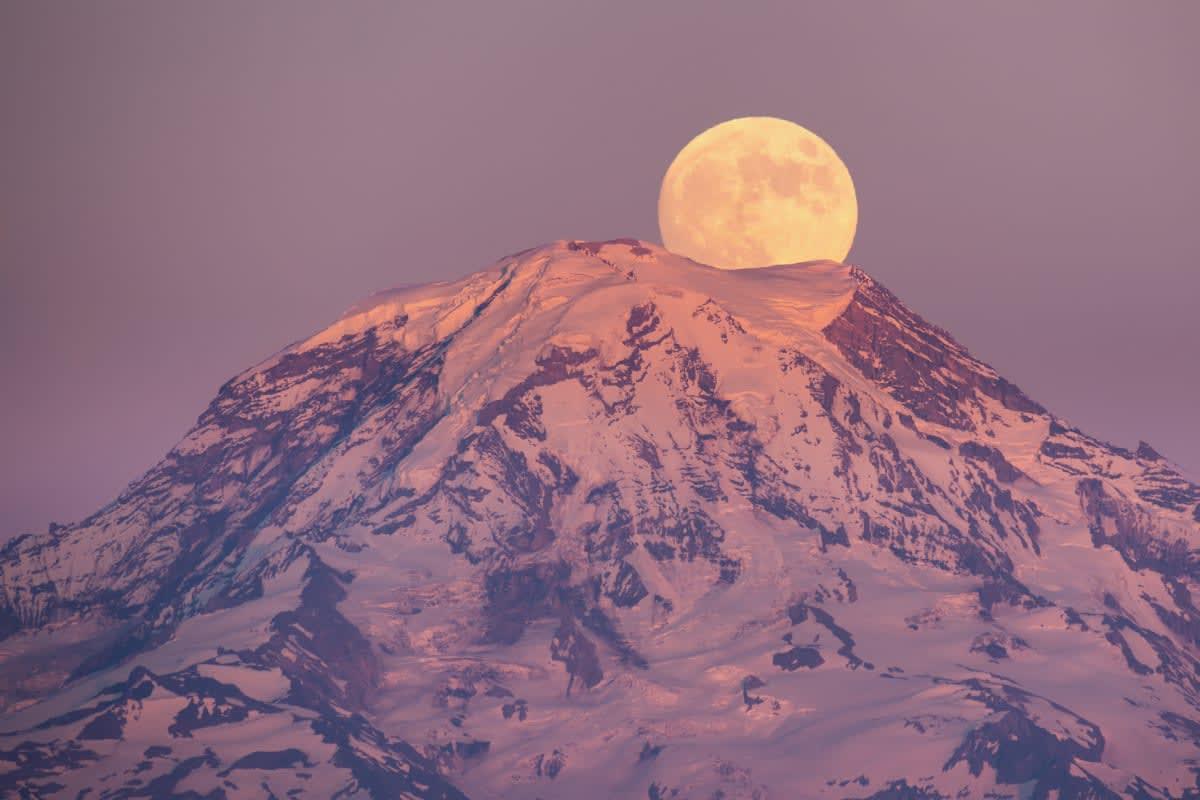
Glowing full moon rising from behind towering snow-covered mountains
Until February 1, the Moon will slowly, subtly climb higher and higher, and at 5:09 p.m. ET on this day, it will reach its peak, arriving in the constellation Leo. But it’s the companion this time who is catching all the spotlight. The showstopper, Regulus, isn’t just a royal star but also a symbol that represents the “heart of the lion.” It is the guardian of the northern sky and the brightest of all stars visible to earthlings. Like a duet performance of top stars, this Snow Moon performance will see two of the leading celestial celebrities.
The Snow Moon in itself isn’t rare. According to The Old Farmer’s Almanac, the explanation for its name is fairly straightforward. Since February is typically a month of heavy snowfall in the north, so is the name of the moon. But what makes it special and unmissable is the appearance of Regulus, whose name translates to the “Little King” that once held a prestigious title among the ancient four Royal Stars of Persia, namely Aldebaran, Fomalhaut, and Antares. Residing in the constellation Leo, the royal little king offers celestial markers that are linked to the turning points of seasons in Persian astronomy. For those who follow astrology, it also signifies royalty and leadership.
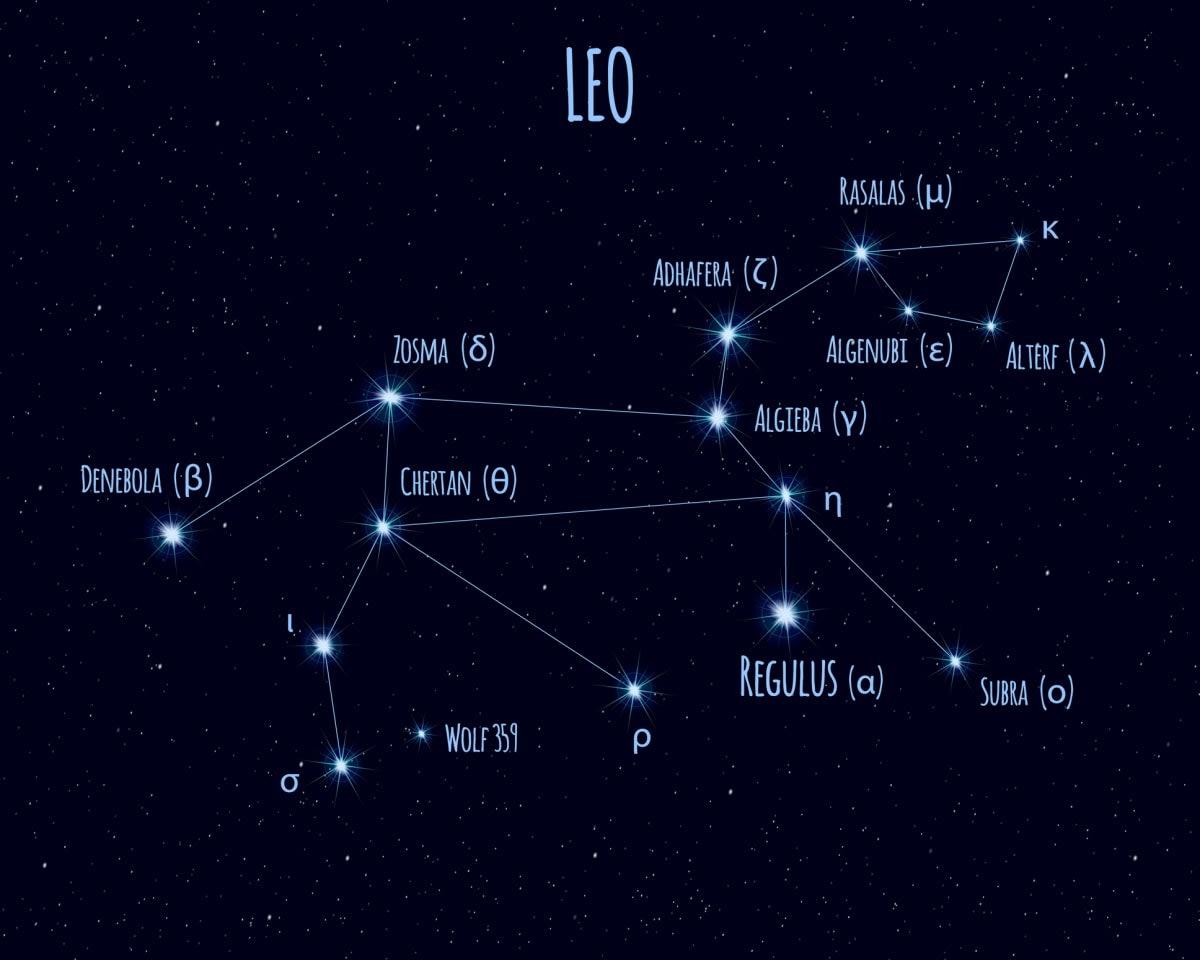
Constellation Leo (Lion) and the stars residing in it, including Regulus
Given the dramatic chorus of events that explode at this time of the year, the Moon has been endowed with dozens of nicknames, including Hunger Moon, which comes from the difficulty people face while hunting in the snow. Other nicknames are Storm Moon, Bald Eagle Moon, Bear Moon, Ice Moon, Raccoon Moon, Groundhog Moon, and Goose Moon.
The upcoming Snow Moon will remain visible to the naked eye, but for the most dramatic views, PEOPLE suggests stepping outside around sunset on February 1, right when the Moon is rising in the east. This timing, the moonrise golden hour, is also an optimal time for photographing the scene. Media outlets say that viewers don't need any special equipment, not even a flashlight, to watch the Snow Moon, although binoculars may come in handy for looking past the Moon's brightness. The Moon may appear brighter than usual due to a phenomenon called "moon illusion." PEOPLE recommends heading outside 10 to 20 minutes before sunset on February 1. Face east to let your eyes adjust to the luminous glare.