
What Do Wolves' Howling in Yellowstone Mean? Scientists Use AI to Decode the Sound
Published Dec. 29 2025, 7:16 a.m. ET

Wolf howling in the Snow in Yellowstone National Park
Wolf howls are dramatic, which popular culture, films, and television have long used to depict wilderness or danger. Now, the researchers at Yellowstone National Park want to learn wolf language beyond what has been fed to us through fictional imitations. Journalist Matt Standal of PBS Montana arrived at the coveted national park to understand how it utilizes artificial intelligence to decipher an animal's language. "Their howls have become central to a new cutting-edge conservation project, using artificial intelligence to decode sound recordings," he said. The development of such bioacoustic methods could redefine the methods used to track wolf activities in the wild. Gray wolves were introduced in Yellowstone in 1995, and researchers have since used several methods to collect data on the species.
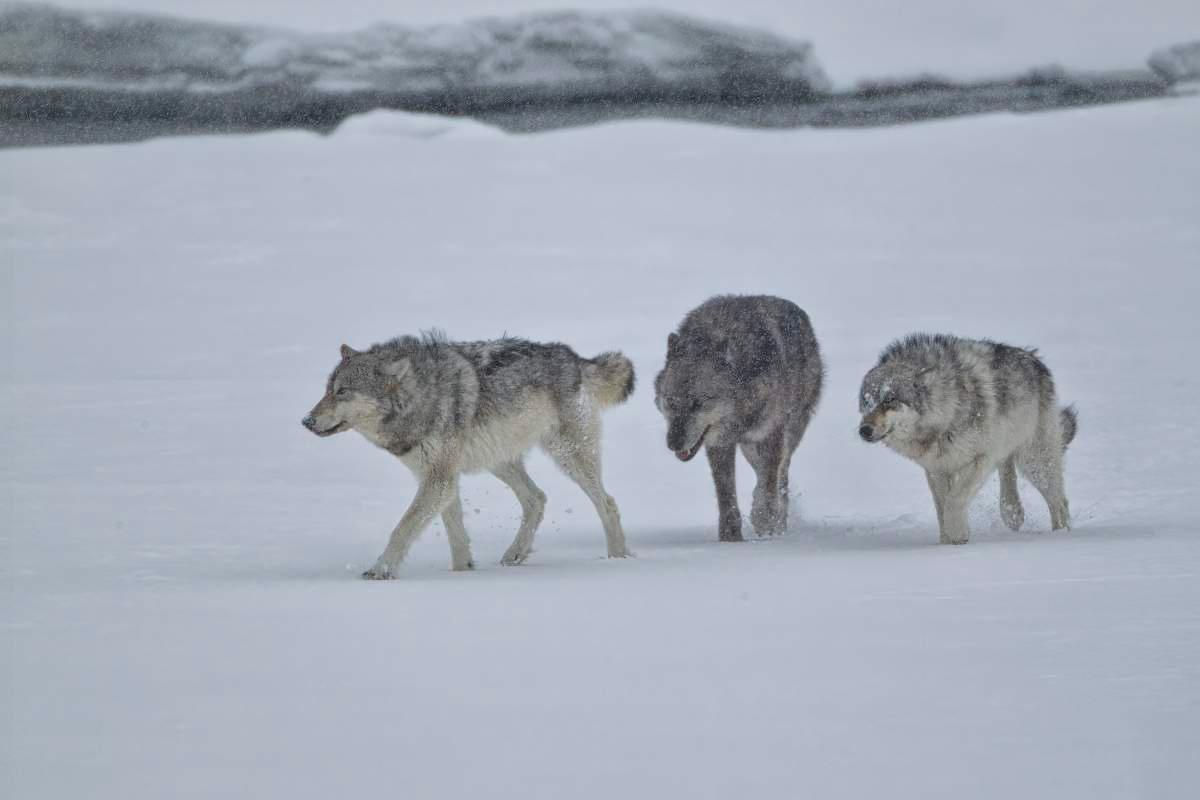
Arctic gray wolves wandering in Yellowstone snow
Airplanes have been used to spot them in the wild, helicopters to track them, and dart guns to install them with GPS tags that scientists can use to detect their location. Thanks to AI, there's finally a less invasive way to not just track the wolves but also understand their language and potential cry for help. Bioacoustics allows "using sound and advances in artificial intelligence to one day potentially decode wolf communication by matching their howls with specific behavior." Dan Stahler, senior wildlife biologist, explained how modern technology can help them in future research. "Not only can we hear them here and record their howling 24/7, 365 days a year, but we often can link behaviors of wolves by observing them when they are vocalizing," he said.
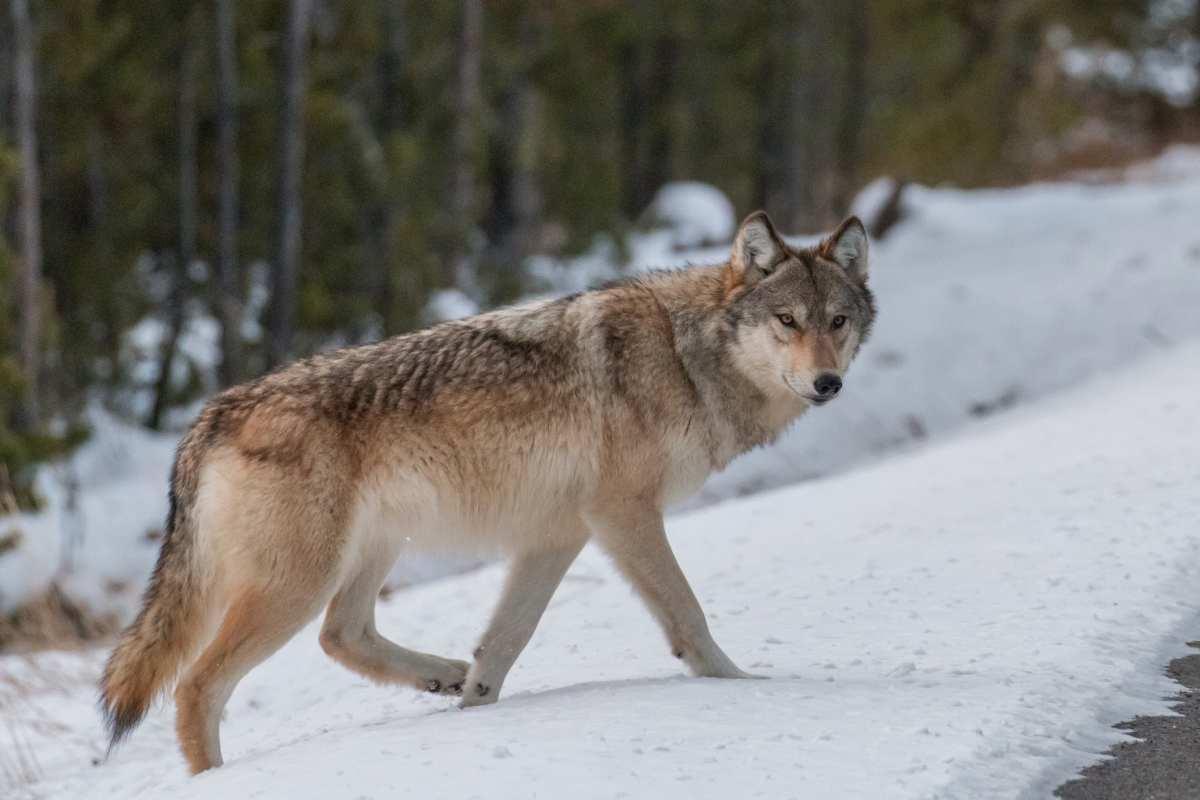
A wolf roaming in the valley of Yellowstone National Park
Collecting data from hidden sound recorders is part of Stahler's job, and he, along with his team have been collecting several recordings of the "barks, yips, and howls" of nine packs of wolves, more than 100 in count, that are found at Yellowstone. Stahler's goal is to collect enough sound recordings to detect patterns unique to each wolf pack. So far, they have collected over 7000 wolf sounds and have been able to identify the acoustic signature of various packs across the park. That's already a strong start. If the bioacoustics method continues to show positive results, there are high chances of it replacing the traditional and brutal method of capturing and collaring for good. "What I could envision down the road, a decade from now, is that we may not have to collar certain packs or put collars out in certain areas of the park," Stahler added.
Sign reading Yellowstone National Park
As the lead of the Yellowstone Wolf Project, Linguistics researcher and software engineer Dr. Jeff Reed has been studying wolf sounds for a while. The main focus is on identifying wolf patterns from a chorus howl, and the key technology that helps identify the pattern is a spectrogram. It creates a visual representation of a sound, highlighting its strength, frequency, and more. AI can pick up these patterns much faster than humans, making it a more efficient and less time-consuming method of analyzing wolf howls. Researchers also believe that cracking the wolf language could help them protect the species from human exploitation. Matt James, the chief animal officer at Colossal Biosciences, thinks the knowledge will help them explain that wolves are "empathetic, emotionally complex animals that aren`t mindless hunters and they deserve the ability to coexist with us."