
What Do Whales And Wolves Have In Common? This Surreal Video Reveals an Unexpected Link
Published Sept. 16 2025, 11:45 a.m. ET

Scuba diver approaches humpback whales
There are certain facts about various animals, marine life, and birds that are truly hard to believe. Extinct animals being brought back to life or species thought to be endangered being spotted show that the world still holds countless secrets that are yet to be revealed. In one such shocking news, it has been reported that whales, the gentle giants in the oceans across the world, may have a surprising history. Researchers claimed that the ancestors of whales were once land-dwelling predators who often hunted, just like wolves. PBS Eons shared a video in August 2022, which revealed this unexpected connection, tracing the evolutionary journey of a species of whale from fierce terrestrial hunters to the majestic marine mammals that we know today.
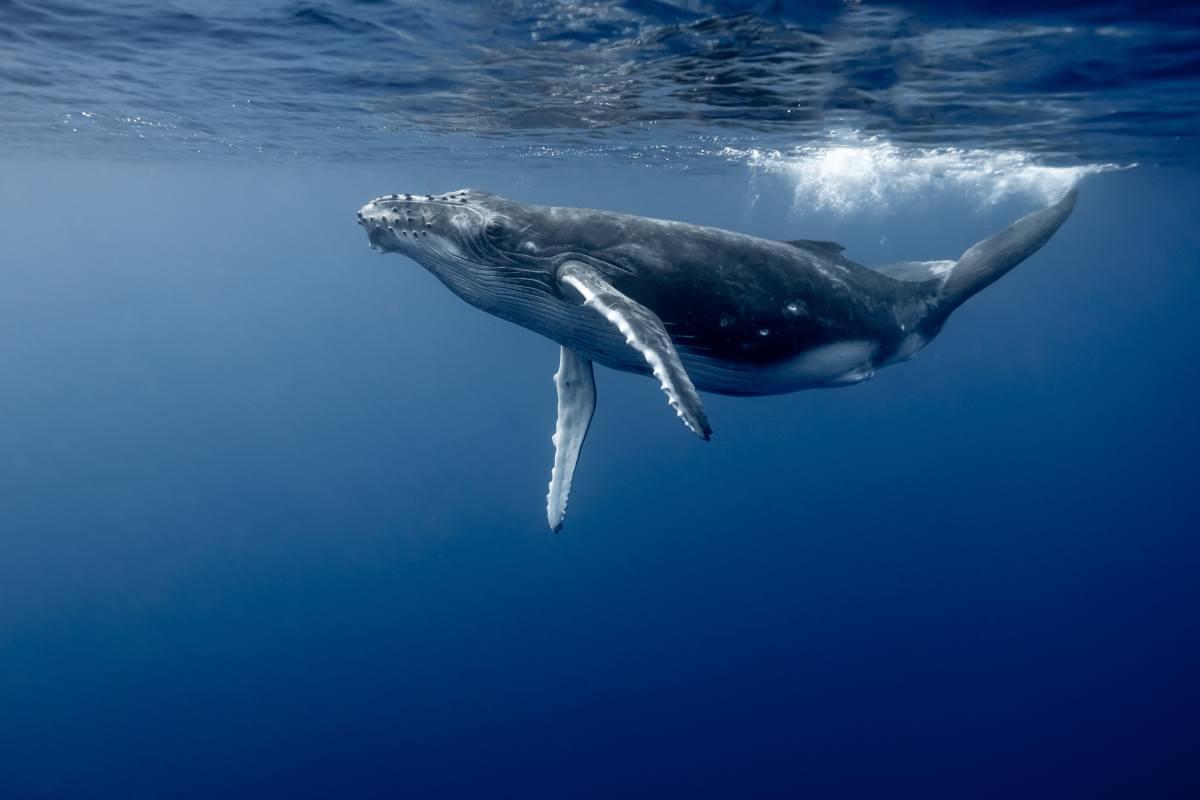
A close-up photo of a humpback whale.
Around 52 million years ago, before the warm, rainy Eocene epoch, whales did not look anything like they do today. Instead, they appeared more like an animal that was a mix of both wolves and crocodiles. The narrator of the video says, “The earliest whales were predatory land animals, who first went into the water about 52 million years ago.” She added, “While they started out looking kind of wolf-like, over time, they adapted to water, becoming sleeker and more streamlined.” Then, around 34 to 36 million years ago, whales were split into two main categories. First were the toothed whales—such as dolphins, orcas, and sperm whales—and the other group included baleen whales, also known as the Mysticeti.
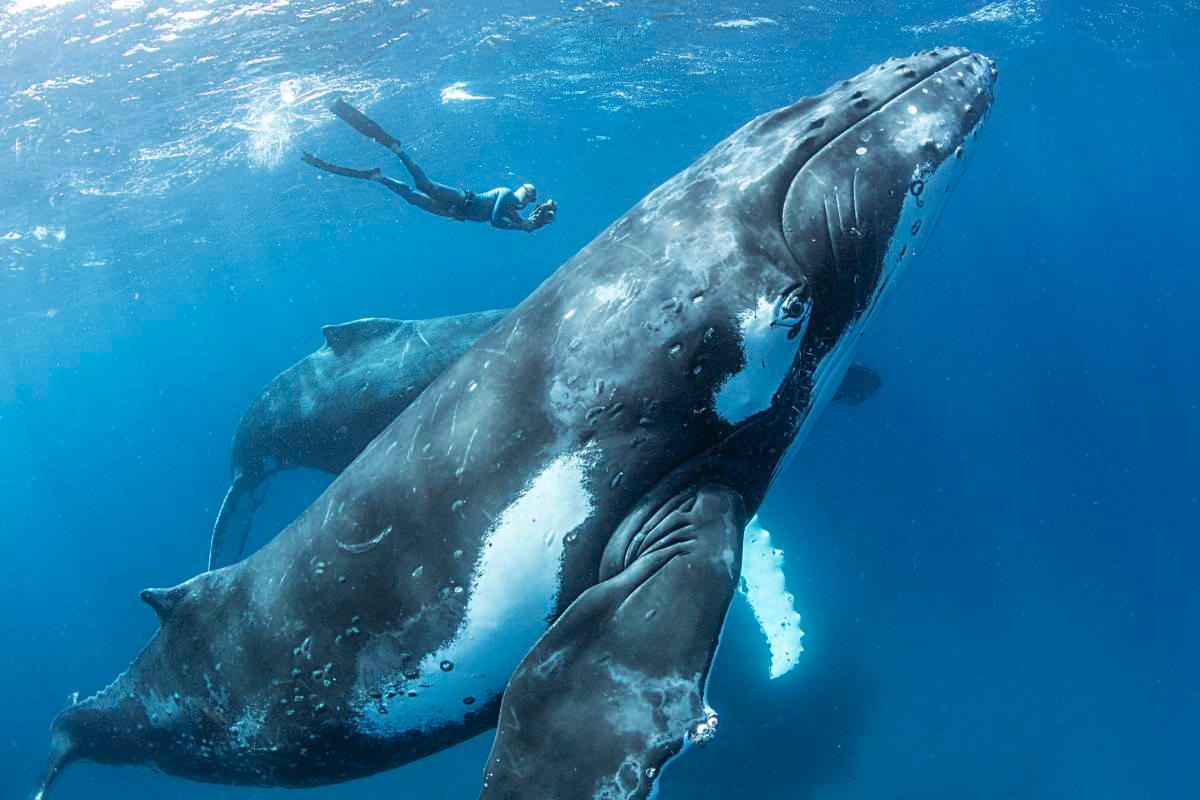
A diver swimming with a humpback whale.
Speaking about the baleen whales, the narrator stated, “Some researchers have assumed that filter feeding showed up early in their evolution, explaining their size and success.” Although fossils have shown that mysticetes existed as far back as 36 million years ago, baleen itself didn’t appear until 11 million years ago. Even when researchers examined Mystacodon, the earliest known relative of baleen whales, they found it lacked any evidence of baleen. This is even more mysterious because baleen is made of keratin, like hair and nails, and doesn’t fossilize easily, unlike teeth.
Further in the video, the host speaks of Mystacodon and states, “In 2019, researchers suggested that its remains held clues about how the creatures ate, and it wasn’t filter feeding.” Reports also suggest these animals had big teeth at the back of their mouth and smaller ones in front, with uneven surfaces that looked as if they’d been scraped by sand or sediment. This, along with several other signs, suggests that mystacodons hunted somewhere near the sea floor. Towards the conclusion, the host rightly stated, “Sometimes, the history of life on Earth is weirder than we expect, and that’s what keeps it interesting.”
Meanwhile, there are around 14 different species of baleen whales, such as blue, humpback, gray, bowhead, and minke whales. When compared to toothed whales, baleen whales tend to grow much bigger in size. Speaking of the present-day scenario, baleen whales no longer have teeth. Instead, they use comb-like baleen plates to gulp in tiny sea creatures such as krill, plankton, and small fish as their food. The plates act like a natural filter, straining food from the water when it enters the whale’s mouth, as reported by Whale and Dolphin Conservation USA.