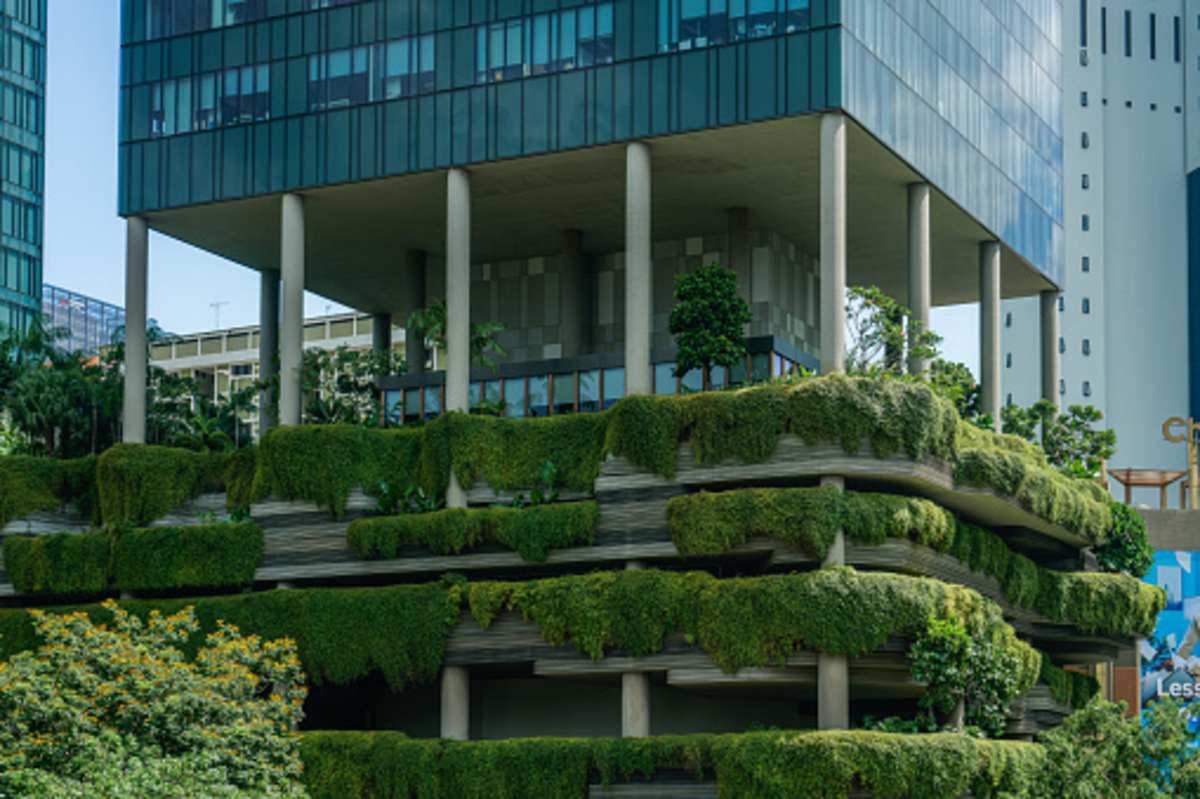
The intellectual architectural planning by WOHA Architects maximised the green coverage area to double the land area of the hotel building. The pioneering sustainable design earned the hotel Singapore’s highest green rating, the BCA Green Mark Platinum. PARKYOYAL on Pickering Hotel also won the Solar Pioneer Award for its innovative solar energy system. Additionally, the hotel flaunts an overwhelming list of 12 awards recognizing its architectural and sustainable genius. On their official YouTube (@parkroyalcollection), a hotel tour glimpses the mesmerizing architecture of the cascading sky gardens and infrastructure.
The location of the hotel was chosen strategically to be able to respond to multiple, separate, and disparate environments and provide public connectivity between these areas. According to the World Economic Forum, Singapore has preserved 7,800 hectares of green space to date. The government now expects to add another 1,000 hectares in the next decade. In 2021, the nation launched a green vision, City In Nature, to create a green, liveable, and sustainable home for all citizens by 2030.
This plan not only includes green spaces and infrastructure, but also restoring nature, expanding community parks, and strengthening the connection between green spaces, raising animal health and welfare standards, among others. These initiatives have transformed Singapore into a global leader in urban greening, while other cities aspire to follow their strategies. PARKROYAL shared their eco-conscious efforts on Instagram (@parkroyalcollectionpickering). It is worth noting that Singapore is densely populated with 5.6 million inhabitants, the second greatest density in the world, and yet has succeeded in creating the topmost sustainable city in the world.
However, the nation’s success is not only linked to active efforts by the government but more holistically, with private companies and real estate developers cooperating to contribute to the green urban landscape. Hence, they conduct biodiversity impact assessments (BIA) near natural habitats to mitigate their impact and reintroduce native species. Meanwhile, other nations like China, the United States, and the EU are still figuring out their transition to clean energy. China aims to go carbon neutral by 2060, while the EU and the U.S. by 2050, per the report.