
NASA Satellite Captures Sahara Desert Witnessing 'A Miracle' for the First Time in 50 Years
Published Feb. 11 2025, 8:45 a.m. ET

People riding on a camel get drenched in rain in the Sahara desert.
For over five decades, the Sahara Desert remained a hot, scorching, barren landscape pockmarked here and there with flimsy scrub bushes and cacti. Whipping Sahara winds often stirred up dust devils and sandstorms from its golden grounds that kept the desert in a hazy atmosphere, almost all the time. Lakebeds were leeched dry by the blazing fury of Sun and basically, there was no oasis for life on this Sun-baked desert scape. But in September 2024, the otherwise cloudless sky turned grey, soon pouring more rain into the torrid sand dunes than they ever had before, reported CNN.
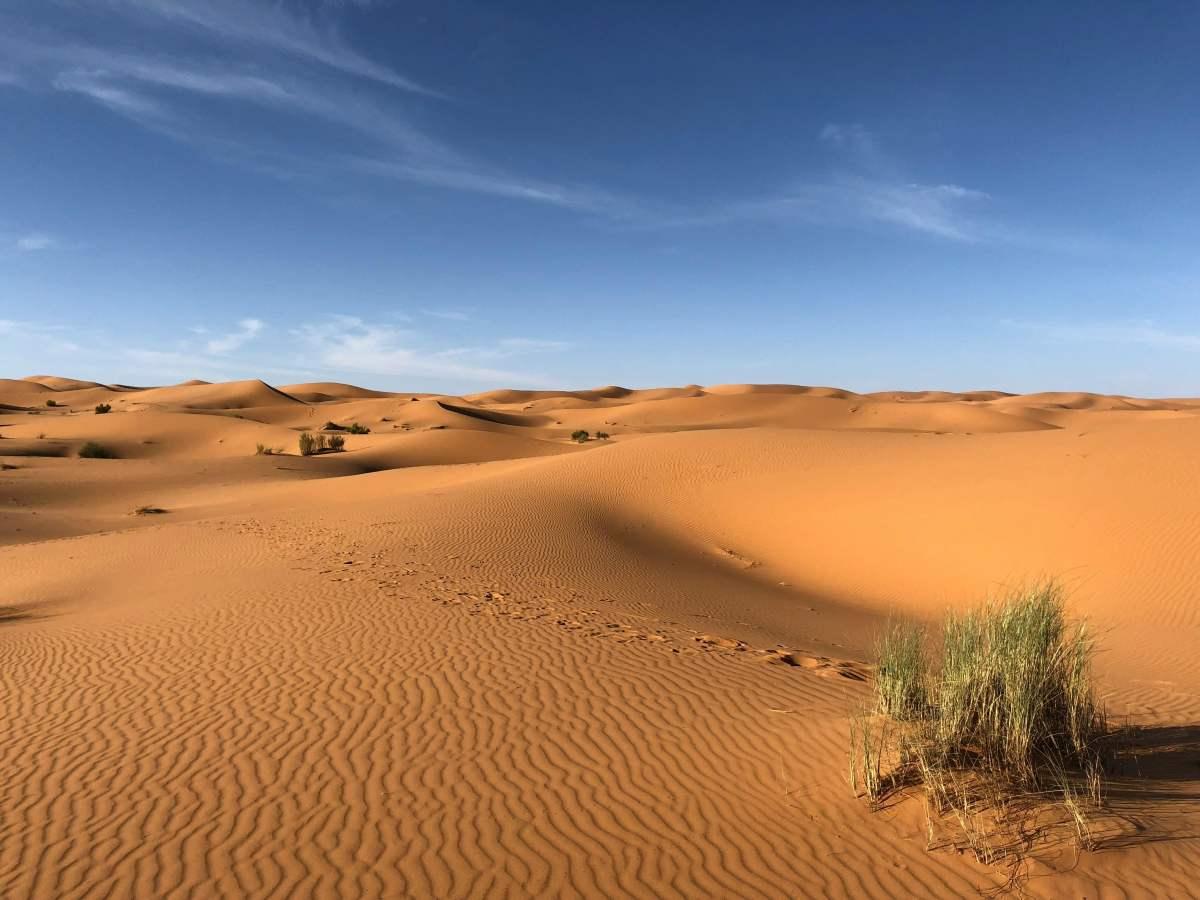
Golden sun-baked dunes of Sahara desert
Sahara, in Southeastern Morocco's desert, has carried the reputation of being the world’s largest non-polar desert and one of the most barren, driest, and most arid places in the world. This changed in the fall of 2024 when this rare deluge replenished its dry dune valleys and dampened its crispening palm bushes, depositing itself on the desert’s sand in the form of tiny blue lagoons.
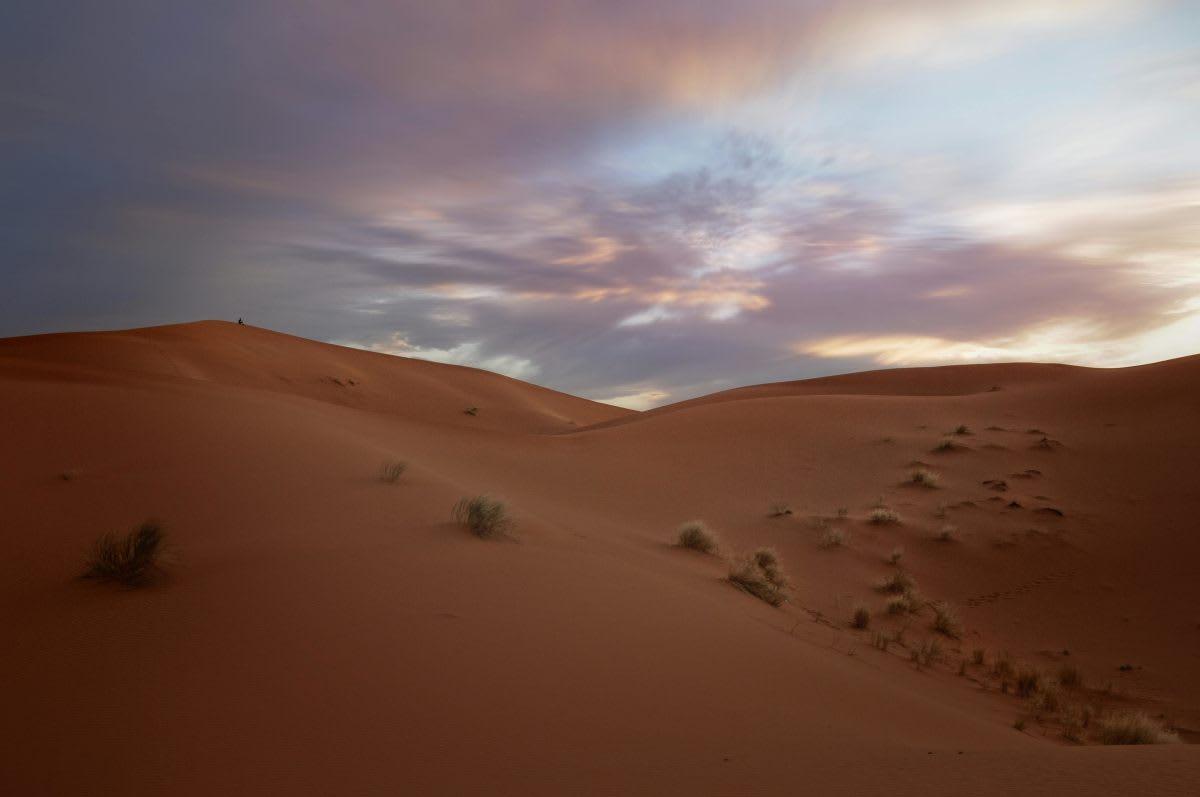
The sky is covered in dark rain clouds in a desert region.
According to the outlet, the Moroccan government declared that this miraculous rainfall exceeded the yearly averages of rain in several areas that typically witness less than 10 inches of rain every year. A desert city named Errachidia, for instance, recorded nearly 3 inches of rainfall. Whereas, a village called Tagounite, 280 miles south of the capital Rabat, received 3.9 inches of rainfall. NASA’s satellite images also showed water from the historic rainfall rushing in to fill Lake Iriqui, a famous lakebed between Zagora and Tata, that had been one of the driest desertlands for over 50 years.
“It’s been 30 to 50 years since we’ve had this much rain in such a short space of time,” Houssine Youabeb of Morocco’s General Directorate of Meteorology, told AP. “Such rains, which meteorologists are calling an extratropical storm, may change the course of the region’s weather in months and years to come as the air retains more moisture, causing more evaporation and drawing more storms,” Youabeb said.
The unanticipated rain that alleviated six years of Sahara’s drought happened primarily due to the involvement of a cyclone, NASA explained. A phenomenon scientists called an extratropical storm “pushed across the northwestern Sahara on September 7 and 8 and drenched large, treeless swaths of Morocco, Algeria, Tunisia, and Libya—areas that only rarely receive rain.”
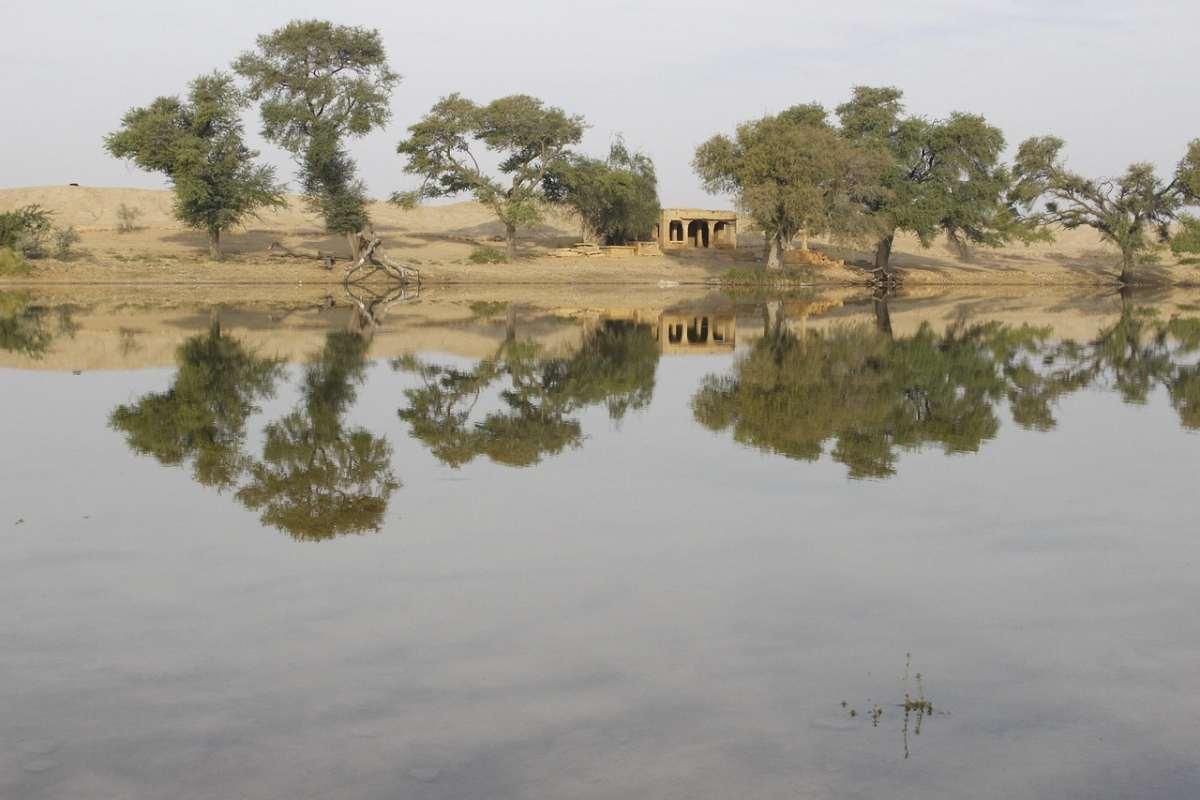
A desert region flooded.
According to The Guardian, drought has been a recurring problem in the Sahara for half a century. But after this storm, scientists predicted the possibility of other storms happening in the desert in the future, mainly due to global warming. “As a result of rising temperatures, the hydrological cycle has accelerated. It has also become more erratic and unpredictable, and we are facing growing problems of either too much or too little water,” Celeste Saulo, the secretary general of the World Meteorological Organization, said in a statement. But this one is indeed record-breaking, meteorologists say.
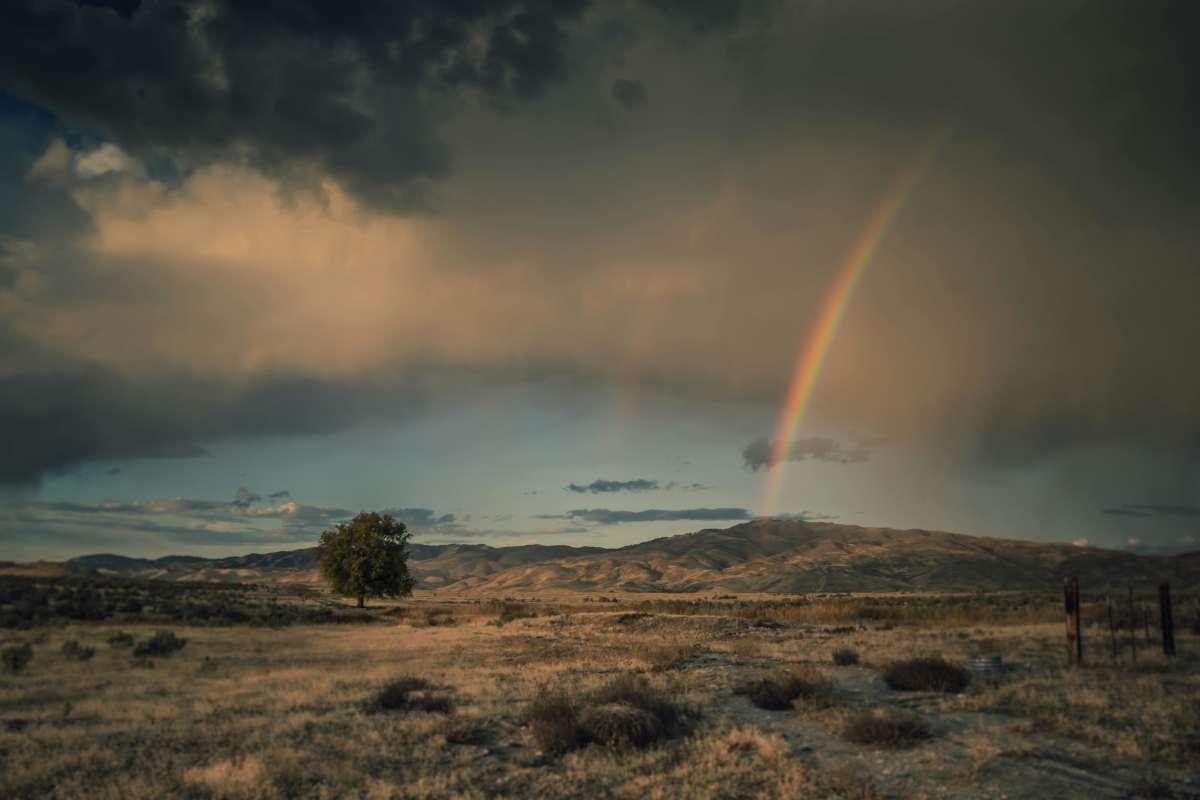
Rainbow shimmering in the sky of a desert
“While some degree of rainfall in this region happens every summer, what’s unique this year is the involvement of an extratropical cyclone,” Moshe Armon from the Institute of Earth Sciences and the Hebrew University of Jerusalem, told NASA. Thanks to this cyclone the reflections of Sahara’s palm trees shimmer in the rainwater lagoons carved amid steep sand dunes, and what was earlier gold and brown is finally stippled with patches of blue and green, for the first time in a long, long time.