
Scientists Explore New Method to Help Strengthen Immune Function With Age
Published Dec. 22 2025, 9:00 a.m. ET

A medical expert is seen talking to a senior man
What do you do when you love eating mangoes, and you don’t want to go to the market every week to grab some stock? You plant a mango tree in your garden. In a recent study, published in Nature, scientists did something like this, except that it’s not a tree of mangoes they planted, but rather a factory of T-cells. In the same way you chose a bright sunny spot for your mango tree, the scientists chose the liver as the location for this temporary cell factory. The goal: Encouraging the liver to mimic thymic factor secretion, so it would fulfill the supply of T-cells in case the body is going through an emergency.
T-cells are key residents of the immune system. As the body grows, the immune system starts losing its strength. Inside the weakening immune system, the populations of T-cells start to shrink. Over the years, these cells become smaller and more stubborn. They do not react to pathogens as quickly as they did while the body was still in its childhood stage. This means the body becomes more vulnerable to a variety of infections. Once upon a time, these cells were sharp warriors that effectively battled the invading germs. But as the body grows into an adult, these warriors don’t have the same fighting ability as they had at the time. Their response time slows down, too.
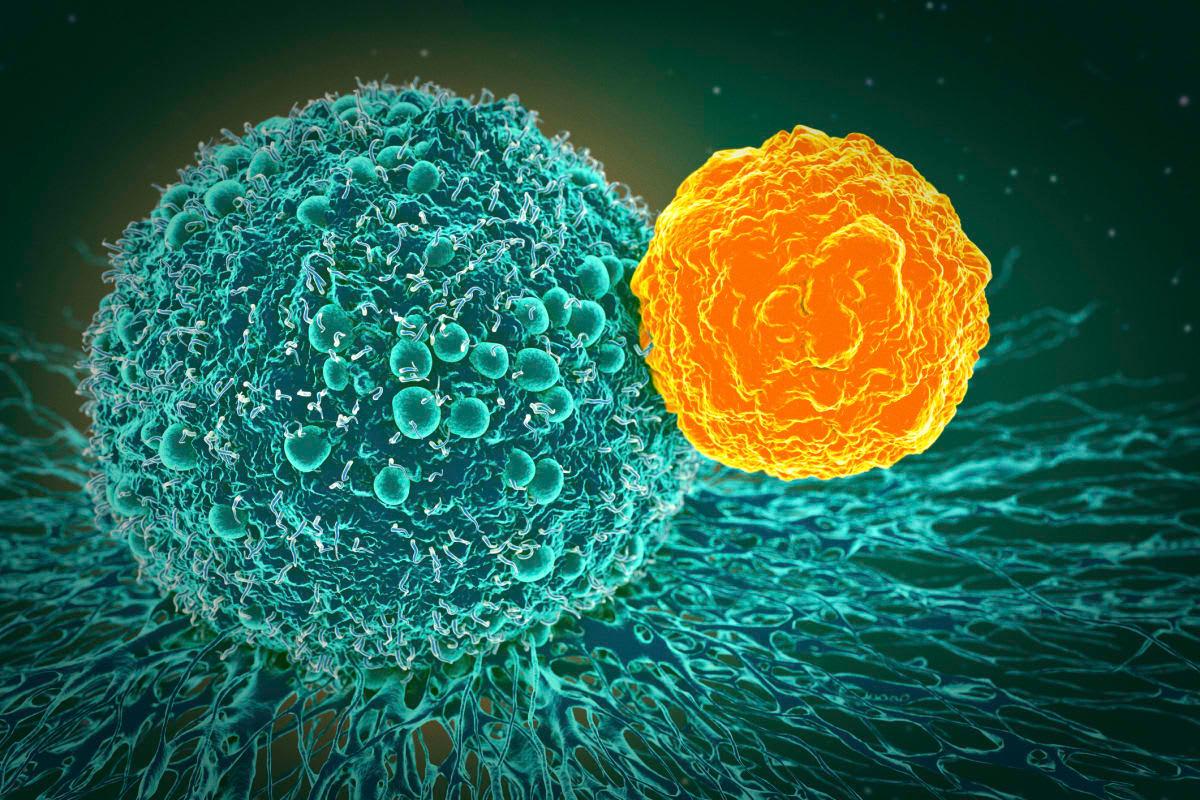
Illustration of cancer cell and T-cell
These specialized white blood cells are secreted inside the lymphatic system in a small organ called the thymus. According to the Cleveland Clinic, the thymus produces most of the T-cells before birth. The rest are generated during childhood. By the time the person reaches puberty, their body has all the T-cells they need for healthy immune function. However, as adulthood strikes, the thymus begins to shrink in a process called thymic involution. By 75 years of age, the thymus is, to most extent, suppressed.
“As we get older, the immune system begins to decline. We wanted to think about how we can maintain this kind of immune protection for a longer period of time, and that's what led us to think about what we can do to boost immunity,” lead author Mirco Friedrich explained in the university press release. The study was conducted by researchers at MIT and the Broad Institute. They believe that this re-programming can compensate for the age-related decline of the thymus.
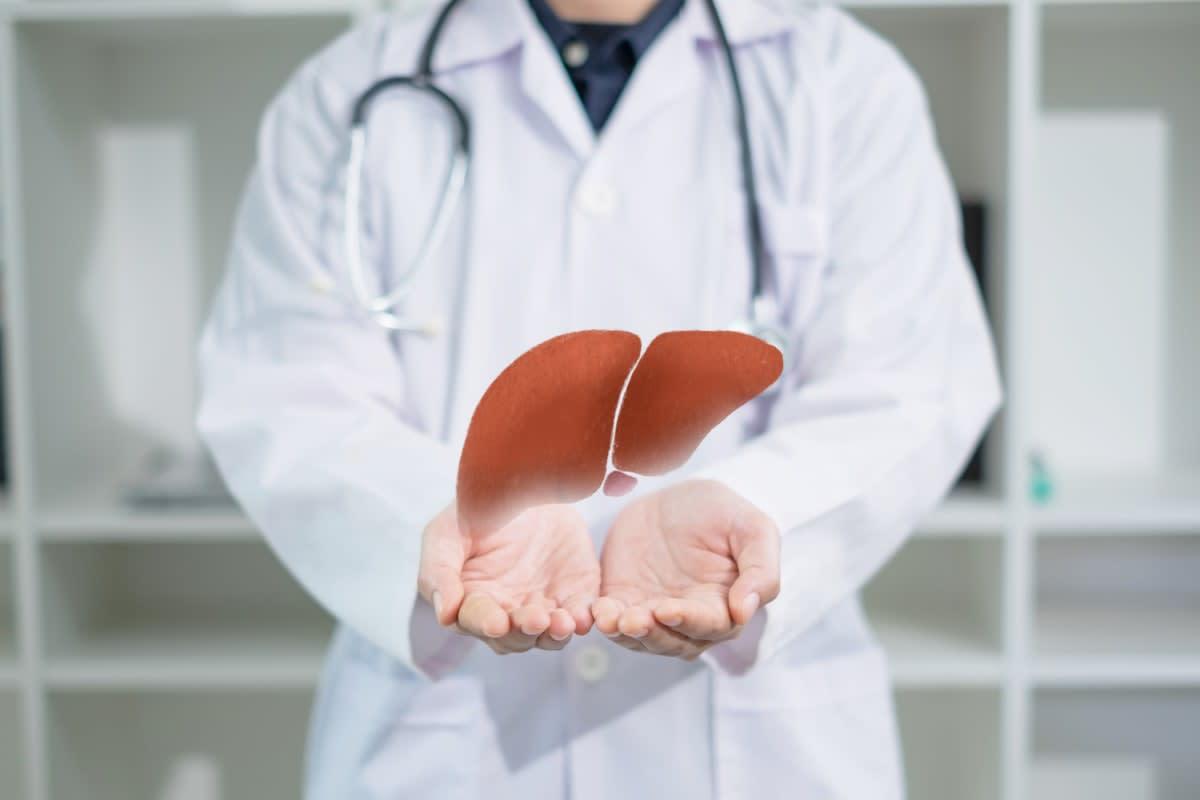
Concept of a doctor and a liver
But why liver? Why not some other location? The first reason is that the liver has a high protein-production capacity, even in old age. Also, it is easier to deliver mRNA to the liver than to most other organs of the body. mRNA will, in turn, boost the production of T-cells. Scientists utilized mRNA to deliver three crucial factors that support T-cell survival.
Older mice given the treatment produced larger, more varied T cell populations after vaccination, and they also showed improved responses to cancer immunotherapy. The same strategy, researchers believe, can be applied to human patients. “If we can restore something essential like the immune system, hopefully we can help people stay free of disease for a longer span of their life,” reflected Feng Zhang, the James and Patricia Poitras Professor of Neuroscience at MIT.