
Scientists Discover Way to Improve Development of Human Organs in Animals
Published Dec. 8 2025, 7:20 a.m. ET

Scientists conducting tests in a laboratory
A creature that is part human, part animal; this sounds like something out of a mythological sci-fi, or a blatant hoax. But thanks to some genius scientists, a creature like this is now a reality. Dubbed chimera research, this emerging branch of science has triggered a new wave of excitement among scientists who are exploring ways to surpass the human limitations of disease and the organ transplant crisis. The first experiment (human-pig chimeras) came to attention around 2017, and now, the technology is already gaining remarkable momentum. In a new study published in Cell, scientists documented a major concern, or a barrier they encounter while creating these human-animal chimeras in their laboratories.
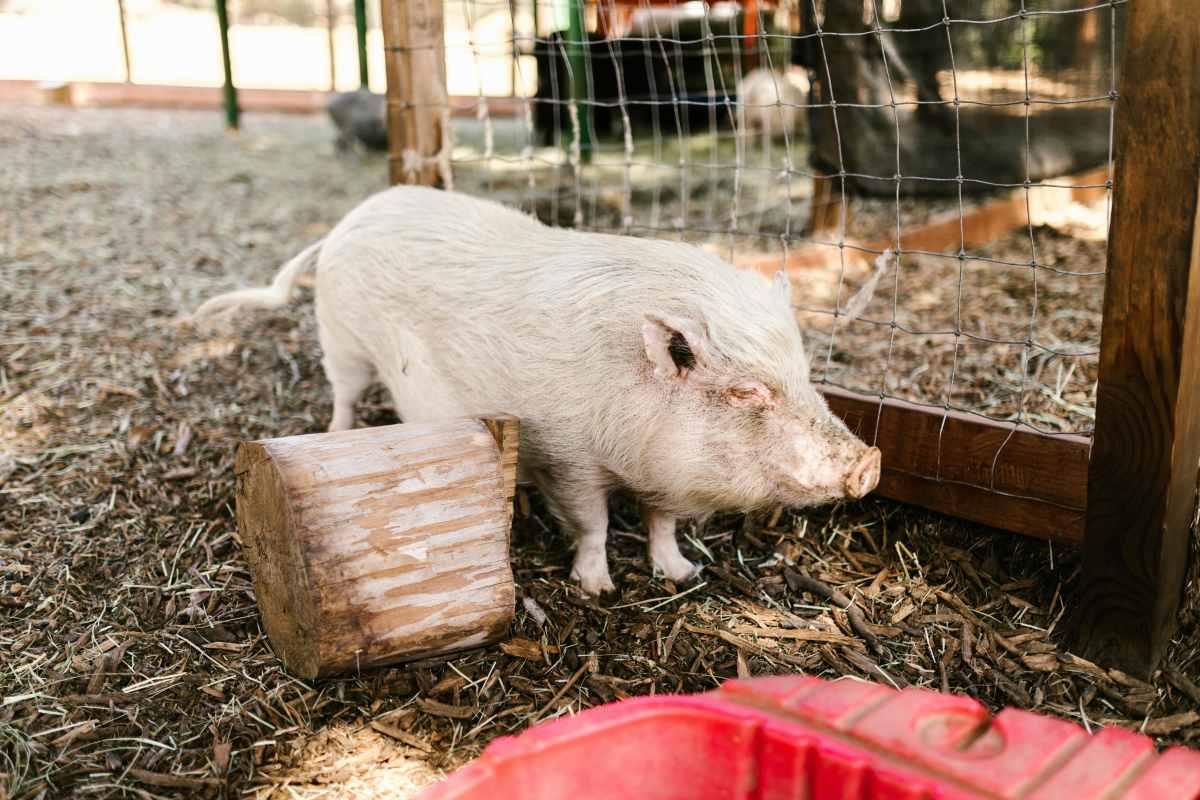
Farm pig in a sanctuary.
Interspecies chimerism refers to a process where cells from two different species are combined by laboratory manipulation to create a single organism that contains both cell types. The technology involves creating a human-animal chimera by injecting human pluripotent stem cells (hPSCs) into animal embryos. This is often done with the help of gene-editing technologies that silence some of the specific genes of the animal and replace the blocked niche with human stem cells. The technique can be used to generate everything from kidneys, livers, pancreas, hearts, and more.
In a report by NPR, Pablo Ross, a reproductive biologist, clarified that, by using this technology, scientists are not trying to make a chimera just because they want to see “some kind of monstrous creature,” but simply because they require it for a “biomedical purpose.”
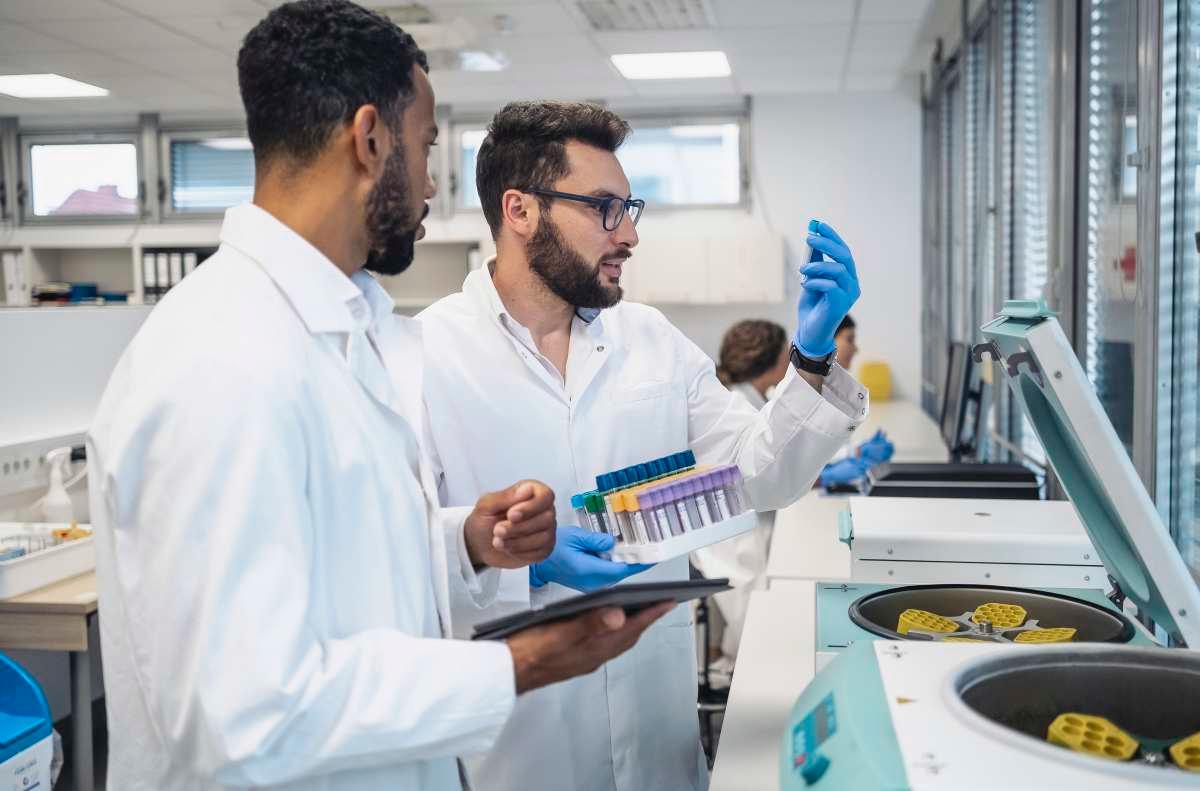
Two scientists are looking at samples in the laboratory.
The cells of the animal host, be it a pig, mouse, or monkey, carry a defense mechanism called 'RNA innate immunity,' that causes the animal’s cells to outcompete human cells during the chimera-formation process. In the latest research, led by experts at UT Southwestern, biologist Jun Wu identified a mouse cell protein named “MAVS” that, when disabled, turns off this immune alarm, according to the study. This allows human cells to compete, survive, and ultimately integrate more effectively inside the pig’s embryo. The solution emerged when Wu was developing ways to circumvent sticky proteins called cell adhesion molecules (CAMs). CAMs naturally adhere to the cells of the same organism, but rarely to the cells of a different organism. Wu and his team took CAMs as the anchor.
They designed a technique that would modify human stem cells with nanobodies, so, each time they encounter antigens belonging to a different organism, they would bypass CAMs altogether and latch onto the host cells. This, however, isn’t the end of challenges. Stuart Newman, a professor of cell biology and anatomy, shared with NPR that sometimes the tissues of human stem cells go on to spread to other organs of the host animal. Brain, for instance. When this happens, it can give the animal human-like qualities, a vision which is currently beyond the scope of science. "If you have pigs with partly human brains you would have animals that might actually have consciousness like a human. It might have human-type needs. We don't really know," he said.
Man feeding a pig.
Jason Robert, a bioethicist, shared that most people believe that there’s something sacrosanct about what it means to be human, expressed in our DNA. So, if a scientist is, knowingly or unknowingly, giving the animal human-like capabilities, it would be a kind of “violation,” as if “playing God.” Ross, however, defended his argument, saying, "I don't consider that we're playing God or even close to that. We're just trying to use the technologies that we have developed to improve people's lives."