
Scientists Claim Asteroid Bennu Contains All Essential Elements of Life
Published Dec. 3 2025, 5:36 a.m. ET

Asteroid Bennu approaching Earth through empty space.
Asteroids often play a crucial role in scientific research because they bring in samples from the solar system. Unlike planets, these space rocks remain largely unchanged for thousands of years, preserving many materials that are yet to be discovered. By studying their composition, experts can gather clues about different aspects of our universe. In one such incident, recent reports claim that asteroid Bennu, a space rock that was orbiting the sun millions of kilometers away, between Mars and Jupiter, is turning out to be far more remarkable than scientists once expected.
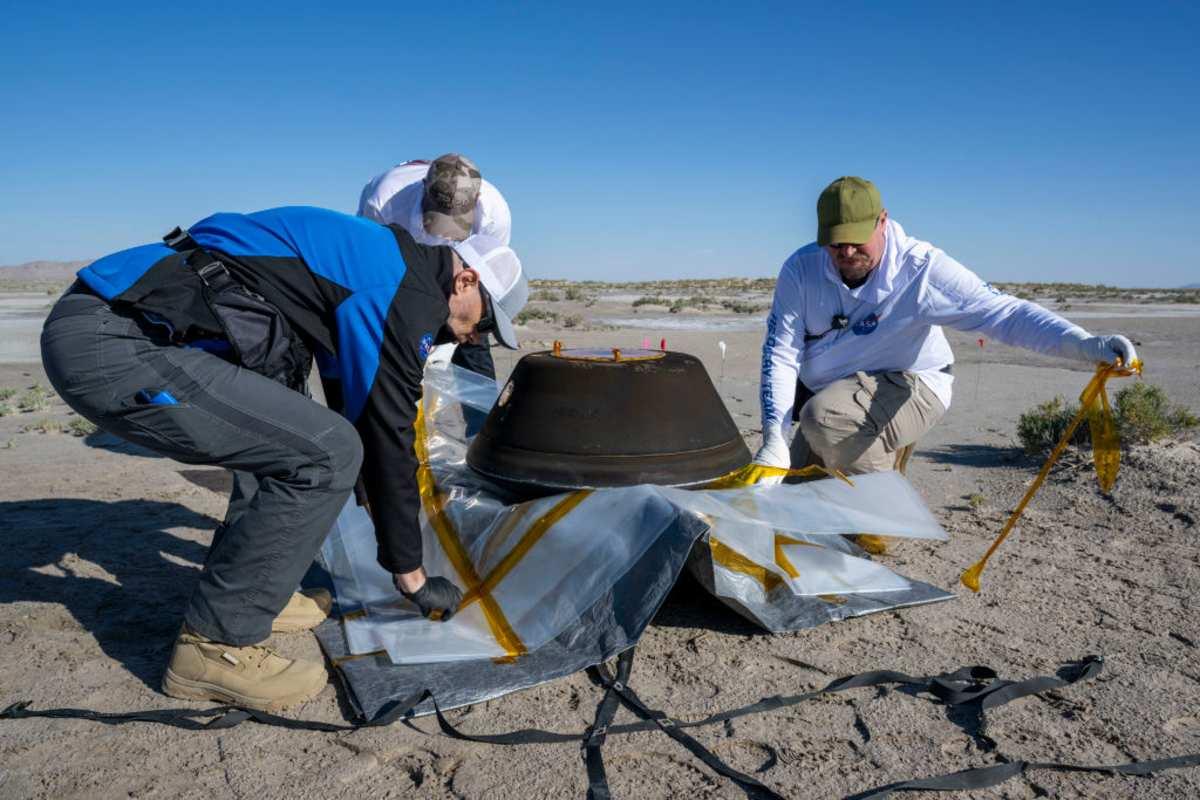
Capsule containing asteroid Bennu.
Scientists have found that asteroid Bennu has all the key components that are needed to spark life, suggesting that asteroids may have carried the prerequisites for life to Earth. As reported by New Scientist, NASA’s OSIRIS-REx mission first collected samples from asteroid Bennu in 2020 and delivered them back to Earth in 2023. Since then, tiny portions of the 121 grams of collected sample have been sent to different laboratories across the world, allowing experts specializing in various biological compounds to begin the detailed analyses. At first, detailed studies revealed that the asteroid sample consisted of water, carbon, and a few other organic molecules.
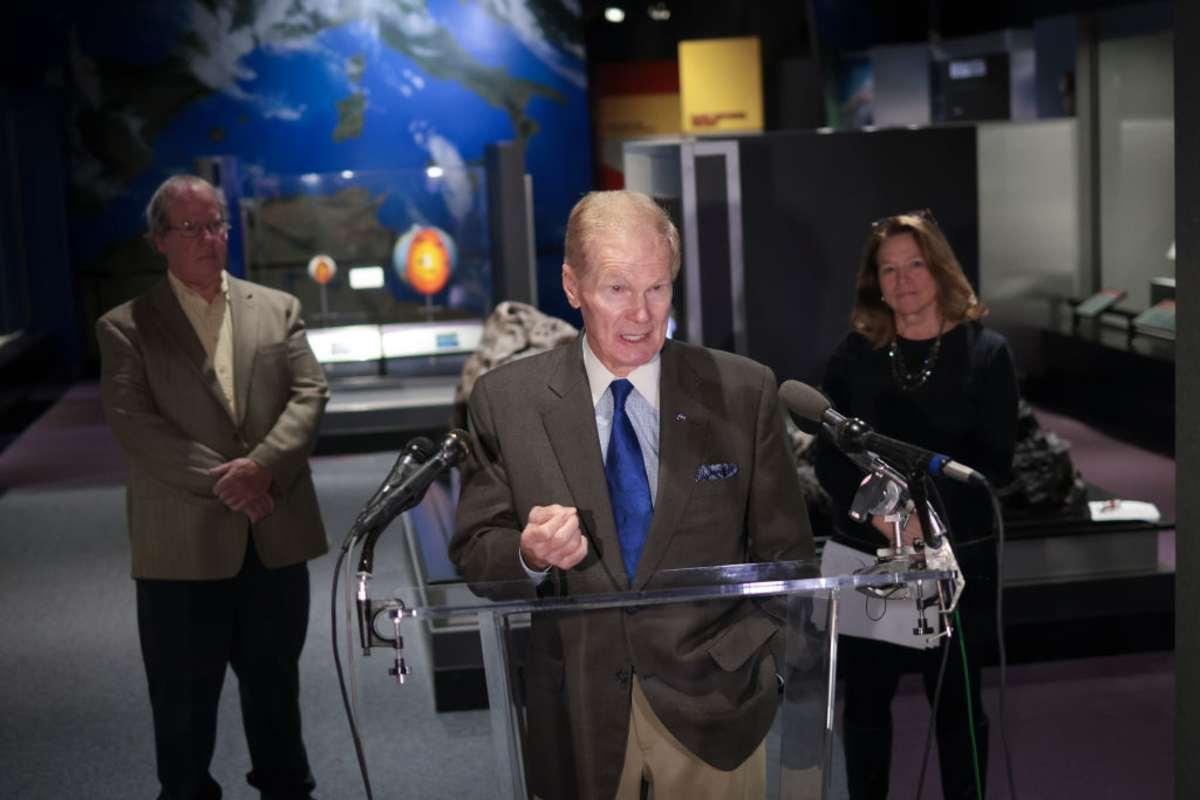
NASA Administrator Bill Nelson speaking before the first public display of a sample from asteroid Bennu.
Scientists then detected amino acids, formaldehyde, the five nucleobases present in RNA and DNA, and phosphates in the samples. While these are some of the key ingredients for life, they aren’t sufficient to form a full genetic molecule. Early analysis did not detect the presence of ribose in RNA and deoxyribose in DNA. Recently, Yoshihiro Furukawa, a scientific researcher, and his team at Tohoku University once again analyzed a small piece of Bennu’s sample and successfully found ribose and other sugars like lyxose, xylose, and more, but they are yet to find deoxyribose. The team suggests that these sugars likely developed in the parent asteroid of Bennu.
As reported by NASA, Furukawa said, “The new discovery of ribose means that all of the components to form the molecule RNA are present in Bennu.” The findings of this research were revealed in a study titled ‘Bio-essential sugars in samples from asteroid Bennu,’ which was published by the journal Nature Geoscience. While it is exciting, finding ribose in asteroid samples isn’t unexpected, as it has previously been detected in two meteorites that landed on Earth. However, what’s surprising is that scientists believe that not discovering deoxyribose strengthens the ‘RNA world’ theory, which states that early life depended mainly on RNA rather than DNA.
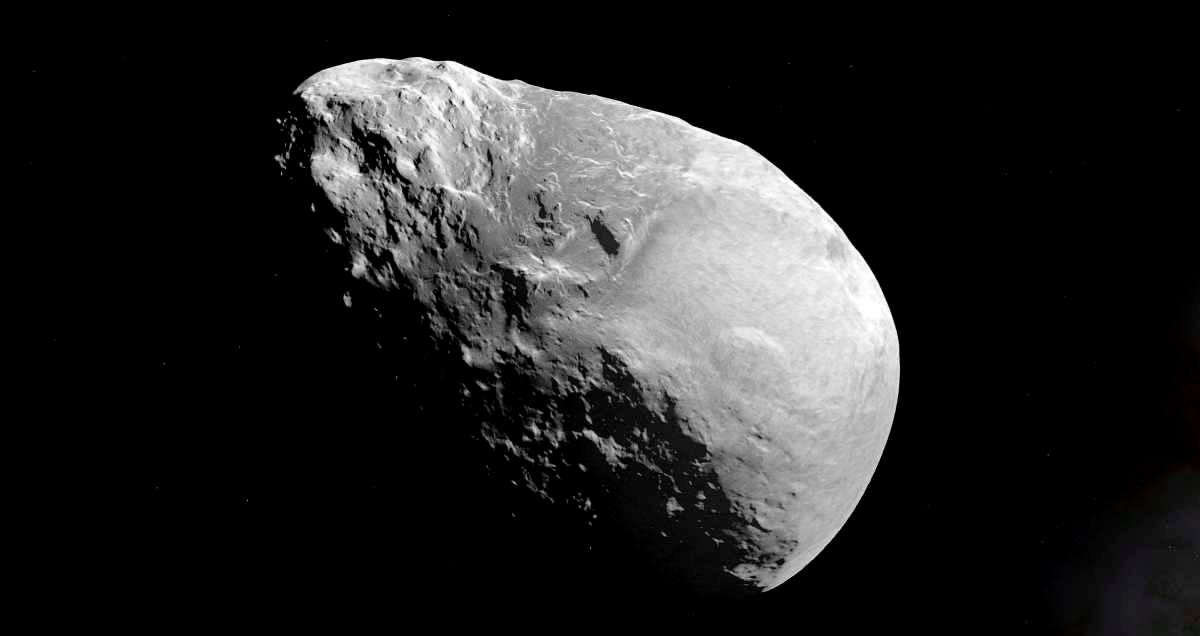
An image of asteroid Bennu.
Speaking of this, Furukawa said, “Present day life is based on a complex system organized primarily by three types of functional biopolymers: DNA, RNA, and proteins. However, early life may have been simpler. RNA is the leading candidate for the first functional biopolymer because it can store genetic information and catalyze many biological reactions.” Meanwhile, another study, which was published by the journal Nature Astronomy, found a sticky, gum-like material in Bennu’s samples. It is something never seen before in any of the space rocks. Researchers think it might have formed long ago as Bennu’s parent asteroid heated up in the solar system.