
Researchers Reveal Easy Way to Remove Microplastics From Drinking Water — It Takes Just a Minute
Published April 8 2025, 11:46 a.m. ET

Woman concerned while drinking a glass of water at home.
No matter how far you live from the coast, the plastic dumped into your bins eventually ends up in the water of oceans and seas. The moment you toss an empty bottle of soda or that cheese wrapper in the trash barrel, these plastics start shedding their skin, disintegrating, and multiplying into zillions of tiny particles called microplastics. As eddies of winds lift dust from the Earth and streams of rainwater sweep it away, these treacherous plastic particles drift away and get trapped in the whirlpools of ocean currents. When this water flows into the underground channels, these particles seep inside the roots of fruits and veggies sprouting above, contaminating the very food we eat. In fact, Good News Network reported that there is around 7 credit cards' worth of plastic circulating in a human body.
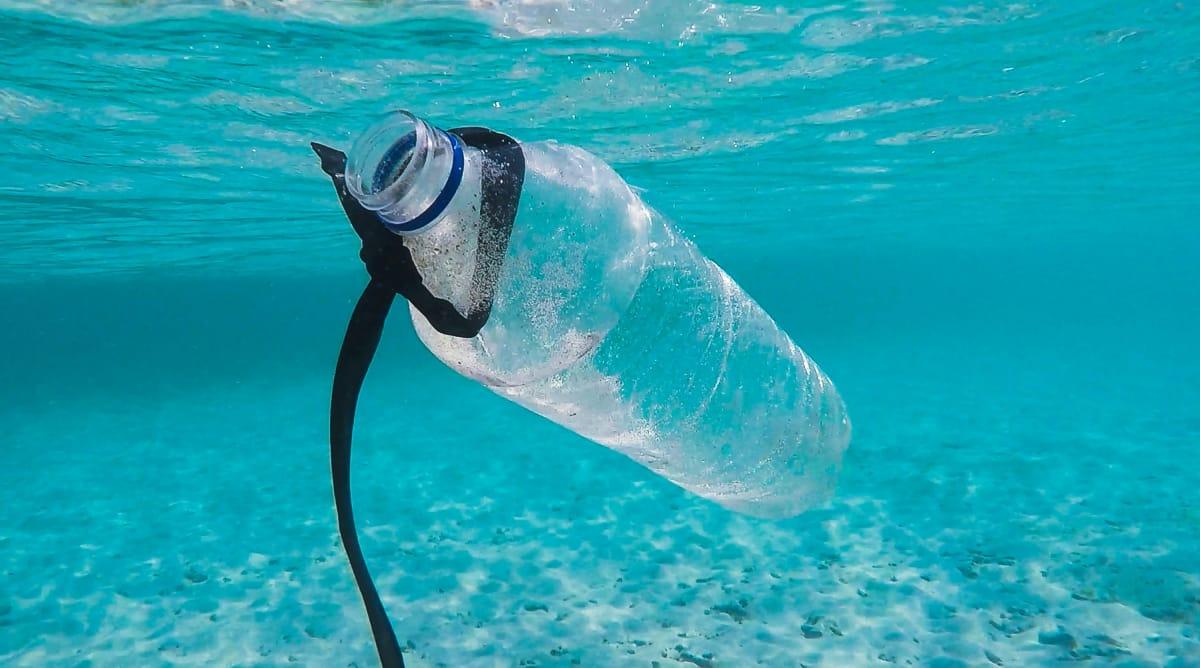
Plastic water bottle drifing and polluting ocean water
Microplastics are everywhere, from salt to drinking water, from human breast milk to chewing gum, per CNN. But do not shake, some researchers have figured out a way to chuck out these gnarly particles, at least from water: boiling. Findings of the study were published in Environmental Science & Technology Letters in March 2024. The team that conducted this study included researchers from Guangzhou Medical University and Jinan University in China. They ran tests on both the soft water and the hard tap water. They simulated tap water with all the minerals plus microplastics to see if boiling could remove some of them. The “hard water,” according to British Water Filter, is quite rich in minerals like calcium carbonate and limescale, which is a compound of calcium and magnesium.
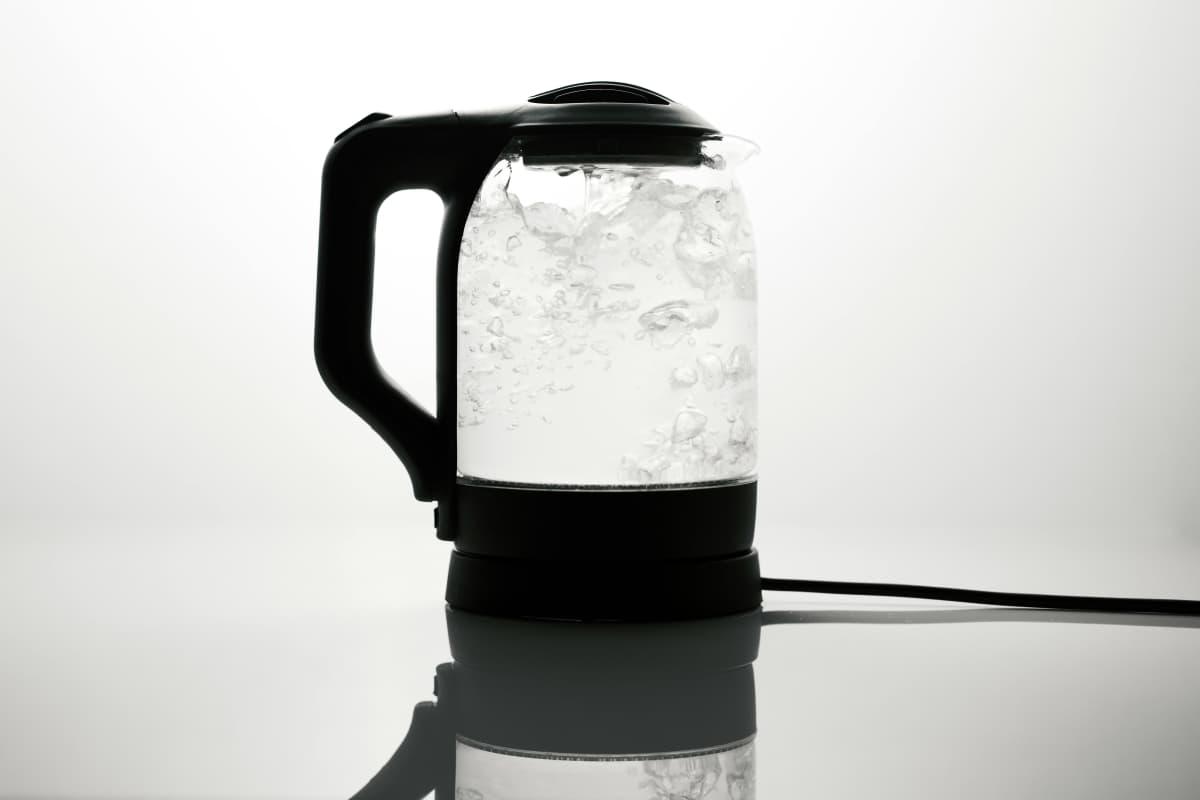
Water boiling in an electric kettle
This limescale is a milky residue or chalky deposit that you might have spotted from time to time in appliances like electric kettles, water heaters, coffee makers, washing machines, and dishwashers. At high temperatures, calcium carbonate turns into a solid, crusty substance, which is effective for trapping the tiny plastic particles lingering in the water inside the appliance. So when scientists boiled hard water, nearly 90% of these particles were trapped in the limescale, with sizes ranging from 5 micrometers to 10 micrometers in length. “This simple boiling water strategy can ‘decontaminate’ [nano and microplastics] from household tap water and has the potential for harmlessly alleviating human intake of NMPs through water consumption,” they wrote in the paper.
Woman Drinking Water.
Even in the soft water samples, which contain a relatively lesser amount of calcium carbonate, roughly a quarter of the plastic particles were squeezed out from the water. "Our results showed that nanoplastic precipitation efficiency increased with increasing water hardness upon boiling," the team concluded in the paper. After this research, the researchers recommended that people boil water to get rid of microplastics, but at the same time, they don’t need to boil every little glass of water. “Are we going to be able to go and vacuum up every piece of plastic that’s on the Earth already now? No,” Chris Reddy, a senior scientist at the Woods Hole Oceanographic Institution who wasn’t involved in the new research, told The Washington Post.
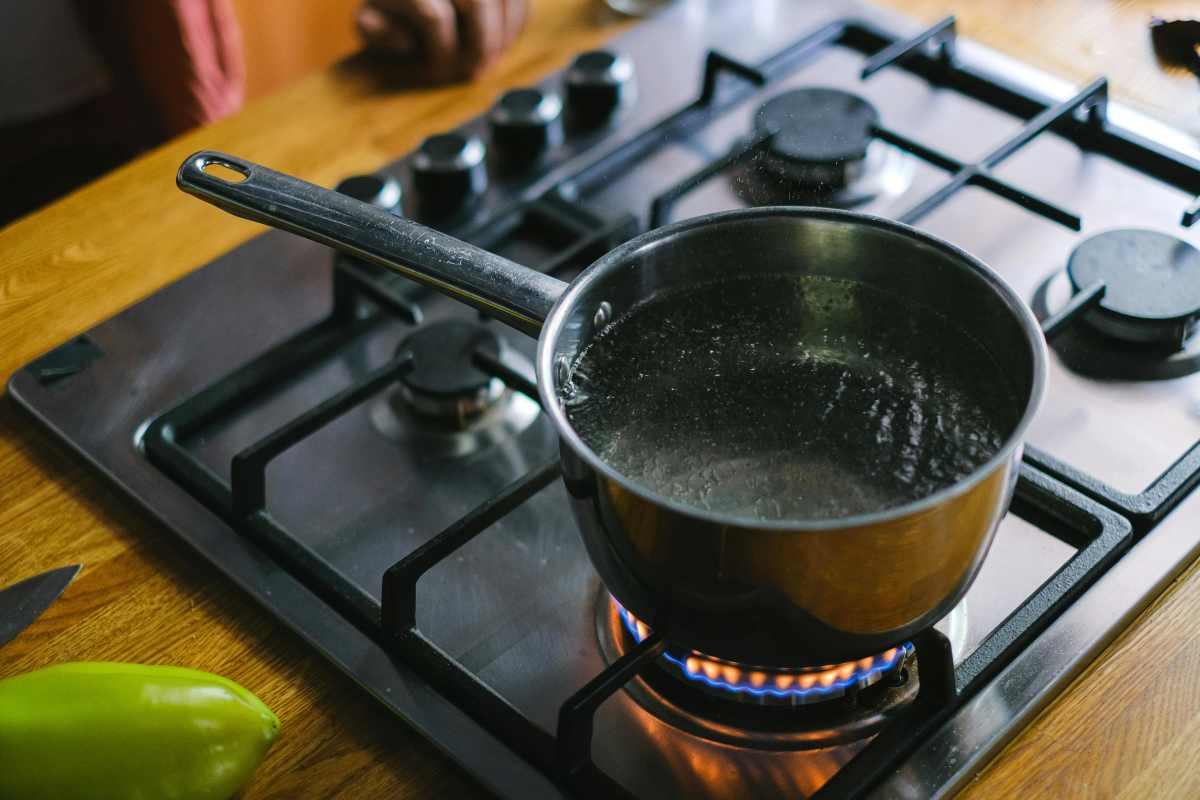
Water is boiling in a pan.
"But I do think that we can make meaningful, broad-scale change in how plastic is potentially impacting our present," Reddy added. The team believes that although the boiling experiment worked out successfully this time, it might not be the sole answer to the alarming dangers of microplastics. “Our results have ratified a highly feasible strategy to reduce human NMP exposure and established the foundation for further investigations with a much larger number of samples,” they noted in the paper. Reddy told The Post, “Science takes a long time. The picture is still getting worked out.”