
Rare Volcano Ejecting Bright Blue Lava Looks Surreal — but It's More Dangerous Than We Think
Published Aug. 16 2025, 9:45 a.m. ET

Visitors looking at the stunning blue lava at Kawah Ijen.
Nature has a way of surprising us with sights that feel almost unreal. From the glowing blue bioluminescence that illuminates the ocean shores at night to plants that glow in darkness, these natural wonders remind us how little we truly know about the planet we inhabit. Deep in Indonesia’s East Java lies one such astonishing wonder. Kawah Ijen, located in the area, is a rare volcano that erupts bright blue lava, which even glows in the night. This otherworldly phenomenon isn’t magic, but a dangerous reality. Yet, the fascination with experiencing nature’s masterpiece has fueled a surge in dark tourism in the area.
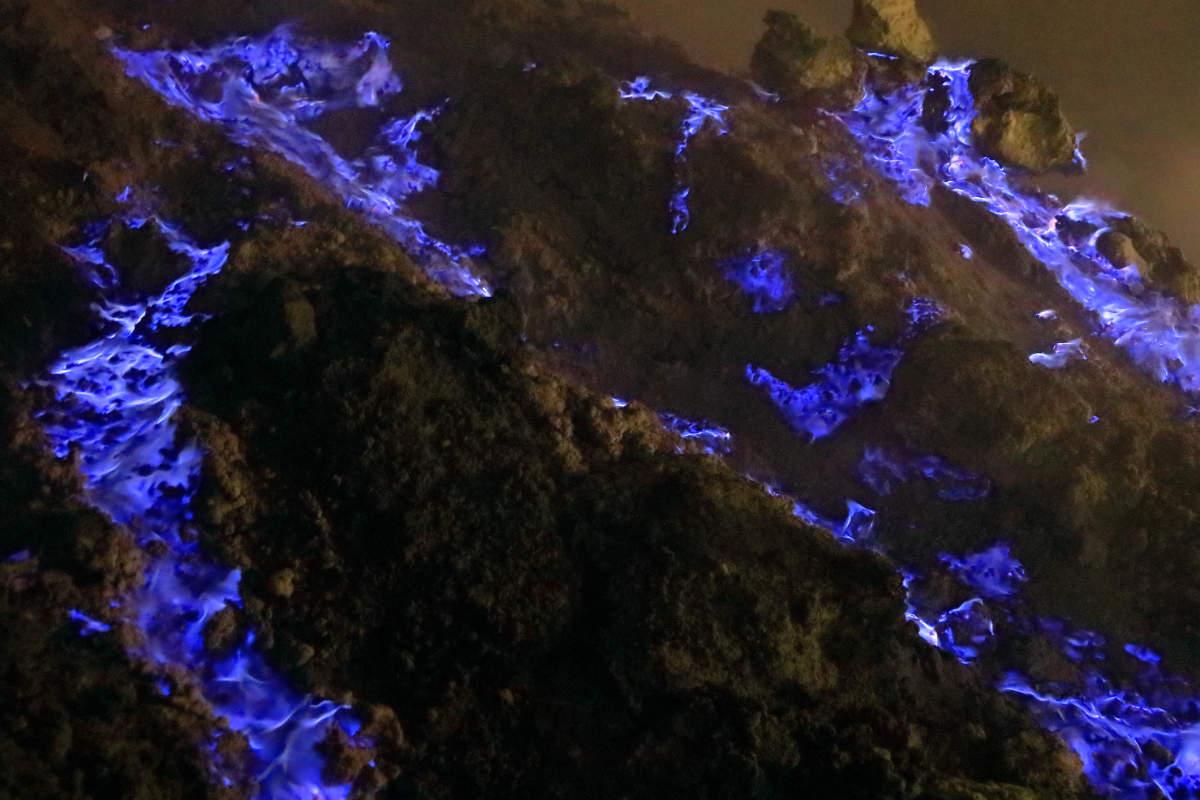
A representative image of Kawah Ijen.
According to the reports, the Blue Fire is also known as Api Biru in Javanese. This shining glow isn't the lava itself, but the result of a reaction between sulfur gases and oxygen when the volcanic eruption occurs. When the burning hot sulfur gases shoot out of the volcano’s vents, they give off excess energy, and as they settle back to the normal state, they glow with a blue-violet light, as reported by The Travel. This effect is termed ‘electronic excitation’. Cynthia Werner, a research geologist from the U.S., spoke about this and said, "I've never seen this much sulfur flowing at a volcano."
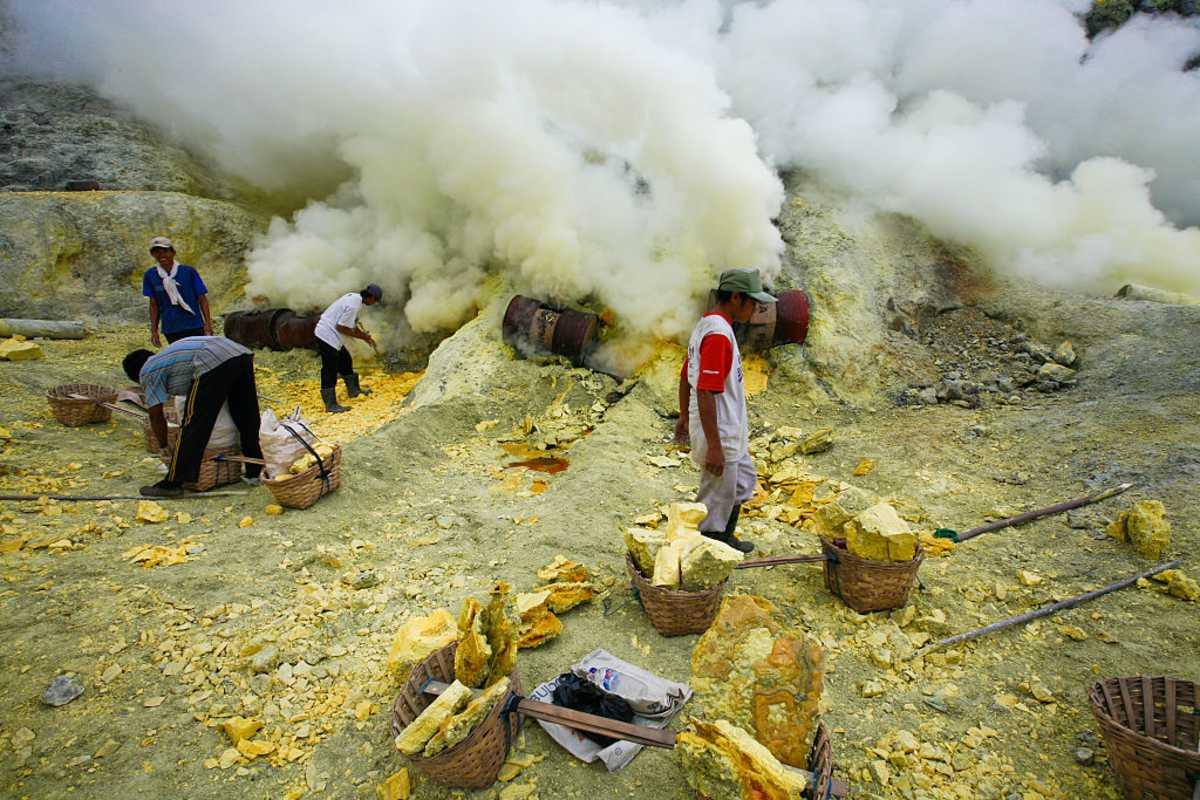
A representative image of miners working at Kawah Ijen.
At Kawah Ijen, we can also see miners climb up to collect sulfur, then carry heavy loads—up to 200 pounds—down to a nearby refinery. Haltom, a miner working there for over a decade, said, “Our families worry when we come here. They say working here can shorten your life." As reported by National Geographic, Werner also revealed, "I feel bad for these miners. We usually bring gas masks and leave them there with the people we work with, because sometimes they don't know that what they are breathing is harmful."
As the photos of glowing blue fire spilling out of the volcano go viral online, people dream of seeing it in person. Travelers who are fascinated by the dark side of tourism are especially drawn to Kawah Ijen. The term ‘dark tourism’ often refers to tourism that revolves around places that are linked to danger or unsettling beauty. For instance, the 9/11 Memorial in New York, the site where terrorists crashed planes into the Twin Towers of the World Trade Center, attracts hundreds of visitors every day. Another similar dark tourism destination is Robben Island, which was once a place of exile and imprisonment.
Similarly, Kawah Ijen also poses extreme risks for miners who work there. For them, it’s not a tourist attraction but a daily battle for survival. They inhale toxic fumes and carry heavy loads down the rocky paths, and all of this for just a few dollars. Moreover, the growing number of visitors is adding to the danger as the fragile terrain is wearing down, and paths are becoming less stable. The huge crowd also makes it harder to maintain the safety measures.