
People Are Being Warned Never to Put One Thing In Hummingbird Feeders: ‘This Will Serve...'
Published April 13 2025, 10:46 a.m. ET

Bird sitting on a red-colored bird feeder decorated with red flowers
If you ever spot a jewel-throated hummer zipping above a cluster of flowers or making a beeline for the red-tinted nectar feeder, it is probably because it is searching for a flower and kissing it. Watchtower Online Library describes that Brazilians nicknamed hummingbirds “kiss flowers.” Call it divine chemistry, but the moment a hummingbird perches its body on the flower, the flower readily opens up its petal cups.
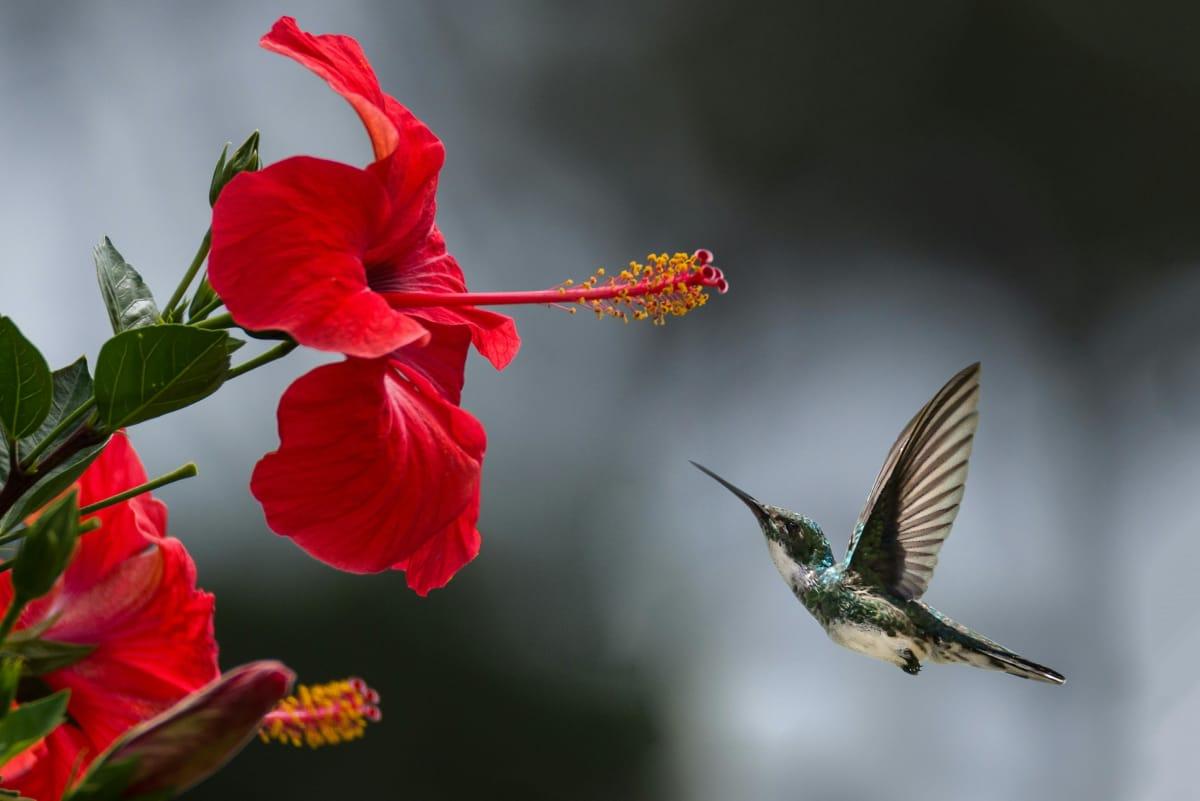
A majestic hummingbird hovers around a cluster of red flowers
Researchers who observed thousands of hummingbirds licking flowers in slow motion noticed how the two react to each other’s touch. First, the hummingbird kisses the petals and then sticks its skinny tongue deep inside the flower to lick and trap the droplets of nectar in its beak to quench its hunger. This love affair is prominently visible when the flower is red-colored, as The Conversation explains.
Hummingbirds see red. BirdNote notes that due to a dense concentration of cone cells in a hummingbird’s retina, it possesses a heightened sensitivity towards red color. In contrast, other colors, such as blue, are dulled out from the spectrum. So the moment a hummingbird sees a red flower, its inexorable attraction to the color prompts it to flutter its plumage, fly to the flower, and sip its nectar. However, this very attraction to “red” can deceive hummingbirds and propel them to eat harmful substances. All that is red is not love, after all. Sometimes, red can be poison. In an interview with Southern Living magazine, experts Gail Karr and Barbara Smith revealed why you should never put red dye in a hummingbird feeder.
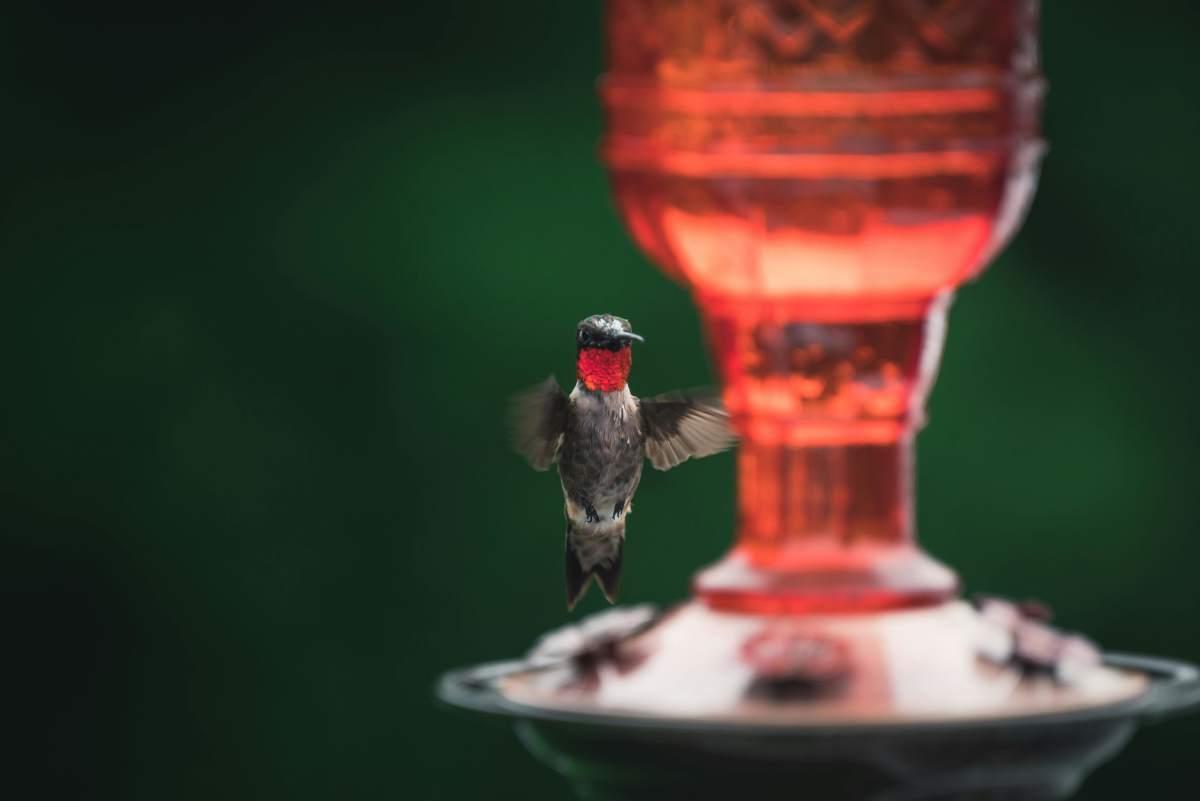
Bird sitting on a red-colored bird feeder
The reason why experts warn people to avoid red-colored dye is that some people deliberately use these reddish dyes or red-pigmented food coloring agents from their pantry to attract hummingbirds to their garden. But this could end up causing more harm than good to these majestic feathery creatures. "Many hummingbird feeders incorporate the color red in the feeder itself. This will serve as an attractant, so using red dye in the nectar just isn’t necessary,” Karr, who is the curator of special animal exhibits at the Memphis Zoo, told the magazine.
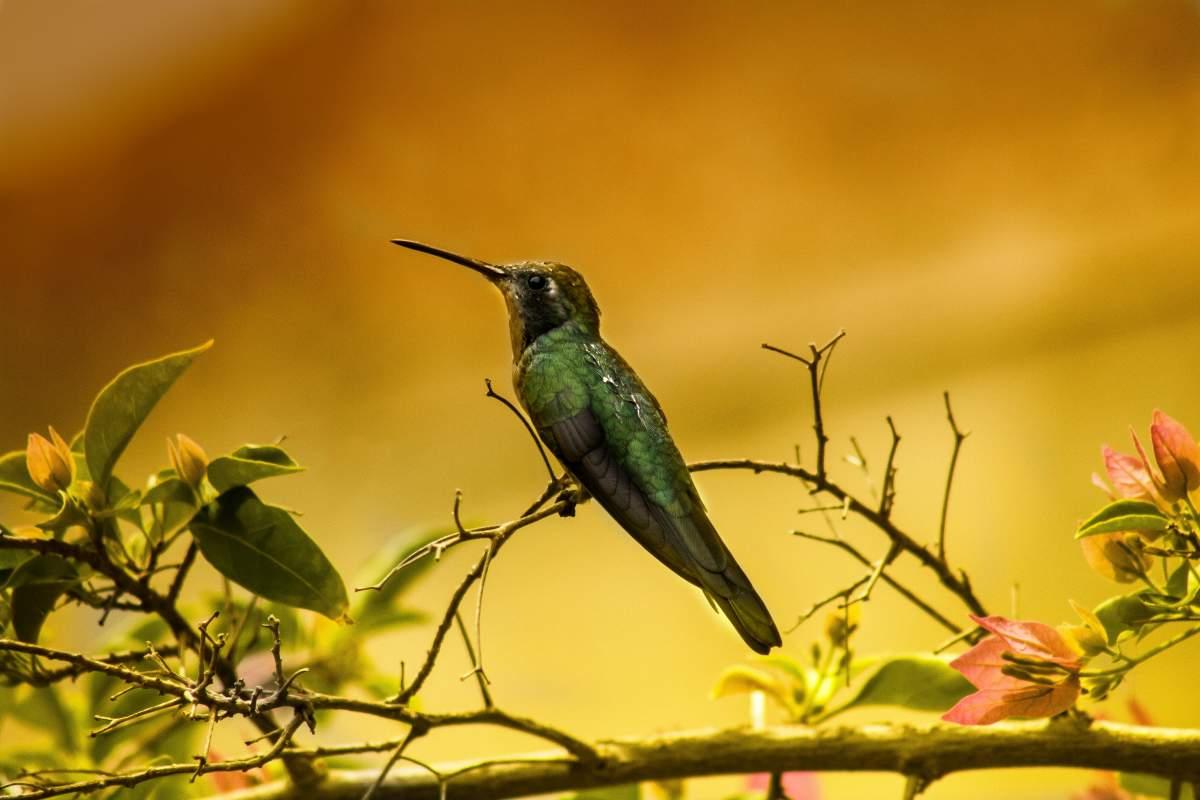
Beautiful emerald-bellied hummingbird perched on a tree branch
According to the United States Food & Drug Administration (FDA), two kinds of red colored dyes are extremely harmful when added as coloring agents to attract the birds. Red No. 3, for instance, is a synthetic food dye used to lend a bright, cherry-red color to foods like candies, cakes, cupcakes, cookies, frozen desserts, frostings, and icings. This dye was found to cause hormonal disturbance in male rats, and so it can do to the hummingbirds as well.
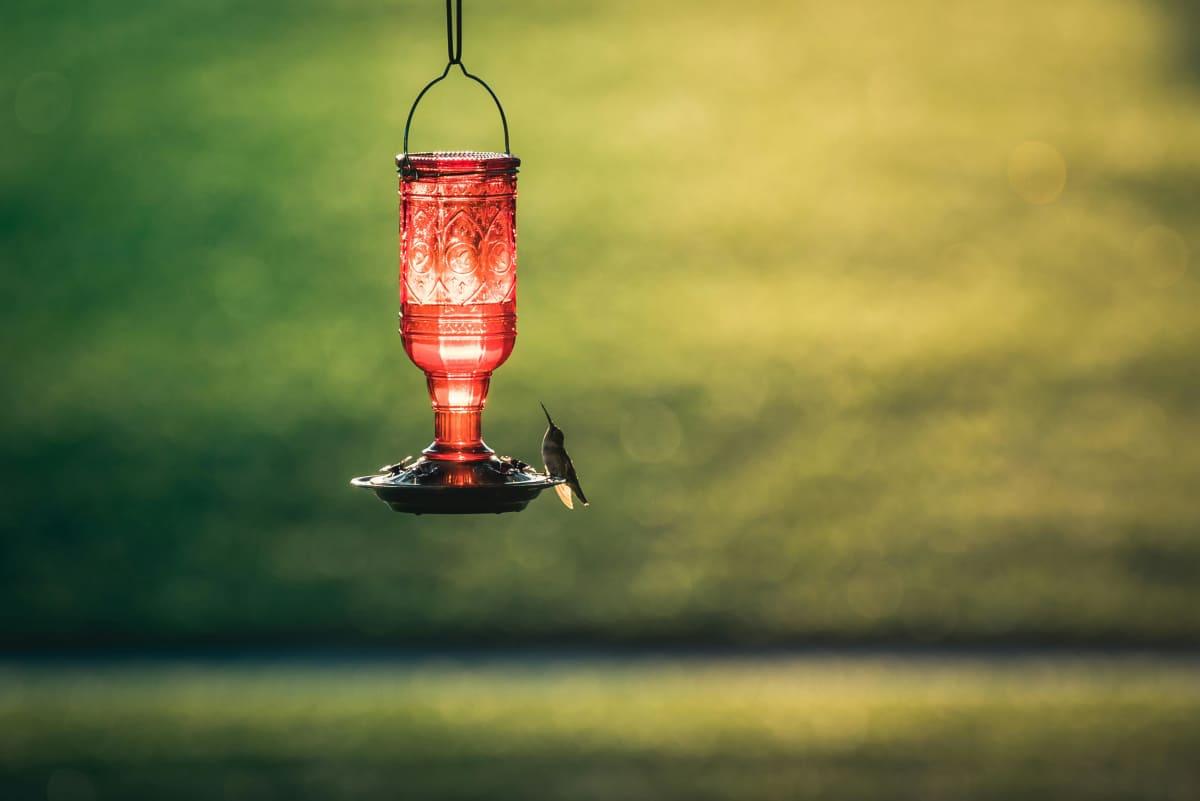
Bird sitting on a red-colored bird feeder
The second one is Red No. 40. It is used prominently to give a dark red color to cosmetics, tattoo inks, and food items like bakery goods, puddings, jellies, dressings, and sauces. Karr mentioned that like Red No. 3, the Red No. 40 is also known to cause reproductive issues in rats and mice. Both of these dyes, though effective as coloring agents, are obviously not supposed to end up in the belly of a hummingbird who is just looking to feed on some nectar. "It is best to try and steer clear of red-dyed hummingbird nectar," suggested Karr.
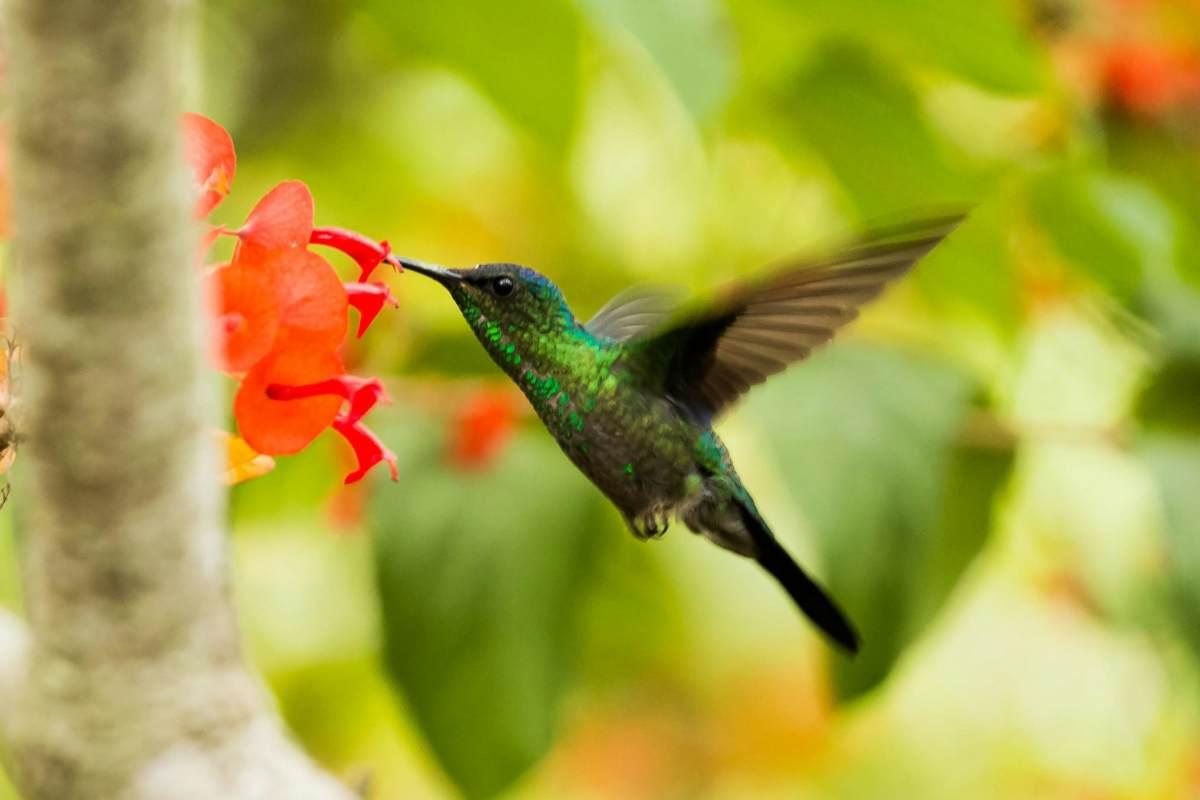
Beautiful hummingbird kissing a flower and sipping its nectar
"Adding harmful red dye to the nectar solution is not only dangerous for the health of the hummingbird but is not necessary," explained Smith, a horticulturist. Both Smith and Karr stressed the importance of steering clear of the red dyes because ingesting these dyes can prove to be fatal for the hummingbirds. A better alternative to these dyes is to create a homemade nectar for the birds by mixing one part sugar in four parts boiled water.