
One Minute Will No Longer Mean 60 Seconds by 2029 - Scientists Blame Melting Polar Ice Caps for It
Published Jan. 17 2025, 10:45 a.m. ET

(L) A clock on a black background. (R) Melting ice caps. (Representative Cover Image Source: Pexels | (L) Kaboompics.com, (R) Francesco Ungaro)
Picture a figure skater gracefully spinning on the ice with their arms tucked tightly around their head. As they shift their arms towards their shoulders, their rotation slows down. Something similar is happening to Earth’s rotation these days. As miles-thick ice sheets in Greenland and Antarctica soften into meltwater, their pull on the oceans decreases. The hot molten iron interior of the Earth is changing motions. As a result, huge masses are drifting from Earth’s polar caps towards Earth’s equator, slowing down its rotation. With the rotation slacking off in speed, researchers estimate that by 2029 a negative leap second would have to be added to the world’s clocks.
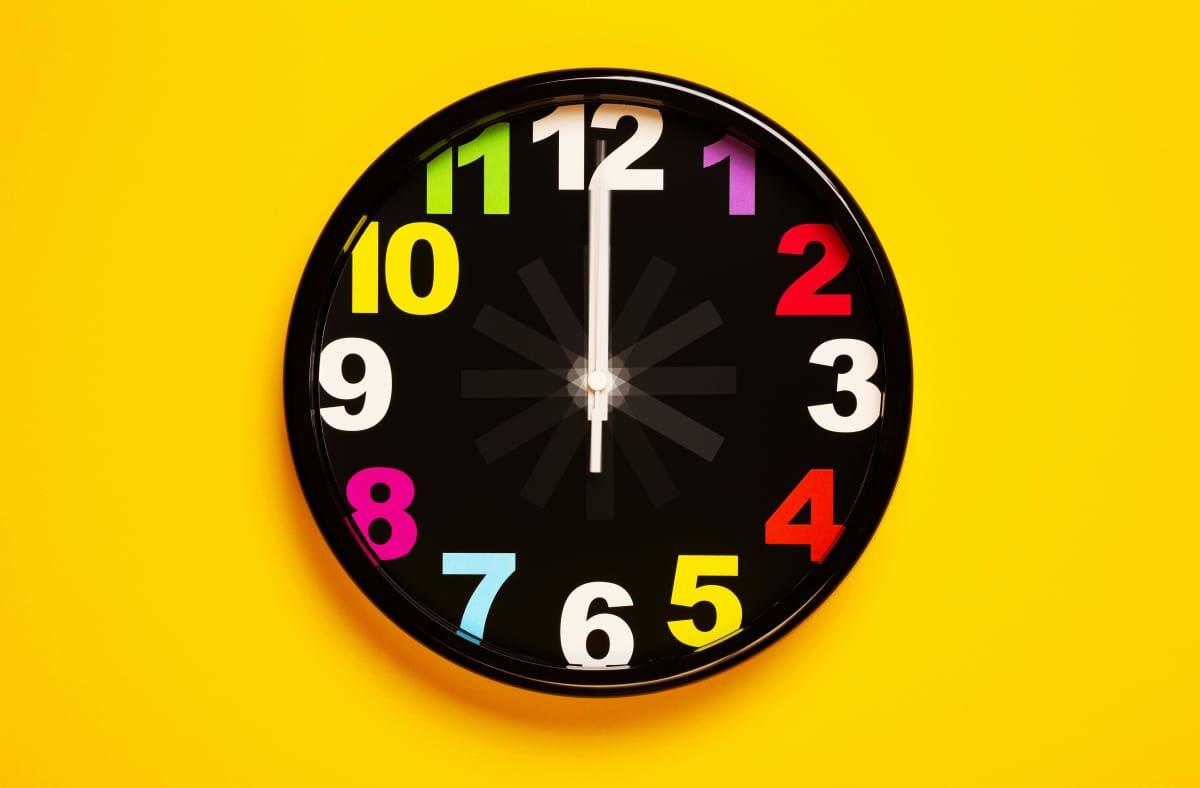
Round clock with colorful numbers on a yellow background
“Global warming is already affecting global timekeeping,” says a study published in the journal Nature. Leap seconds were first used in 1972 when computers were still in their infancy. While each computer is already designed to accommodate an extra second, at some point in the next 10 years, “computers might need to allow for a negative leap second, that is a minute only 59 seconds long,” lead author, Duncan Agnew, a geophysicist at Scripps Institution of Oceanography at UC San Diego, said in a university press release.
"Even a few years ago, the expectation was that leap seconds would always be positive, and happen more and more often,” added Agnew. "But if you look at changes in the Earth's rotation, which is the reason for leap seconds, and break down what causes these changes, it looks like a negative one is quite likely. One second doesn't sound like much, but in today's interconnected world, getting the time wrong could lead to huge problems." If the hypothesis of this “negative leap second” turns out to be real, it would prompt massive chaos and disorder in the global timekeeping system. Just picture placing an online order for which the bank and the store and realizing that the timing in their computers is different.

Man looking at his watch with a confused expression
Today, time is measured by a system called Coordinated Universal Time (abbreviated UTC), which is based on atomic clocks. These clocks measure time by the frequency of the vibration. There’s always scope for an extra leap second, something which has accelerated Earth’s rotation over many years. This is the first time a “negative leap second” is anticipated and suggested to the timekeeping society. “One second doesn't sound like much, but in today's interconnected world, getting the time wrong could lead to huge problems," said Agnew.

Melting icebergs in Greenland.
According to Agnew, the most likely factor that is increasing the possibility of a negative leap second in the coming years is human-driven climate change. He noted that although the impact of climate change was unprecedented, the fact that human beings have changed the Earth’s rotation is surprising. “The impacts of melting polar ice, driven by humans burning planet-heating fossil fuels, have become a significant factor,” he told CNN. While 2029 is just four years away, if the prediction about this negative leak second turns out to be true, all the computers of the world would need to be re-programmed and reset from scratch; a task akin to herding cats. Ted Scambos from the University of Colorado Boulder, a glaciologist not involved in the study, said, “It’s a ‘yikes’ moment for some computer applications.”