
Northern Lights May Be Visible Through Christmas — Here's Where You're Most Likely to Spot Them
Published Dec. 24 2025, 8:08 a.m. ET

Two people looking at auroras in the sky.
Auroras or Northern Lights cascade through the sky during high solar activity. According to a recent release by NOAA's Space Weather Prediction Center, the sun's activity is quite low. However, there are chances of auroras appearing in the sky and lasting through Christmas, all thanks to high-speed solar winds. The wind speed got enhanced to an unusual level, averaging around 430 miles per second. "Enhanced solar wind conditions are expected to prevail over 24-25 Dec as influence from the positive polarity coronal hole persists," the forecast says. A CME (coronal mass ejection) that left the Sun on December 20 is expected to pass in proximity to Earth on Wednesday, December 24.
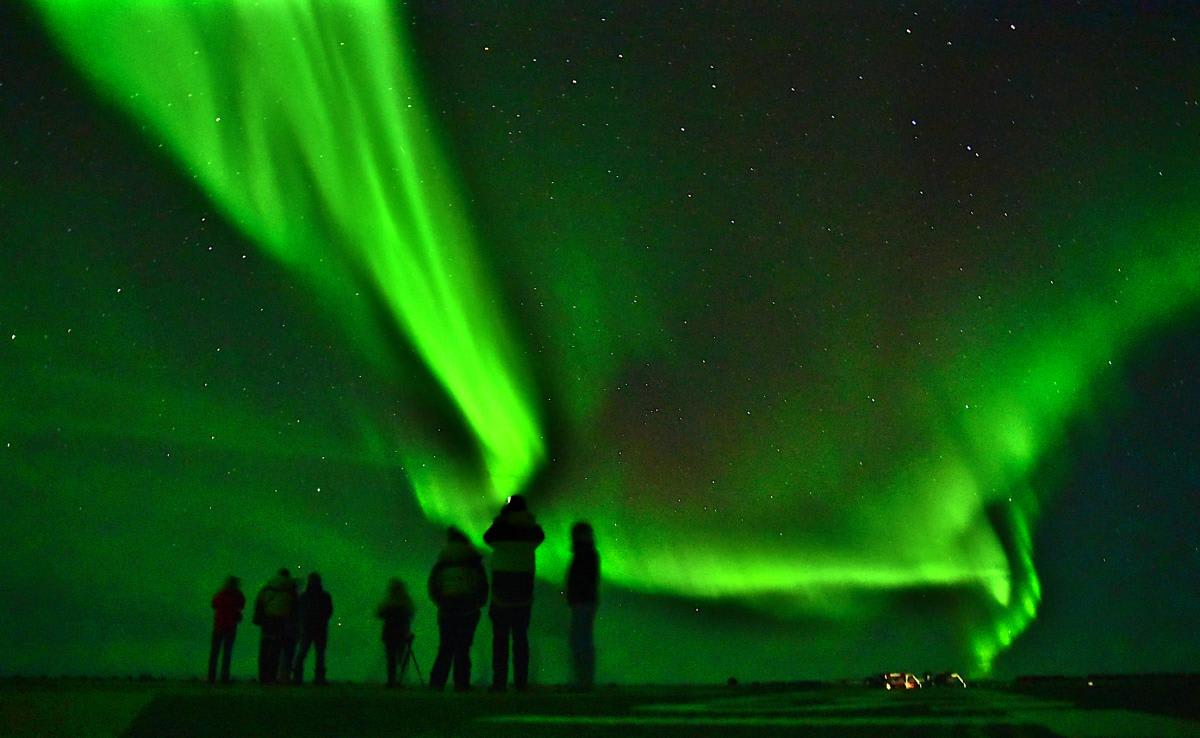
Columns of neon green light dancing in the sky. Spectators watching.
In the aftermath, the enhanced wind speed will reach its highest potential on that day. The effect will be prominent throughout Christmas, and will significantly reduce by Friday, December 26. The high-power solar wind from a large coronal hole on the sun will disrupt the Earth's magnetic field, prompting auroras to form. "The geomagnetic field reached unsettled to active levels due to effects from a positive polarity coronal hole," as per the forecast discussion. However, this aurora sighting wouldn't be as widespread as the ones we witnessed earlier this year, during high solar activity. This time, there are high chances that the Northern Lights will be confined to high-latitude regions, as per Space. In the U.S., northern states like Alaska, Washington, North Dakota, and Minnesota might witness the impact of the minor geomagnetic storm. Elsewhere, people in northern Canada, Greenland, and parts of Scandinavia may also be able to watch auroras in the sky.
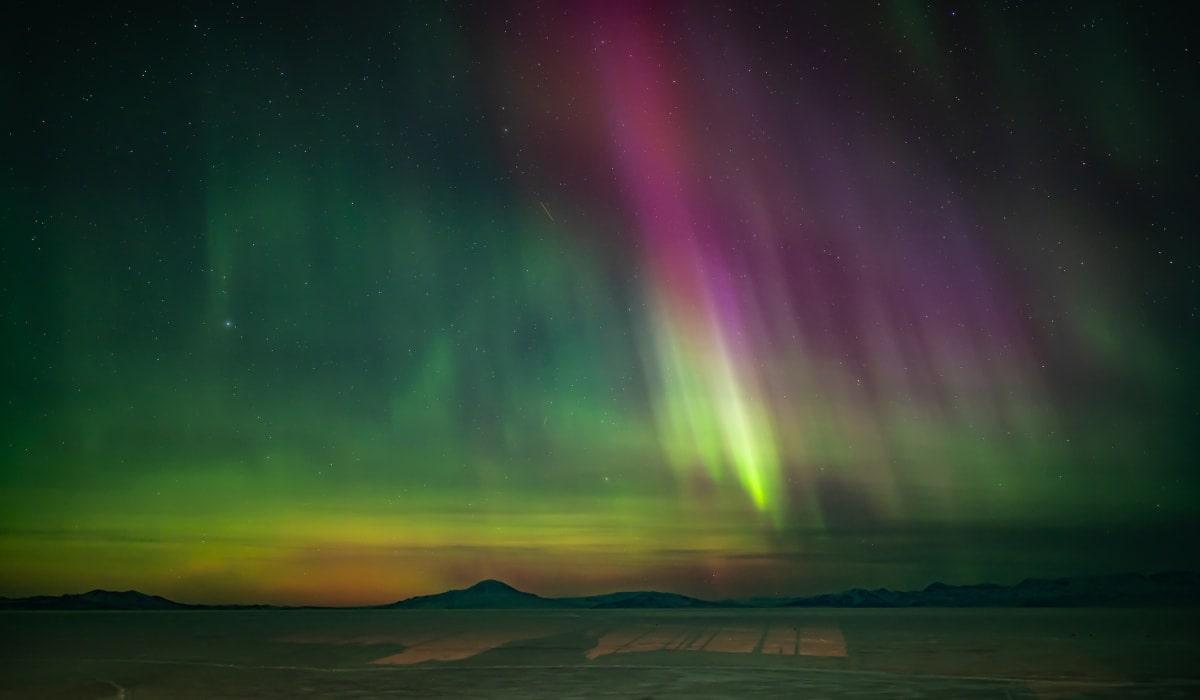
Colorful columns of light glowing in the night sky
So, if you are lucky to be living in any of the aforementioned high-altitude regions, you can add sky-gazing to your Christmas to-do list. The ones who are eager to catch a glimpse of the Northern Lights can track and stay informed about the phenomenon using a space weather app. Such an app can predict auroras based on your location, allowing you to drive to the nearest location for sighting. You can download My Aurora Forecast & Alerts, available for both Android and iOS, and stay updated. The Space Weather Live is another versatile prediction app you could opt for.
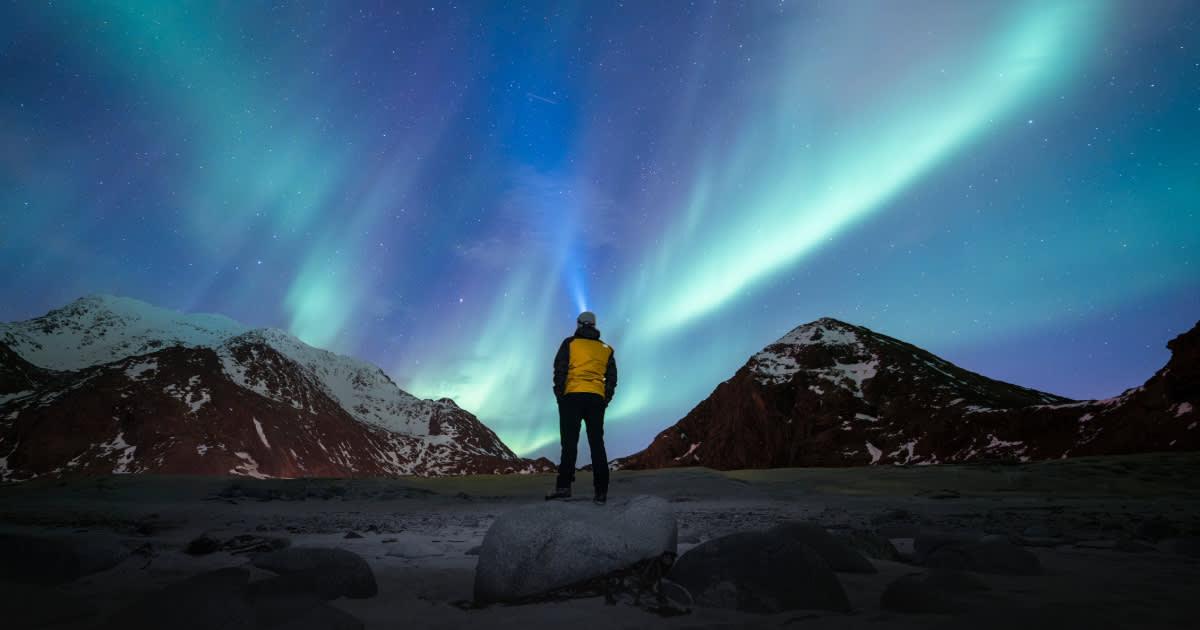
A man gazing at the Northern Lights
This year has been great for sky-gazers and aurora lovers. Thanks to the high solar activity, people got to witness several stunning and picturesque visuals of the Northern Lights in the sky. In November, a massive solar flare triggered a G4 geomagnetic storm, which led to auroras being spread across half of the U.S. The consecutive CME ejections had turned the sky colorful. Although these strong geostorms cause auroras to occur, it has some negative impact as well. Earth's magnetic field and radio signals could be disrupted, the space satellites' navigation could be hampered, power grids and communication systems have chances of getting damaged, and much more.