
Netherlands Tests Unique Lazer Fix to Help Its Drivers Avoid Wildlife Collisions
Published Feb. 27 2026, 11:40 a.m. ET

(L) Road sign to alert drivers of vehicle-deer collisions, (R) Glowing laser beams streaking along a roadway (Representative Cover Image Source: Getty Images | (L) Heather Paul, (R) Björn B.)
In February 2012, four deer were crossing a highway near the E40 motorway near Nevele, Belgium, when they crashed into a fleet of cars and died, per VRT NWS. In March 2013, a pregnant deer near Route 19 in Belmont was racing across a roadway with its two fawns when they slammed into a car with so much impact that the woman driving it had a narrow escape from death, the Evening Tribune reported. Whether the deer dies or the human in the car, it’s a lose-lose situation for everyone. Sadly, this situation is created more often than not on dark roads, at night, on asphalt roads not illuminated by streetlights. Often, a deer or two darts from a tree line, scrambling and leaping onto the road. The driver, in the meantime, is not prepared for their sudden appearance, which results in a collision.
To minimize the probability of these incidents, engineers in the Netherlands are experimenting with a new “laser-based roadside technology” that utilizes lasers to create invisible protective barriers for wildlife. The technology, as the Instagram page @promptfai shares in a post, targets human behavior while ensuring that the safety of animals is taken care of, rather than the other way around. The technology might sound futuristic, but officials believe that it will significantly reduce the vehicle-wildlife collisions without having to trap, block, or redirect animals, also preserving their natural migration paths whilst not being too intrusive.
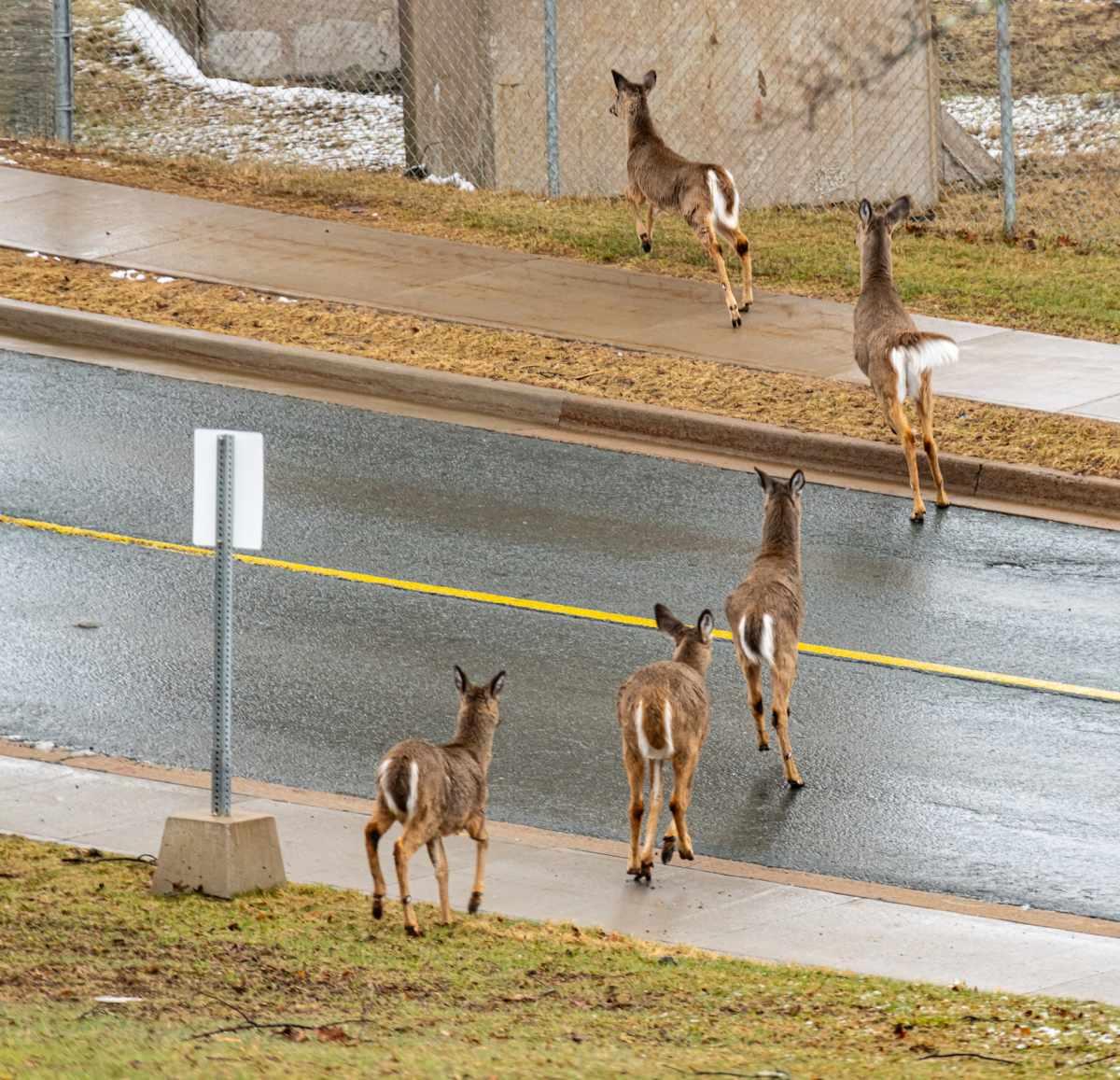
Five deer cross a two-lane street in a suburban area.
Addressing why this is important, tech professional Pavel Ryzhikh said, "Every year, thousands of animals like deer, foxes, and badgers get hit by cars when they try to cross busy roads. This is dangerous for both the animals and the drivers." According to Intertraffic, the Humane Society estimated that one million wild animals die per day from collisions with road vehicles.
The innovative technology aims at slashing down the number of collisions, fostering safer crossings, and all this without having to rely on cages or concrete. The goal, as @promptfai notes, isn’t to block animals. It’s to slow down cars. It’s not a laser to hinder or stop the animals, but a warning system to caution the drivers passing by. In contrast to the physical fences that animals can easily surpass, the laser technology generates laser lines that activate each time an animal crosses the road, alerting the drivers nearby. The laser beams cast a neon green glow across the road, prompting the driver to slow down or reroute their pathway.
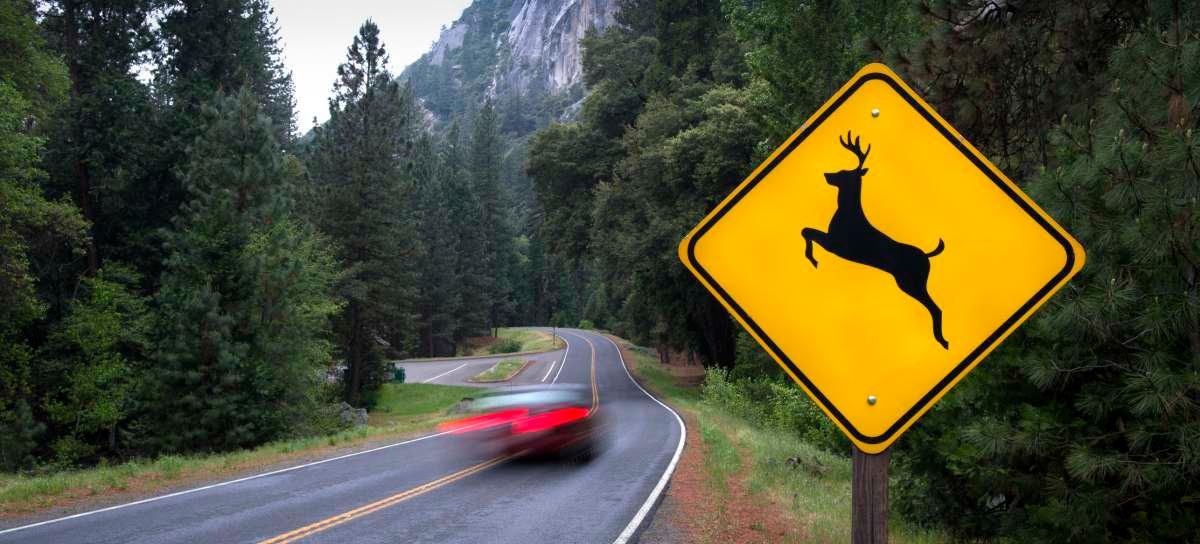
Deer crossing sign and traffic.
What makes the technology so trailblazing is that it focuses on changing human behavior rather than messing around with nature or wildlife. “Drivers get real-time visual alerts, animals move freely, and landscapes stay untouched. It's infrastructure that adapts to nature, not the other way around,” as Future AI puts it in a LinkedIn post.
Some people, however, have met the new idea with skepticism, as suggested by the comments on @promptfai’s post. “Can’t wait for more light pollution,” is a sarcastic remark from @dewbieous. Many, including @caseycallahann, criticized that the lasers won’t work if the driver is intoxicated. @anxa_brnl loves the idea but suspects whether it will trigger any issues for nocturnal animals. @tracitrout seems to be completely hopeless believing that human behavior can’t be changed. “Unfortunately, some people just don’t care enough to press the brake,” they wrote.