
Melting Antarctic Ice Isn’t Helping the Ocean Absorb Carbon — Defying Years of Predictions
Published Feb. 3 2026, 9:55 a.m. ET

Iceberg reflections in Antarctica.
Researchers have discovered an unexpected connection between West Antarctica’s ice sheet and the Southern Ocean, as published in the journal Nature Geoscience. They found that the disintegration of the West Antarctic Ice Sheet (WAIS) did not promote algal growth. The research is valuable as it indicates that if disintegration continues, the Southern Ocean’s capability to absorb carbon dioxide will decrease. It could further damage the already vulnerable climate by enhancing global warming. The assertions in the study were made based on a sediment core collected in 2001 from the Pacific sector of the Southern Ocean.
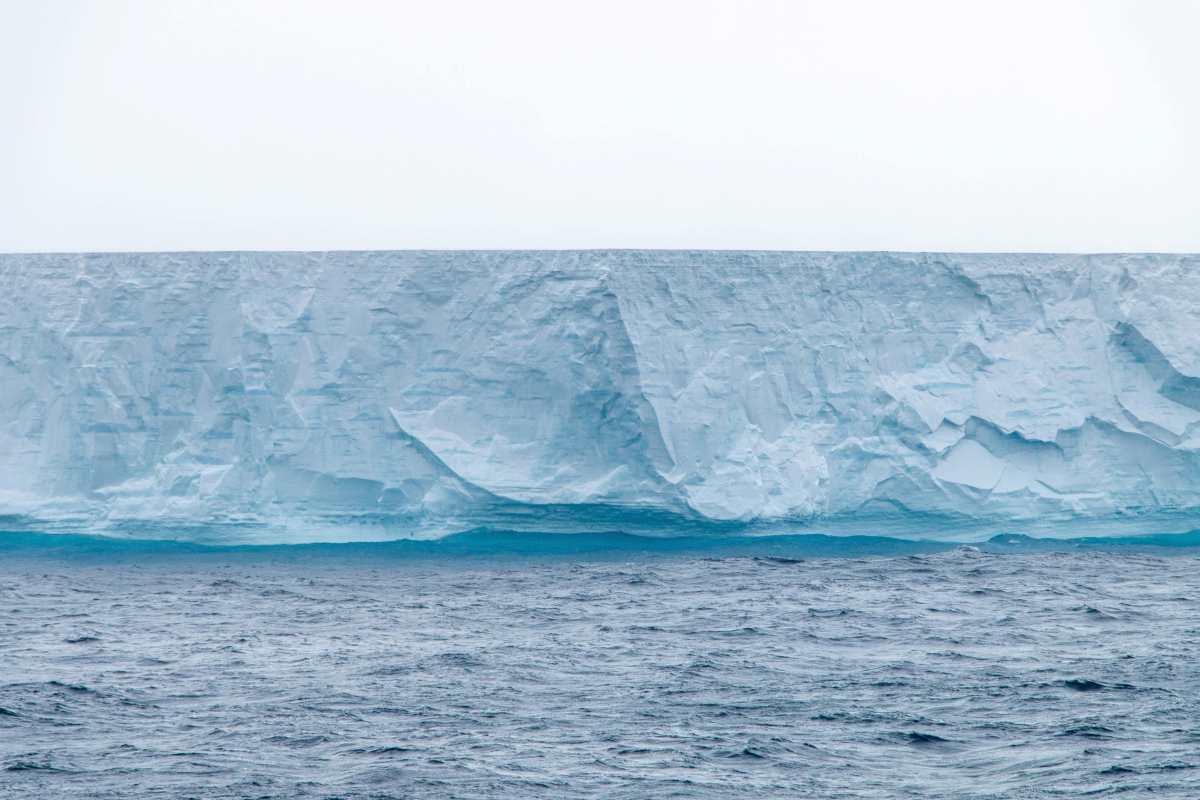
Majestic Antarctic Iceberg Towering Over the Sea
Researchers were surprised by the finding, as they expected the opposite to be true. In the past, they speculated that iron-rich sediments carried by icebergs breaking away from the WAIS into the Southern Ocean accelerated algal growth. This is because iron is typically known to encourage algal growth. However, the analysis of the 2001 core suggested that even when iron levels were high, algal growth did not increase.
The team specified that this was not a new development. It has been the prevailing status over the last few glacial cycles, per EurekAlert. The culprit behind this unique phenomenon was the kind of iron mineral being delivered by icebergs from the WAIS. The mineral was extremely weathered, which implies that most of the iron that reached the Southern Ocean during past warm spells was in less-soluble form. Algae cannot use these minerals easily; hence, their biological productivity also does not get enhanced.
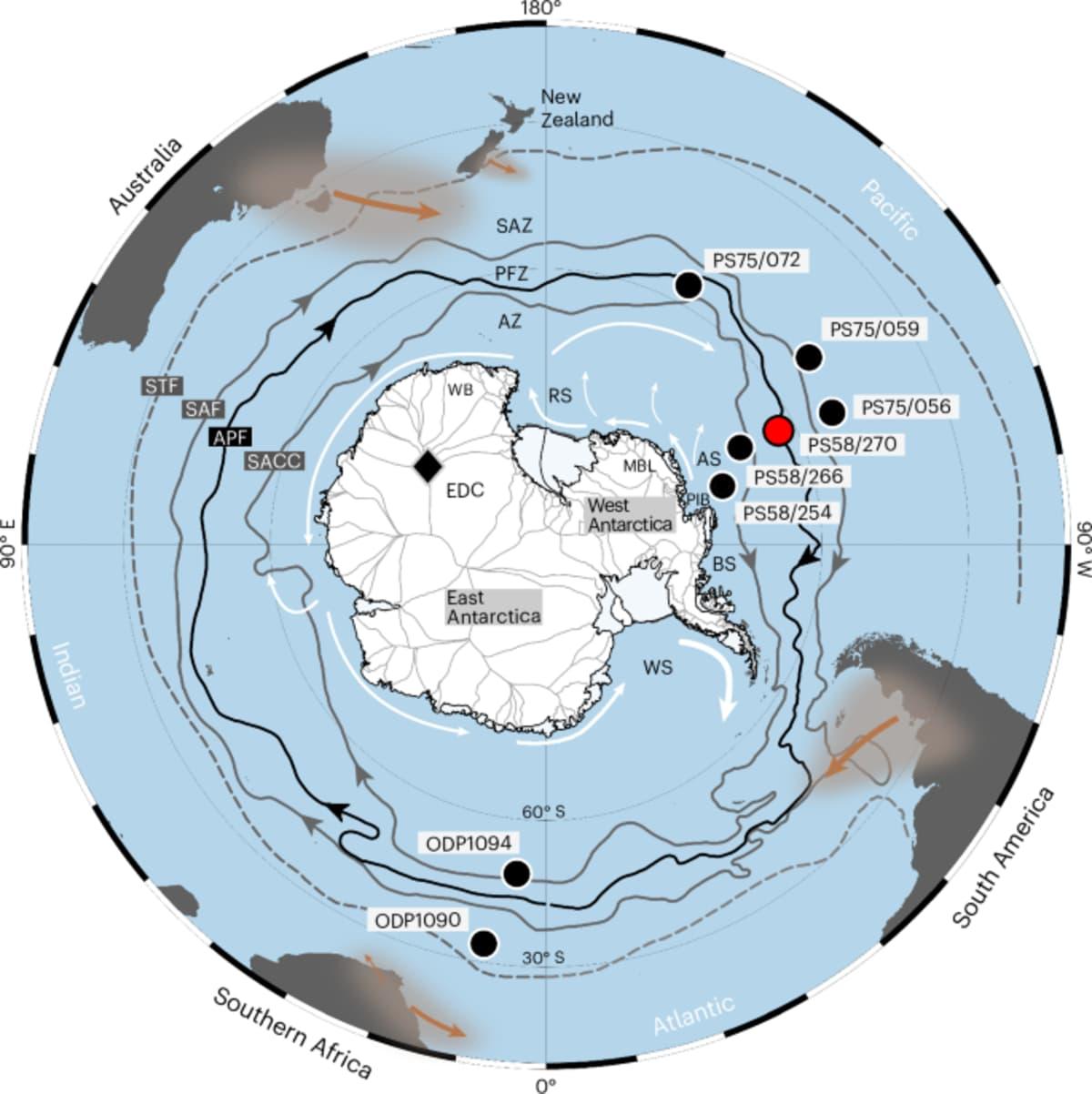
Map of the Southern Ocean.
The core examined for the study contained sediments dating back 500,000 years, encompassing four glacial cycles, according to Space Daily. It was extracted from three miles below the ocean's surface at 116 degrees west and 62 degrees south, south of the Antarctic Polar Front. The examination of this core suggests that iron input was higher in the area during the warmer periods in these cycles. Grain's features suggest that most of the iron mineral arrived through icebergs from West Antarctica. These insights challenge past assertions that claimed strong winds transported iron dust from continents during glacial periods, stimulating algae growth that kick-started global cooling at the onset of ice ages, by absorbing carbon dioxide.
The team further determined that the ocean’s capability to absorb CO2 was hampered due to the oversupply of less-soluble iron. "The growth of phytoplankton - microalgae found in the light-flooded upper layers of the ocean - was either not stimulated or only weakly stimulated. This led to a sharp reduction in CO2 absorption," explained Dr Frank Lamy, a paleoclimatologist at the Alfred Wegener Institute, Helmholtz Center for Polar and Marine Research, and co-author of the study.
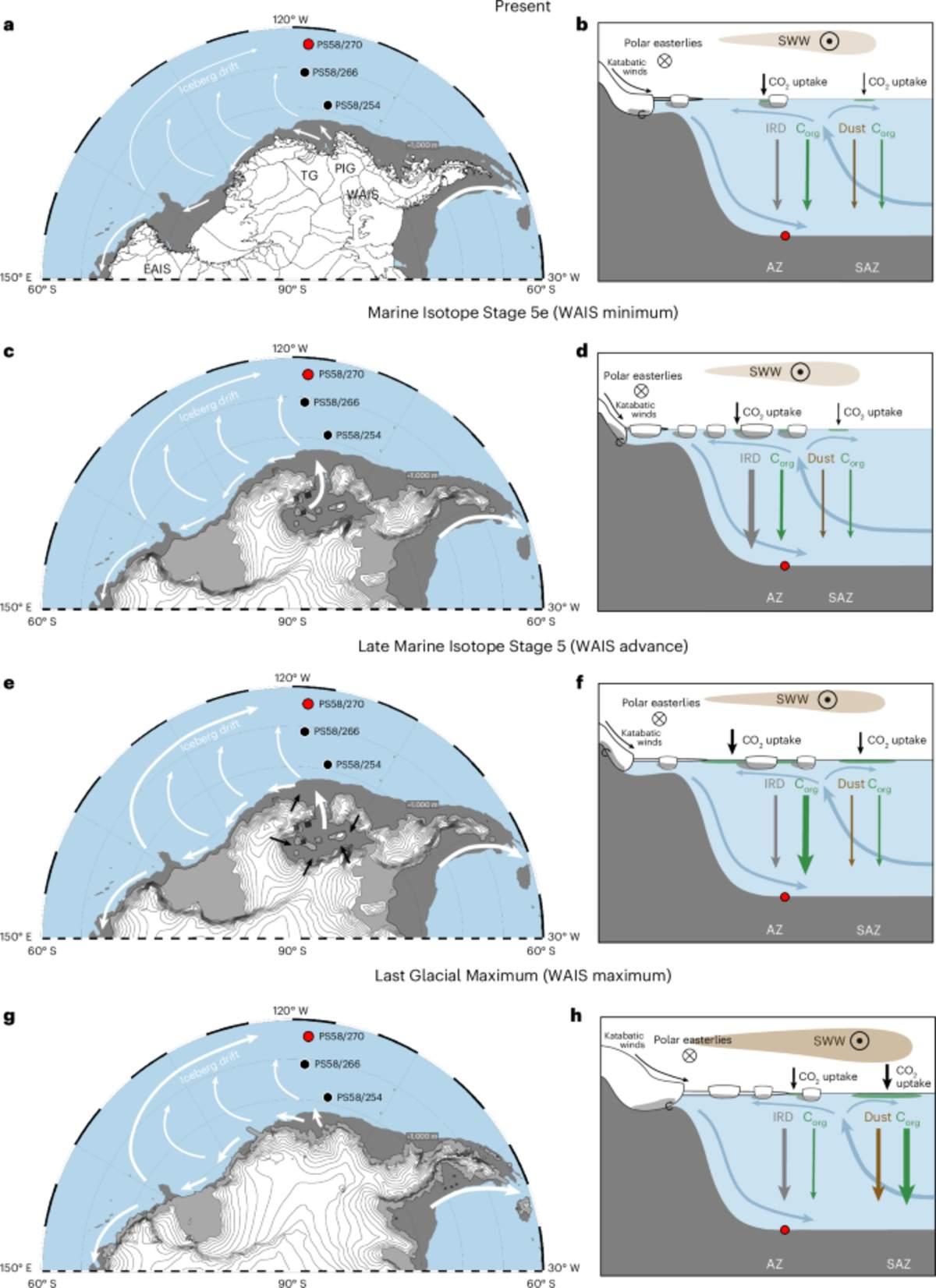
Schematic of major phases of ice-driven carbon uptake in the Southeast Pacific over the last glacial cycle
These insights serve as a warning, as many present-day conditions are similar to those of the last glacial cycle. The continued thinning of the WAIS can enhance the erosion of weathered bedrock due to interaction with glaciers and icebergs. This erosion, in turn, will possibly increase the quantity of low-bioavailability iron in the Southern Ocean. All of this may weaken a massive carbon sink in the environment, which may increase global temperatures. Researchers want more insights into this phenomenon by further examining other sediment cores from across the South Pacific to get a clearer picture.