
For the First Time in 50 Years, a Grizzly Bear Is Seen Roaming Montana's Bangtail Range Again
Published Dec. 24 2025, 2:27 a.m. ET

Grizzly bear standing in a meadow
The Bangtail Mountain range rises from the grassy grounds of southwestern Montana and stretches for about 269 miles. At the arrival of morning light, the manicured tracks become bathed in glossy glow. The winds blowing atop ridges and dirt trails tickle clusters of alpine flowers and juniper berries sticking out from the slopes of timbered hillsides. Meadows are mostly invaded by upland birds, large game animals, and raptors. If there’s something that has been missing lately, it's grizzly bears, per SCI Foundation. No grizzly has been spotted here for at least half a century, until quite recently. In a December 23 press release, Montana Fish, Wildlife, and Parks (FWP) confirmed the first grizzly bear sighting in years.
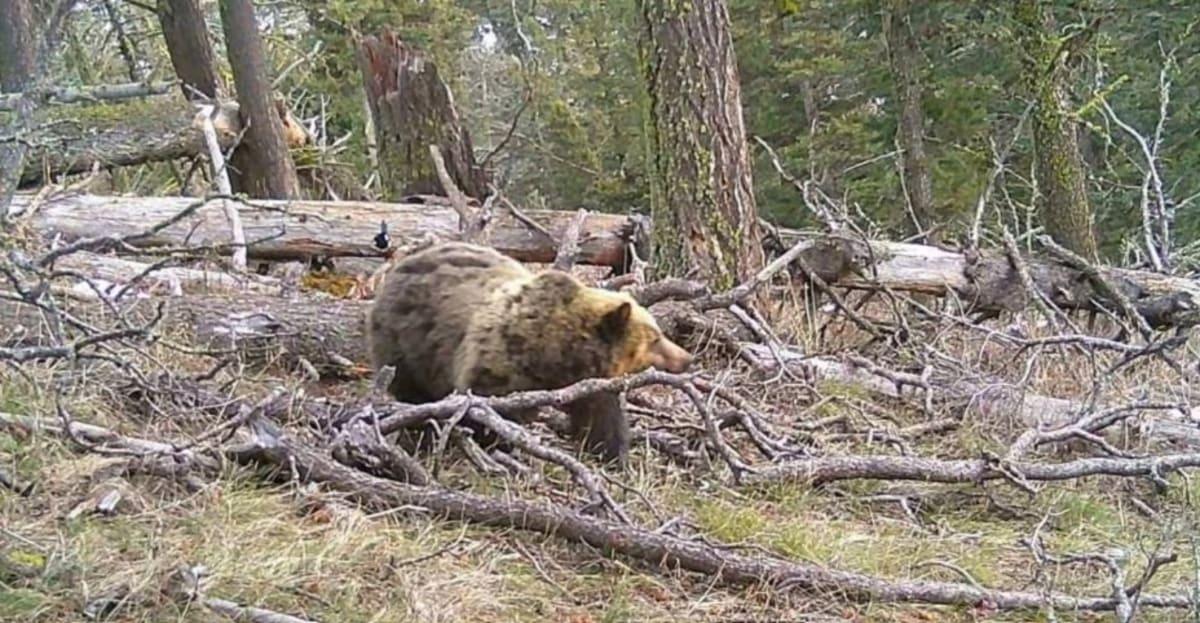
FWP confirmed a grizzly bear sighting in the Bangtail Range east of Bozeman this month.
It might not be a “yahoo moment” because Montana’s grizzly population has been skyrocketing in the past few years. But the sighting of this single subadult grizzly in this part of Montana offers a grain of hope. With the arrival of grizzlies, also arrives the possibility that the ecosystem of Bangtails could reengineer itself to better health. When bears live in an ecosystem, they unknowingly carry out a lot of tasks that humans can’t. Eating berries and plant roots, for instance. When they forage, they scatter the seeds, helping plants reproduce. They also control the population of fish, elk, and squirrels by regularly preying upon them.
For thousands of years, the “wild” in Montana’s “wilderness” was entitled to the grizzly bears that roamed here. But then humans arrived, and with their arrival, the bears that once made the country wild became a threat to survival. Conflicts erupted. By the mid-20th century, grizzlies had almost disappeared from the region. Then they returned. Humans began spotting them here and there. At nighttime, livestock disturbances were noted. Residents would understand that a grizzly was crossing the ditch. The fringes of houses and schools were strapped with electric fences, and so were the carcass piles and bone pits that were an exciting lure to the bears.
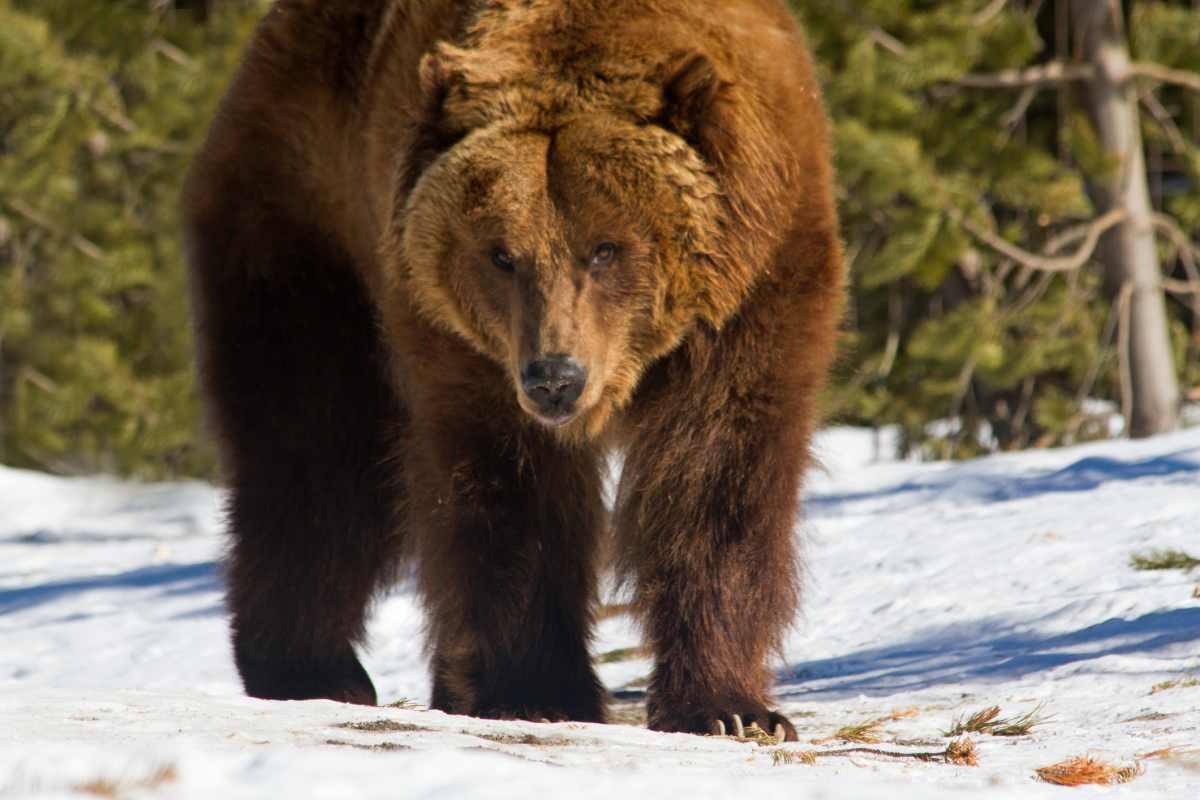
Large grizzly bear standing on snow with pine trees in background
In this case, the grizzly was captured by a trail camera that someone had set up in the forest. “This marks the first formal documentation of a grizzly bear in the Bangtails since grizzly bear recovery efforts began,” the agency noted. For the rest of Montana, however, the sighting is unsurprising. In the surrounding areas, bear sightings are common. In 2023, for example, a grizzly was observed strolling in the Shields Valley, and another one roaming along the Yellowstone River this fall.
These sightings, the agency said, are reminders that affirm that Montana is a “bear country,” and added that grizzly populations are increasing day by day. Visitors travelling in these areas should be cautious and avoid getting too close to a bear. The FWP also shared a list of guidelines for the visitors. To begin with, carry bear spray. Travel in groups and make some noise, so they will be alerted to your presence. Stay away from animal carcasses. If a bear sees you messing around with a carcass it foraged for dinner, it might turn aggressive. And, never try to feed them, the agency warns. It is not just illegal to feed the bears here, but also dangerous.
Silhouette of a grizzly bear walking on the shoreline glows with golden sunset light
Repetitive feeding makes bears conditioned to depend on humans and lose their natural foraging ability. Residents living nearby are urged to keep their garbage containers, bird feeders, pet food, and other attractive items out of sight in a secure building. Ultimately, having an abundance of grizzlies is more positive than negative.